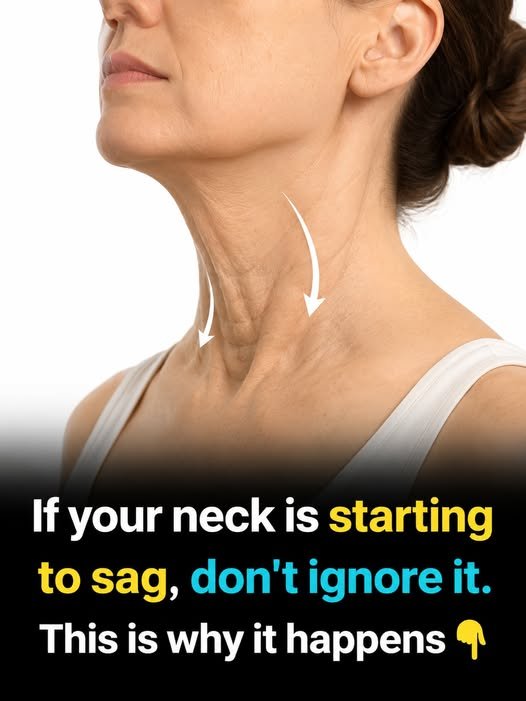
The American Academy of Dermatology (AAD) notes that creams generally produce only subtle improvements, while energy-based treatments can provide modest tightening. The American Society of Plastic Surgeons (ASPS) also emphasizes that nonsurgical treatments cannot reproduce the degree of correction achieved by a neck lift, particularly when there is a lot of excess skin.
1. Start with realistic expectations
There are three common situations:
A. Fine lines and crepey skin
This is the easiest type to improve. Retinoids, sunscreen, moisturizers, lasers, and microneedling can improve texture and stimulate collagen.
B. Mild-to-moderate skin laxity
Ultrasound or radiofrequency treatments can stimulate collagen and produce some tightening.
C. Significant hanging or excess skin
Nonsurgical treatments usually won’t remove the extra skin. They may improve the appearance somewhat, but a neck lift provides substantially more correction.
2. Daily sunscreen is one of the most important steps
The neck is frequently exposed to ultraviolet radiation, which accelerates collagen breakdown and contributes to wrinkles, pigmentation and loss of elasticity.
Use a broad-spectrum SPF 30–50+ sunscreen on the neck every morning, including the sides and upper chest.
Ideally:
- Apply enough to cover the entire neck.
- Reapply when outdoors for prolonged periods.
- Wear a hat when appropriate.
- Avoid tanning beds.
- Don’t neglect the back and sides of the neck.
This won’t tighten already loose skin dramatically, but it helps prevent further collagen damage and protects the results of other treatments. ASPS specifically recommends sun protection when addressing neck aging.
3. Retinoids/retinol
A retinoid is probably the most useful topical ingredient if your main problem is fine lines, crepey texture and early laxity.
Retinoids can encourage collagen production and improve skin texture. The AAD specifically notes that products containing retinoids such as retinol may produce a small improvement because they can help the body make more collagen.
How to start
If you are new to retinoids:
Night:
- Cleanse gently.
- Let the skin dry.
- Apply a small amount of retinol/retinoid.
- Follow with moisturizer.
Start perhaps 2–3 nights per week, then gradually increase as tolerated.
The neck can be more sensitive than the face, so don’t assume that a strength you tolerate on your face will automatically be comfortable on your neck.
Possible side effects include:
- dryness
- peeling
- redness
- burning/irritation
- increased sensitivity
If irritation develops, reduce frequency.
Important: Retinoids are not appropriate during pregnancy, and people with certain skin conditions or who take certain medications should discuss them with a clinician.
4. Moisturizer can make crepey skin look better
A moisturizer won’t actually lift loose skin, but it can temporarily make the skin appear smoother and plumper.
Look for products containing ingredients such as:
- ceramides
- glycerin
- hyaluronic acid
- niacinamide
- peptides
Think of moisturizer as a skin-quality treatment, not a true skin-tightening treatment.
The AAD specifically warns that claims that ordinary creams can actually lift sagging skin are overstated.
5. Ultrasound skin tightening
Professional focused ultrasound treatments are one nonsurgical option for mild-to-moderate laxity.
The treatment delivers ultrasound energy into deeper tissue, producing controlled heating that can stimulate collagen remodeling.
According to the AAD:
- results develop gradually;
- many people see modest lifting/tightening over roughly 2–6 months;
- additional treatments may sometimes provide more benefit.
This is much different from applying an ultrasound gadget or cream at home.
Best candidates
It tends to make more sense when you have:
- mild skin laxity
- early jowling
- mild loss of jawline definition
- relatively good skin elasticity
- limited excess skin
It is not a substitute for removing a large amount of hanging skin.
6. Radiofrequency (RF) tightening
Radiofrequency uses electromagnetic energy to heat tissue and stimulate collagen remodeling.
The AAD reports that noninvasive RF can produce tightening, with the best results developing over several months as new collagen forms.
RF may be useful for:
- mild loose skin
- fine lines
- crepey texture
- early loss of firmness
There are also RF microneedling treatments, which are more invasive because needles deliver RF energy beneath the skin.
Important safety warning about RF microneedling
This deserves special attention.
In October 2025, the FDA issued a safety communication warning about reported serious complications from certain uses of RF microneedling, including:
- burns
- scarring
- fat loss
- disfigurement
- nerve damage
The FDA recommends that consumers discuss the risks with a qualified healthcare provider.
So I would not recommend buying an inexpensive RF microneedling device online or having the treatment performed by an inadequately trained provider.
7. Laser treatments
Certain laser treatments can improve the surface quality and texture of the neck.
Depending on the laser, treatment can address:
- fine wrinkles
- pigmentation
- sun damage
- uneven texture
- some degree of collagen loss
Some nonablative lasers heat deeper tissue without removing the outer skin, while resurfacing lasers intentionally affect the skin surface.
The AAD notes that some laser treatments can tighten skin, although multiple treatments may be necessary and results develop gradually.
Laser treatment is particularly attractive if your problem is crepey/wrinkled skin rather than a large amount of hanging skin.
8. Microneedling
Microneedling creates controlled microscopic injuries that stimulate the body’s wound-healing response and collagen production.
It can be useful for:
- fine wrinkles
- crepey skin
- uneven texture
- early signs of neck aging
ASPS specifically identifies microneedling as an option for improving fine neck wrinkles and skin quality.
RF microneedling is a different, more energy-intensive procedure and has the safety considerations described above.
9. Botox for vertical neck bands
If what bothers you isn’t primarily loose skin but vertical cords/bands running down the neck, Botox can sometimes help.
These bands are associated with the platysma muscle.
Botulinum toxin temporarily relaxes the muscle, which can make the bands less prominent and sometimes improve the appearance of the jawline.
ASPS describes this type of treatment as a nonsurgical option for early neck aging and platysma bands.
However, Botox doesn’t remove loose skin.
It’s therefore much more appropriate for:
prominent muscle bands
than:
a large amount of hanging skin.
Results are temporary and require repeat treatments.
10. Dermal fillers
Fillers aren’t really a “skin tightening” treatment, but they can sometimes improve the appearance of horizontal neck lines or loss of volume.
ASPS notes that fillers can improve some horizontal “necklace lines” and restore volume, although the effect is temporary.
They generally make more sense when the problem is:
- volume loss
- pronounced horizontal lines
- contour irregularity
rather than substantial excess skin.
11. If you have a double chin, treat the fat separately
Sometimes what appears to be “loose neck skin” is actually a combination of:
fat + skin laxity + muscle changes.
If there is significant fat underneath the chin, reducing the fat can improve the neck contour.
There are injectable and other nonsurgical approaches for submental fat, but these need to be evaluated carefully because removing fat from an area that already has poor skin elasticity can sometimes make laxity more noticeable.
ASPS lists treatments such as Kybella for reducing submental fat as one of the nonsurgical options used in neck rejuvenation.
12. Exercise: useful, but don’t expect it to tighten skin
Neck exercises are frequently advertised as a way to “get rid of turkey neck.”
The reality is more modest.
Exercise can strengthen muscles and improve posture, but it cannot physically remove excess skin.
If the problem is primarily:
- weak muscles → strengthening may help appearance somewhat
- poor posture → correction can improve how the neck looks
- excess skin → exercise cannot eliminate it
- skin collagen loss → exercise isn’t a replacement for dermatologic treatment
ASPS notes that the neck generally does not respond dramatically to diet, exercise or ordinary skincare when the issue is true loose skin.
13. Correct your “tech neck” habits
Looking downward at a phone for hours isn’t necessarily going to create major excess skin by itself, but repeated neck flexion can contribute to wrinkles/creases and can make existing neck aging more noticeable.
Try:
- holding your phone closer to eye level
- raising your laptop/monitor
- taking regular breaks
- stretching the neck
- avoiding prolonged downward positioning
ASPS recommends periodically looking up from screens and adjusting device position to reduce the effects associated with “tech neck.”
14. Maintain a stable, healthy weight
Large fluctuations in body weight can affect the appearance of the neck.
If you’re overweight, gradual weight loss can reduce submental fat. But there is an important catch:
Major weight loss can sometimes make loose neck skin more obvious.
So don’t expect weight loss alone to tighten hanging skin.
If you’re already at a healthy weight, repeatedly losing and gaining weight isn’t a good strategy for tightening the neck.
15. Don’t smoke
Smoking accelerates skin aging and damages collagen and elastin.
If you smoke, quitting is one of the most valuable things you can do for long-term skin quality.
The AAD specifically lists quitting smoking among measures that can improve outcomes from skin-tightening treatments.
What actually works best?
Here’s a practical comparison:
| Problem | Most useful options |
|---|---|
| Fine neck wrinkles | Retinoid, sunscreen, microneedling, laser |
| Crepey skin | Retinoid, moisturizer, laser, microneedling |
| Mild skin laxity | Ultrasound, RF, laser |
| Moderate laxity | Professional energy-based treatment ± combination therapy |
| Vertical platysma bands | Botox |
| Horizontal “necklace” lines | Skin resurfacing, microneedling, sometimes filler |
| Double chin/fat | Fat-reduction treatment |
| Large amount of hanging skin | Nonsurgical treatments usually limited |
| Severe “turkey neck” | Neck lift gives the most dramatic correction |
ASPS specifically describes ultrasound, RF microneedling, laser, fillers, Botox and fat-reduction treatments as possible nonsurgical approaches, but emphasizes that their results are more limited than surgery.
A sensible at-home routine
If you want to start conservatively, I would keep it simple:
Morning
1. Gentle cleanser
↓
2. Moisturizer
↓
3. Broad-spectrum SPF 30–50+ on the neck and chest
Evening
1. Gentle cleanser
↓
2. Retinol/retinoid, beginning 2–3 nights/week
↓
3. Moisturizer
On nights you don’t use retinoid:
cleanser → moisturizer
Give skincare months rather than weeks to show its full effect.
If you want a stronger nonsurgical result
If your neck is visibly sagging, a consultation with a board-certified dermatologist or board-certified plastic surgeon is much more useful than buying multiple “neck tightening” creams.
A specialist can determine whether your primary issue is:
skin laxity + fat + platysma bands + wrinkles
and then select the treatment accordingly.
The AAD recommends seeing a board-certified dermatologist to determine which skin-tightening treatment is appropriate.
You can also use the American Society of Plastic Surgeons’ surgeon directory to find an appropriately qualified plastic surgeon. ASPS states that its members are board certified by the American Board of Plastic Surgery and have completed accredited plastic-surgery training.
The most important point
There is no cream, exercise, massage, supplement, or home device that can reliably remove a substantial amount of loose neck skin.
For mild laxity, you can often achieve worthwhile improvement with:
SPF + retinoid + good skincare + ultrasound/RF/laser/microneedling when appropriate.
For moderate-to-severe hanging skin, nonsurgical treatments may make the skin somewhat tighter or improve its texture, but expectations need to be realistic. A neck lift remains the most effective way to remove excess skin and correct underlying neck structures.
If you tell me your age, whether the problem is mostly loose skin vs. a double chin vs. vertical bands, and whether the sagging is mild/moderate/severe, I can explain which nonsurgical option is most likely to work for your particular type of neck laxity, including expected results, number of treatments, downtime, and approximate longevity.