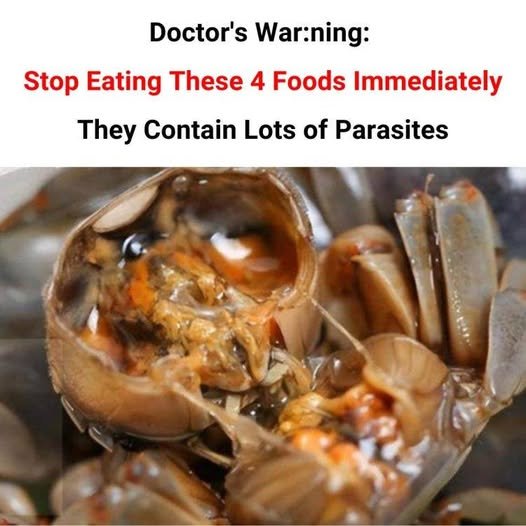
I checked current information from the CDC and FDA, and there is an important distinction: some foods can carry parasites when they are raw, undercooked, contaminated, or improperly handled, but this does not mean that four ordinary foods are “full of parasites” or that people should immediately stop eating them.
The foods that genuinely deserve caution
1. Raw or undercooked fish and squid 🐟
This is one of the clearest parasite risks. Raw or inadequately cooked fish can transmit Anisakis, a parasitic worm that can cause severe abdominal pain, nausea, vomiting and other gastrointestinal symptoms. CDC recommends avoiding raw or undercooked fish/squid; cooking seafood to 145°F (63°C) kills the parasite.
This includes foods such as:
- Raw fish
- Some sushi/sashimi
- Ceviche if the fish hasn’t been appropriately treated
- Undercooked squid
- Certain lightly cured or smoked seafood
Importantly, commercially prepared fish intended for raw consumption may undergo parasite-control freezing procedures, so “fish contains parasites” does not mean all sushi is dangerous. FDA has specific controls for seafood intended to be eaten raw.
2. Raw or undercooked pork and certain wild game 🥩
Undercooked pork can transmit Trichinella, while wild game such as bear or wild boar can also carry Trichinella. CDC recommends cooking meat properly rather than avoiding pork altogether.
For whole cuts of pork, CDC lists 145°F (63°C) plus a 3-minute rest as the safe temperature. Ground meat should reach 160°F (71°C).
3. Unwashed fruits and vegetables 🥬🍓
Fresh produce can become contaminated with parasites such as Cyclospora, Giardia or Cryptosporidium, particularly when contaminated water, soil, animals or poor hygiene are involved. This does not mean that fruits and vegetables normally contain parasites.
The CDC recommends washing produce under running water and following good food-handling practices. Washing reduces contamination, although it cannot guarantee removal of every pathogen.
4. Raw or inadequately cooked shellfish 🦪
Raw oysters, clams, mussels and other shellfish can transmit several foodborne pathogens, including certain parasites. The FDA specifically advises people at increased risk of severe foodborne illness to avoid raw or undercooked shellfish.
What about “4 foods doctors say to stop eating immediately”?
I couldn’t find a CDC or FDA warning saying that people should immediately stop eating four particular everyday foods because they “contain a lot of parasites.” The official guidance is much more nuanced.
The CDC’s current food-safety guidance identifies raw/undercooked meat, seafood and eggs, unwashed produce, raw sprouts, and unpasteurized foods as higher-risk foods for foodborne illness—but many of those risks involve bacteria and viruses as well as parasites.
So if the viral article lists things like lettuce, strawberries, pork, or sushi and says they are “filled with parasites,” that wording is sensationalized. The real issue is contamination and preparation, not that these foods inherently contain dangerous worms.
How to substantially reduce your risk
- Cook seafood to 145°F (63°C).
- Cook whole cuts of pork to 145°F and rest 3 minutes.
- Cook ground meat to 160°F.
- Cook poultry to 165°F.
- Wash fruits and vegetables under running water.
- Keep raw meat/seafood separate from ready-to-eat food.
- Wash hands, knives, cutting boards and countertops after handling raw foods.
- Avoid untreated water.
- Be particularly careful with raw foods if pregnant, over 65, under 5, or immunocompromised.
Bottom line: You do not need to panic or eliminate four foods from your diet. The scientifically supported message is: be cautious with raw/undercooked seafood and meat, wash produce properly, and follow safe food-handling practices.
If you paste the article or give me the link, I can go through its claimed “4 foods” one by one and tell you which claims are true, exaggerated, or completely false.