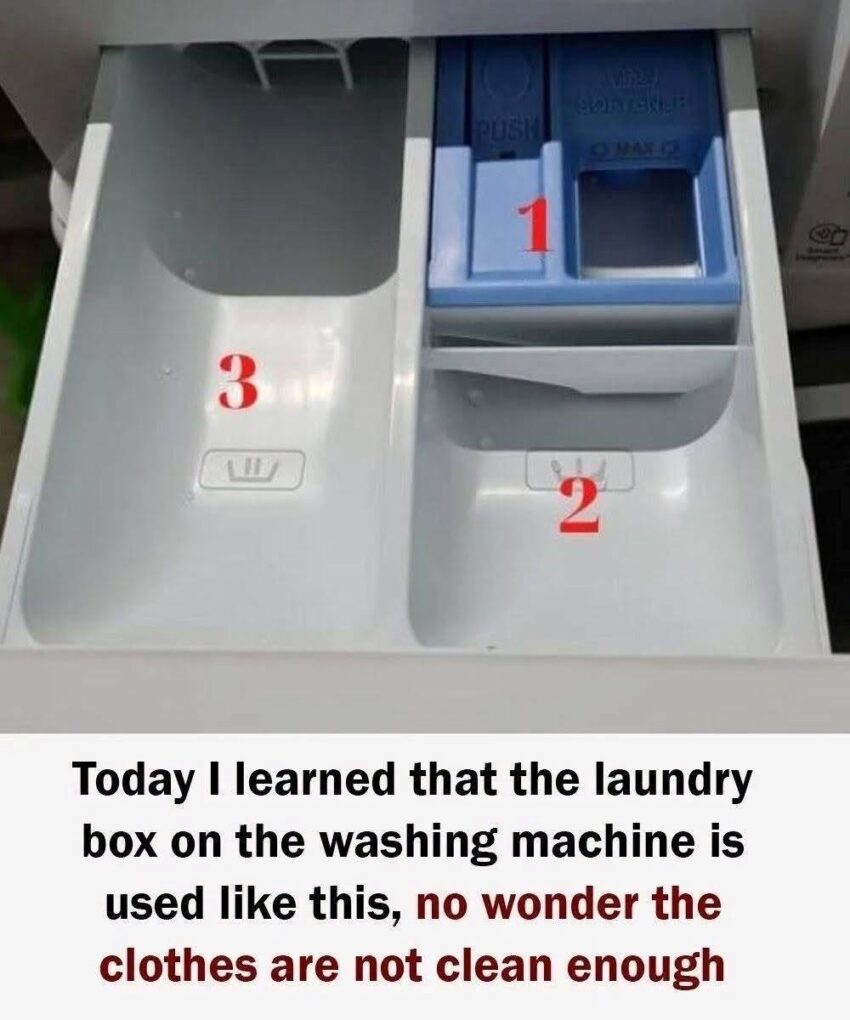
The Right Way to Use Your Washing Machine’s Detergent Drawer
Using the detergent drawer correctly is more important than it looks. Putting detergent or fabric softener in the wrong compartment can lead to poorly washed clothes, residue, excessive suds, or even problems with the machine over time.
Most front-load and many top-load washing machines have a drawer divided into two or three compartments. The exact symbols vary by manufacturer, but the basic system is usually the same.
1. Understand the compartments
Look inside the drawer for symbols such as “I,” “II,” and a flower/star symbol.
- Compartment I — Prewash
- Used only when you select a prewash cycle.
- Add detergent here if your program specifically includes prewashing.
- For a normal wash, leave this compartment empty.
- Compartment II — Main wash
- This is the main detergent compartment.
- Put your normal laundry detergent here for most washing cycles.
- Whether you use powder or liquid depends on what your machine and detergent manufacturer recommend.
- Flower symbol / softener compartment — Fabric softener
- Used for fabric softener or conditioner.
- Do not fill above the MAX line.
- The machine automatically releases the softener during the appropriate part of the rinse cycle.
2. Where does detergent go for a normal wash?
For an ordinary cycle without prewash, detergent normally goes into:
Compartment II → Main wash
For example, if you’re washing everyday clothes on a standard cotton cycle, you generally don’t need to put anything in compartment I.
3. Powder vs. liquid detergent
Both can work, but the correct method depends on the washing machine.
Powder detergent
- Usually goes directly into the main-wash compartment.
- It tends to work particularly well for heavily soiled laundry and higher-temperature washes.
- Avoid putting too much in—the machine doesn’t necessarily clean better with extra detergent.
Liquid detergent
- Many machines have a removable insert or flap that changes the main-wash compartment for liquid detergent.
- Some manufacturers instead recommend putting liquid detergent in a dosing cup inside the drum.
- Follow the instructions for your specific machine rather than assuming every drawer works the same way.
Detergent pods/capsules
- These generally do not belong in the detergent drawer.
- They are normally placed directly inside the empty drum before the clothes, according to the pod manufacturer’s instructions.
4. Don’t overfill the drawer
The MAX markings are there for a reason.
In particular, don’t fill the fabric-softener compartment beyond its MAX line. Excess softener can remain in the drawer or be released incorrectly.
More detergent isn’t necessarily better either. Too much can cause:
- Detergent residue on clothes
- Excessive foam
- Poor rinsing
- Unpleasant odors
- Build-up inside the washing machine
Use the amount recommended for your detergent, taking into account the load size, soil level, and water hardness.
5. What about fabric softener?
Pour fabric softener into the compartment marked with the flower symbol or another clearly identified softener symbol.
Keep it below the MAX line.
Don’t pour fabric softener directly onto clothes unless the product instructions specifically say to do so. Concentrated softener can stain or damage fabric when it contacts clothing directly.
Also, fabric softener isn’t appropriate for every type of laundry. For example, it can reduce the absorbency ofIt’s usually not catastrophic, but the result may towels and can affect the performance of some sportswear and technical fabrics.
6. What happens if you put detergent in the wrong compartment?
It’s usually not catastrophic, but the result may be poor.
For example:
- Main detergent in compartment I: It may be dispensed during the prewash—or potentially not at the stage you intended.
- Detergent in the softener compartment: The machine may release it during the rinse, leaving detergent on your clothes.
- Softener in the main-wash compartment: Much of it may be washed away during the main wash instead of being dispensed during the finalDetergent and softener can accumulate inside the drawer and rinse.
If you accidentally put detergent in the wrong compartment, it’s generally best to remove and rinse the drawer before starting the cycle, rather than relying on the machine to correct the mistake.
7. Keep the detergent drawer clean
Detergent and softener can accumulate inside the drawer and its channels.
Every few weeks—or more frequently if you notice build-up:
- Pull the drawer out as far as it will go.
- Press the release mechanism if your machine has one.
- Remove the drawer.
- Rinse it under warm water.
- Clean away hardened detergent or softener with a soft brush.
- Clean the cavity where the drawer sits.
- Check the small water jets/openings above the compartments.
- Allow the drawer to dry before replacing it.
If the drawer regularly develops black or slimy residue, cleaning the drawer and the surrounding dispenser area is particularly important.
8. Don’t ignore the detergent drawer if detergent remains after washing
If you repeatedly find detergent sitting in the drawer after a cycle, possible causes include:
- The drawer is clogged.
- The water inlet holes are blocked.
- Too much detergent has been added.
- The detergent has become damp and clumped.
- Water pressure is inadequate.
- The drawer isn’t installed correctly.
- The detergent isn’t suitable for the dispenser or wash temperature.
Cleaning the drawer is a good first step. If the problem persists, check the machine’s manual for dispenser-specific troubleshooting.
9. A simple rule to remember
For most machines:
| Drawer marking | What goes there | When to use it |
|---|---|---|
| I | Detergent | Prewash only |
| II | Main detergent | Normal washing |
| 🌸 / flower | Fabric softener | Rinse/softening stage |
The most important rule: always check the symbols and instructions on your particular washing machine. Manufacturers use different drawer designs, and some machines have special compartments for liquid detergent, bleach, automatic dosing, or other products.
If you tell me your washing machine brand and model (for example, LG, Samsung, Bosch, Whirlpool, IFB, Haier, etc.), I can explain exactly what each compartment in your drawer is for, how much detergent to use, and where to put powder, liquid, softener, and pods.