-
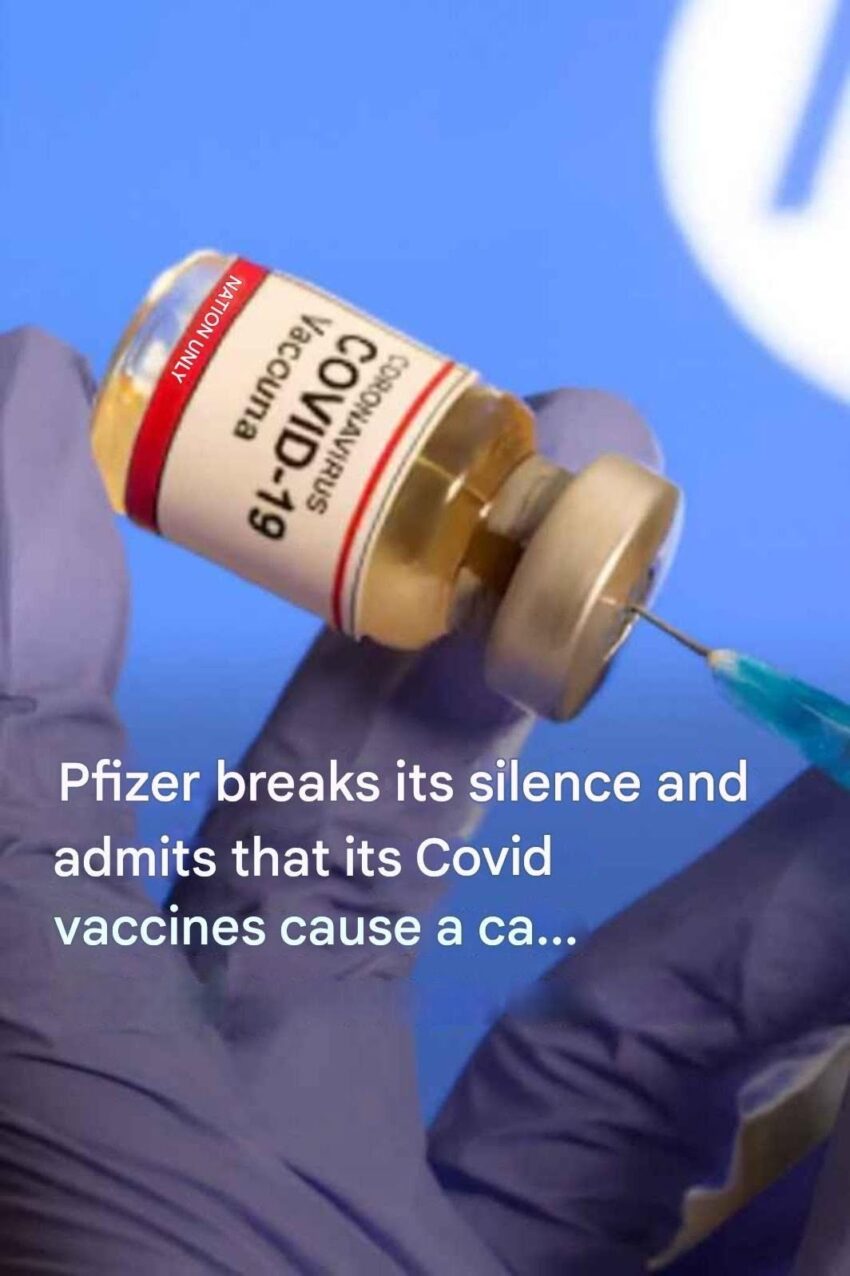
Did Pfizer admit its COVID-19 vaccines cause cancer?
There is an important distinction between a company acknowledging a possible side effect, a regulator confirming a safety risk, and evidence that a vaccine causes cancer. These are not the same thing.
If you have seen a headline claiming that “Pfizer admits its COVID vaccines cause cancer,” it is worth examining the original document and the specific evidence behind that claim.
Here is how to understand the issue in detail, including what is known about cancer claims, documented vaccine side effects, and the meaning of pharmaceutical safety disclosures.
1. What Pfizer actually said
In October 2023, Pfizer sent a letter to a South Carolina Senate committee responding to claims made during a public hearing about COVID-19 vaccines, residual DNA and cancer risk.
Pfizer stated that there was no evidence supporting the claim that its vaccine could alter a person’s DNA and create a theoretical cancer risk. The company also stated that no signs of DNA mutation or vaccine-induced cancer had been reported to that point.
FactCheck.org+1So, based on the documented statement, Pfizer did not admit that its COVID-19 vaccine causes cancer. However, that does not mean the vaccine has no risks or that every possible long-term effect has been ruled out.
2. Why are people making the cancer claim?
Three issues are often combined in online posts and videos.
A. DNA fragments in the vaccine
Pfizer’s manufacturing process uses DNA templates to produce the vaccine’s mRNA. Small amounts of residual DNA can remain after purification. The key question is whether these fragments could harm human cells or cause genetic changes.
Pfizer says residual DNA levels meet applicable regulatory requirements. A review by FactCheck.org, citing the FDA and European Medicines Agency, reported that regulators had not identified evidence showing that residual DNA in these vaccines causes cancer or changes a person’s genetic code.
FactCheck.org+1B. The SV40 sequence controversy
Some reports focus on sequences associated with SV40, a virus studied for its ability to cause cancer in laboratory settings.
Pfizer has acknowledged that non-infectious portions of an SV40 sequence are present in the DNA starting material used in manufacturing. That is not the same as saying the finished vaccine contains infectious SV40 virus.
The reported sequences are not the entire virus, and their presence does not establish that the vaccine causes cancer.
Pfizer+1C. Reports of aggressive or rapidly progressing cancer
Some online posts use the term “turbo cancer” to describe cancers allegedly triggered or accelerated by vaccination.
Researchers have published individual case reports involving cancer diagnoses after vaccination. However, a diagnosis occurring after a vaccine does not establish that the vaccine caused it. Evidence needs to show a reproducible pattern and a credible causal relationship.
A 2023 review of these claims found no established causal link between COVID-19 vaccination and cancer development or acceleration.
FactCheck.org+13. Can the Pfizer vaccine alter your DNA?
The Pfizer-BioNTech vaccine uses messenger RNA (mRNA). Its intended function is to provide temporary instructions for cells to make a version of the coronavirus spike protein, allowing the immune system to recognize it.
The mRNA is broken down by normal cellular processes. It does not need to enter the cell nucleus, where most of our DNA is stored.
The concern raised by some critics is that residual manufacturing DNA could potentially enter cells and integrate into the human genome.
There are important distinctions here:
-
Theoretical possibility: A mechanism is proposed that might cause harm under certain conditions.
-
Demonstrated biological effect: Experiments establish that the mechanism actually occurs.
-
Clinical evidence: Research shows that the effect causes a measurable health problem in people.
The presence of residual DNA has been discussed and investigated, but it does not itself demonstrate that vaccine recipients experience genetic changes or cancer. Available evidence has not established that Pfizer’s COVID-19 vaccine changes human DNA or causes cancer.
FactCheck.org+14. What side effects has Pfizer acknowledged?
This is where the distinction between a false cancer claim and documented vaccine risks matters.
The U.S. Food and Drug Administration (FDA) has required Pfizer and Moderna to update their vaccine labels to include information about myocarditis and pericarditis.
Documented heart-inflammation risk
FDA safety communication, June 25, 2025
8 per million
Estimated cases of myocarditis or pericarditis within 7 days per million doses, among people aged 6 months through 64 years.
27 per million
Estimated cases within 7 days per million doses among males aged 12–24 years.
These are estimates for the 2023–2024 vaccine formula, not universal rates for every age group, dose or vaccine formulation.
FDA+1Myocarditis is inflammation of the heart muscle. Pericarditis is inflammation of the tissue surrounding the heart. The risk has been most prominent in younger males, particularly during the week following vaccination.
The FDA has also reported that follow-up heart MRI scans in some patients showed persistent abnormalities several months after vaccine-associated myocarditis. The long-term significance of these findings is not yet known.
FDA+1Other commonly reported side effects include:
-
Pain, redness or swelling at the injection site.
-
Fatigue, headache and muscle aches.
-
Chills, fever and joint pain.
-
Rare severe allergic reactions.
These are not all equivalent in seriousness. The FDA’s safety updates demonstrate that regulators can acknowledge genuine risks without concluding that the vaccine causes unrelated conditions such as cancer.
5. What about the rise in cancer diagnoses after COVID-19 vaccination?
Some people have reported being diagnosed with cancer, experiencing a recurrence or seeing their disease progress after vaccination. These experiences deserve appropriate medical attention, but establishing a cause requires more than a timeline.
Cancer develops through many processes, including age-related mutations, inherited predispositions, environmental exposures, infections and other biological factors.
To establish whether vaccination increases cancer risk, researchers would ideally compare large groups of vaccinated and unvaccinated people while accounting for age, prior cancer, medical history, screening rates and other confounding factors.
The National Cancer Institute states that there is no evidence that COVID-19 vaccines cause cancer, trigger cancer recurrence or make cancer progress. It also notes that vaccination can temporarily enlarge lymph nodes, particularly under the arm on the vaccinated side, which can affect the appearance of medical imaging.
NCI+1An important limitation: No scientific study can rule out every conceivable rare or long-term effect with absolute certainty. Continued monitoring is necessary. But individual reports, social media anecdotes and theoretical mechanisms cannot establish that a vaccine causes cancer.
6. What does the scientific evidence tell us?
Claim
What the available evidence supports
Pfizer admitted its vaccine causes cancer
The documented 2023 Pfizer statement says the opposite.
Residual DNA can be present in manufacturing-derived material
Yes, small amounts may remain after purification.
Residual DNA proves that the vaccine changes human DNA
No; presence alone does not demonstrate integration into the human genome.
Pfizer’s vaccine contains infectious SV40 virus
The reported SV40 sequences are not the complete infectious virus.
COVID-19 vaccines cause “turbo cancer”
This has not been established by credible scientific evidence.
Pfizer’s vaccine has recognized serious side effects
Yes. Myocarditis and pericarditis are documented rare risks.
Every possible long-term risk has been ruled out
No; ongoing safety surveillance and research remain important.
Sources: Pfizer’s statement, the FDA, the National Cancer Institute and scientific fact-checking reviews.
Pfizer+47. Where to check the original documents
These are useful primary or evidence-focused sources to examine for yourself.
My conclusion
The evidence supports two points at the same time: Pfizer’s COVID-19 vaccine has genuine, documented risks, but the claim that Pfizer has admitted its vaccine causes cancer is not supported by the available documents or scientific evidence.
That conclusion does not require dismissing safety concerns. It requires distinguishing known side effects, unresolved scientific questions and claims that have not been demonstrated.
If you saw a particular video, news headline or document saying “Pfizer admits its COVID vaccines cause cancer,” share it here. I can examine the exact wording, identify the original source and explain whether it actually contains an admission, a warning about a theoretical risk, or a claim taken out of context.
-