Bagworms Inside Your Home: Where They’re Most Likely Hiding and How to Find Them


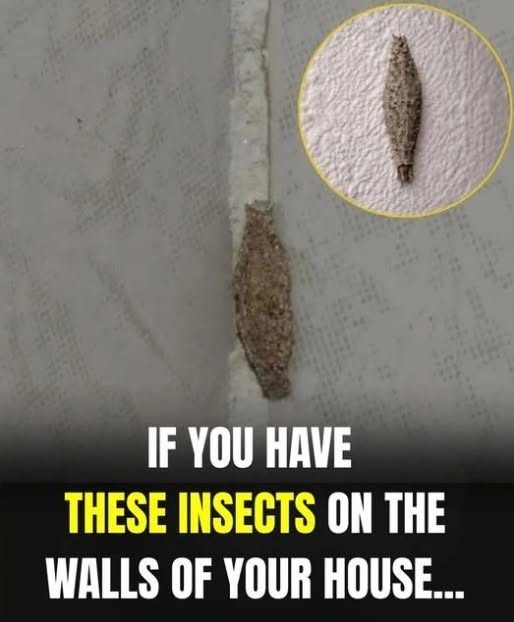
Finding small, moving, seed-shaped bags on your walls, ceilings, or floors can be unsettling. These insects are commonly known as plaster bagworms, also called household casebearers.
They are small caterpillar-like larvae that construct protective cases from silk, dust, hair, lint, spiderwebs, and other household debris.
The important thing to understand is that they don’t usually appear randomly. They are attracted to places where they can find food, moisture, shelter, and undisturbed areas.
Let’s look at exactly where they hide, why they enter homes, what they eat, and how to get rid of them.
1. What are bagworms inside your home?

The insect commonly called a plaster bagworm is scientifically known as Phereoeca uterella.
It belongs to the moth family Tineidae. Despite its name, it isn’t a true bagworm. It is a moth larva that carries a small protective case wherever it travels.
How to recognize them:
-
Appearance: Small, flattened, oval or spindle-shaped cases.
-
Color: Gray, brown, tan, or dusty beige.
-
Size: Usually around ¼–½ inch long when mature.
-
Movement: The larva slowly crawls while pulling its case along.
-
Shape: The case resembles a tiny pumpkin seed or grain of rice.
-
Location: Commonly attached to walls, ceilings, furniture, and other surfaces.
The larva can extend its head and legs from the case to crawl and feed. When disturbed, it can retreat inside for protection.
2. Where bagworms are most likely hiding inside your home
This is the most important part of identifying an infestation. Bagworms prefer quiet, undisturbed places where dust, cobwebs, and organic debris accumulate.
1. Behind furniture and underneath sofas

Behind furniture is one of the first places worth checking.
Bagworms can find:
-
Dust and accumulated lint.
-
Pet hair and human hair.
-
Spiderwebs.
-
Dead insects.
-
Small pieces of fabric fibers.
Check behind sofas, bookshelves, cabinets, beds, and heavy furniture.
Pay special attention to the corners where furniture touches the wall.
2. Ceiling corners and wall edges
Ceiling corners are particularly easy to overlook.
Look for tiny brown or gray cases attached to:
-
Ceiling edges.
-
Wall-to-ceiling joints.
-
Corners behind curtains.
-
Areas around ceiling fixtures.
-
Upper sections of closets.
These places often collect cobwebs and dead insects, providing a convenient food source.
You might notice several cases attached to the same wall, particularly in quiet rooms.
3. Closets and wardrobes

Closets can provide both shelter and food.
Inspect:
-
Behind hanging clothes.
-
Underneath closet shelves.
-
Along baseboards.
-
Behind storage boxes.
-
Around wool blankets and rugs.
-
Inside dark corners.
Household casebearers primarily feed on debris, spiderwebs, and dead insects, but they can also use animal-based fibers such as wool and silk.
If you discover damaged natural-fiber clothing, investigate whether clothes moths or another fabric pest are also present.
4. Bathrooms and areas around showers

Bathrooms can provide favorable conditions because of their humidity.
Check:
-
Behind bathroom cabinets.
-
Around ceiling corners.
-
Near exhaust fans.
-
Behind toilets.
-
Under sinks.
-
Around windows.
-
Along baseboards.
Moisture doesn’t directly feed bagworms, but higher humidity can make the environment more suitable for them.
If you repeatedly find them in bathrooms, check for poor ventilation, condensation, and moisture problems.
5. Windowsills, window frames, and curtains

Windows and curtains can become hiding and feeding areas.
Inspect:
-
Window tracks.
-
Corners of window frames.
-
Curtain folds.
-
Behind curtain rods.
-
Windowsills.
-
Nearby wall surfaces.
Adult moths may enter through openings around windows, damaged screens, or doors.
The larvae can then settle in nearby sheltered areas.
6. Under beds and mattresses

The space underneath a bed often receives little attention during routine cleaning.
It can accumulate:
-
Dust.
-
Hair.
-
Lint.
-
Spiderwebs.
-
Dead insects.
Check the bed frame, floor edges, nearby baseboards, and underneath storage containers.
Also inspect the underside of nearby furniture.
7. Garages, basements, and storage rooms

These are particularly important areas to inspect.
Garages and storage rooms often have:
-
Higher humidity.
-
Limited ventilation.
-
Accumulated dust.
-
Undisturbed cardboard and stored belongings.
-
Spiderwebs and dead insects.
Plaster bagworms are frequently associated with garages, carports, and other sheltered storage spaces.
Look along walls, ceiling corners, shelves, and around stored items.
8. Behind refrigerators and kitchen appliances

Although kitchens aren’t necessarily their primary hiding places, they can offer sheltered spaces.
Inspect:
-
Behind refrigerators.
-
Under dishwashers.
-
Behind washing machines.
-
Under kitchen cabinets.
-
Along floor edges.
-
Around appliance openings.
The main attraction is usually accumulated dust, lint, dead insects, and cobwebs rather than food stored in your kitchen.
9. Air vents, light fixtures, and ceiling fans

These areas are often overlooked during household cleaning.
Check:
-
Around air-conditioning vents.
-
Behind removable vent covers.
-
Around ceiling lights.
-
Near ceiling fans.
-
Around recessed lighting.
-
Along the edges of ventilation openings.
Dust and dead insects can accumulate around these fixtures, attracting larvae.
Don’t assume that finding a case near an air vent means the insects are living inside the ductwork. Inspect the surrounding surfaces first.
10. Carpets, rugs, and baseboards

Carpet edges and floor corners can collect hair, lint, and debris.
Inspect:
-
Underneath area rugs.
-
Along carpet edges.
-
Behind floor-length curtains.
-
Around baseboards.
-
Under furniture legs.
-
Near carpeted closets.
If you find holes or irregular damage in wool rugs, consider checking for clothes moths as well.
3. What attracts bagworms into your home?


Bagworms generally seek three important things: food, shelter, and suitable environmental conditions.
Here are the main attractions.
|
Attraction |
Why it matters |
|---|---|
|
Spiderwebs |
An important food source |
|
Dust and lint |
Provide organic debris |
|
Human and pet hair |
Can be used as food and case material |
|
Dead insects |
Provide additional food |
|
High humidity |
Can favor their development |
|
Undisturbed corners |
Provide shelter and feeding opportunities |
|
Wool and silk |
Can provide animal-based fibers |
An important fact: Plaster bagworms do not actually eat plaster, drywall, or concrete. Their name comes from the appearance of their cases and the fact that they are frequently seen on plastered walls.
4. What do bagworms eat inside your house?
Their feeding habits explain why they often appear in dusty areas.
Their diet can include:
-
Spiderwebs and abandoned cobwebs.
-
Dead insects and insect remains.
-
Human hair.
-
Pet hair.
-
Dust and organic debris.
-
Wool fibers.
-
Silk and other animal-based fibers.
-
Feathers.
They also incorporate small particles of debris into their protective cases.
This is why removing cobwebs and accumulated dust is so important when controlling an infestation.
5. Are bagworms dangerous to humans and pets?
Low direct health risk
Household casebearers are not known for biting or stinging people. They aren’t considered a significant disease-transmission threat.
However, there are a few reasons to remove them:
-
They can become a nuisance when numerous larvae appear.
-
Some related case-bearing moth larvae can damage natural-fiber clothing.
-
Their cases can accumulate on walls, ceilings, and furniture.
-
Their presence may indicate excessive dust, cobwebs, or moisture.
You generally don’t need to panic if you find one or two.
The priority is identifying the source and removing the conditions that allow them to survive.
6. How do bagworms reproduce and spread inside a home?

Understanding their life cycle helps explain why you may continue finding them even after removing visible cases.
-
Egg stage: An adult female moth lays eggs in a suitable sheltered location.
-
Larval stage: Small larvae hatch and begin constructing protective cases.
-
Feeding stage: The larvae crawl around searching for spiderwebs, hair, lint, and other organic material.
-
Pupal stage: The mature larva transforms inside its protective case.
-
Adult stage: A small moth emerges and can reproduce, continuing the cycle.
The larvae are usually much easier to notice than the adult moths.
Finding several larvae may mean that an adult moth previously entered the home and laid eggs.
7. How to get rid of bagworms inside your home

You can often control a small household casebearer infestation through thorough cleaning and moisture management.
Step 1: Remove all visible cases
-
Vacuum cases from walls, ceilings, floors, and furniture.
-
Use a soft brush attachment on delicate surfaces.
-
Remove attached cases manually where appropriate.
-
Empty the vacuum outdoors into a sealed bag.
Step 2: Remove spiderwebs
Clean:
-
Ceiling corners.
-
Behind furniture.
-
Window frames.
-
Closet corners.
-
Garage ceilings.
-
Areas around light fixtures.
This removes one of their most important food sources.
Step 3: Deep-clean hidden areas
Move furniture and vacuum:
-
Under beds.
-
Behind sofas.
-
Behind refrigerators.
-
Beneath cabinets.
-
Along baseboards.
-
Under carpets and rugs where accessible.
Step 4: Reduce indoor humidity
Use:
-
Bathroom exhaust fans.
-
Dehumidifiers when needed.
-
Air conditioning when appropriate.
-
Better ventilation.
-
Repairs for plumbing leaks and water intrusion.
Step 5: Protect clothing and fabrics
-
Wash clothing when appropriate.
-
Clean wool blankets and rugs.
-
Store seasonal wool clothing in sealed containers.
-
Inspect stored natural-fiber materials regularly.
Step 6: Prevent new insects from entering
-
Repair window screens.
-
Seal gaps around doors and windows.
-
Install door sweeps where necessary.
-
Keep window areas clean.
-
Reduce unnecessary outdoor lighting near open windows.
8. Where should you inspect first? A room-by-room checklist
If you suspect bagworms are inside your home, use this inspection checklist.
Home inspection checklist
0/10 checked
9. When should you call a pest-control professional?
Consider professional inspection if:
-
You find dozens of cases in multiple rooms.
-
New larvae continue appearing despite thorough cleaning.
-
You discover damage to wool clothing or carpets.
-
You suspect another insect species is involved.
-
You find a persistent moisture problem or inaccessible infestation.
Avoid spraying pesticides indiscriminately on walls, ceilings, mattresses, or inside ventilation systems. Correct identification and targeted treatment are more effective than unnecessary chemical applications.
10. How to distinguish plaster bagworms from other household pests


|
Pest |
Typical appearance |
Common location |
|---|---|---|
|
Plaster bagworm |
Small seed-shaped portable case |
Walls, ceilings, corners |
|
Clothes moth larva |
Cream-colored caterpillar, sometimes in a silken case |
Closets and natural-fiber clothing |
|
Carpet beetle larva |
Brown, hairy, elongated larva |
Carpets, upholstery, closets |
Correct identification matters because the treatment for each pest can differ.
11. Reliable additional information
For more scientific information and identification photographs, consult:
-
University of Florida IFAS Extension — Household Casebearer: Identification and Biology .
-
Mississippi State University Extension — Plaster Bagworm: Identification and Control .
-
Washington State University Extension — Bagworms: Identification and Management .
Final takeaway
The most important places to investigate when you find bagworms inside your home are:
-
Behind furniture.
-
Ceiling corners.
-
Closets and wardrobes.
-
Bathrooms and damp areas.
-
Window frames and curtains.
-
Under beds.
-
Garages and storage rooms.
-
Behind kitchen appliances.
Remember, the presence of bagworms doesn’t necessarily mean your home is dirty. Even a relatively clean home can provide suitable food and shelter if spiderwebs, dead insects, hair, and moisture accumulate in hidden spaces.
The best long-term solution is to remove visible cases, eliminate cobwebs and debris, control excess humidity, and inspect the areas where larvae repeatedly appear.