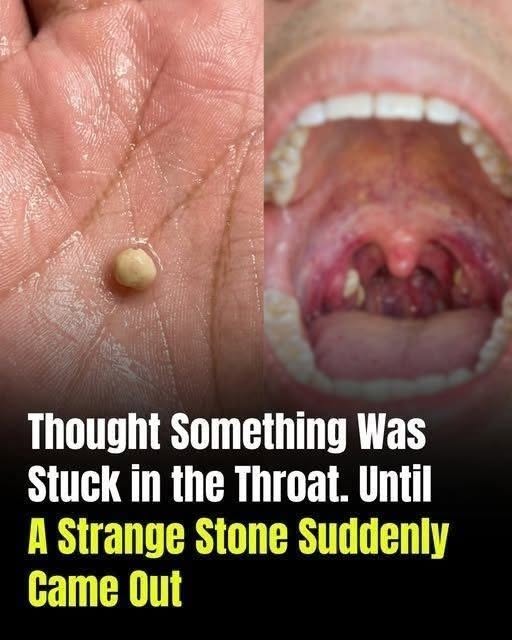
Suddenly felt like something was stuck in your throat, then a strange lump came out — what was it?
One possible explanation is a tonsil stone (tonsillolith). These small, sometimes surprisingly large, white or yellowish lumps can develop inside the tonsils and suddenly come loose, creating the sensation that something is stuck in the throat.
However, the appearance, texture, smell, and circumstances in which the lump came out can help identify what it actually was.
Let’s look at the possibilities in detail.
1. Tonsil stones (tonsilloliths)


One common possibility
Tonsil stones are small, hardened deposits that develop in tiny pockets and crevices of the tonsils.
Your tonsils are two soft tissues located at the back of your throat, one on each side.
How do tonsil stones form?
Your tonsils have small openings called tonsillar crypts. These openings can collect:
-
Food particles.
-
Dead cells from the lining of your mouth.
-
Mucus.
-
Bacteria.
-
Other microscopic debris.
Over time, this material can accumulate, become compacted, and sometimes harden due to mineral deposits such as calcium.
Eventually, a small lump forms.
Why does it suddenly feel like something is stuck?
A tonsil stone can remain hidden inside a tonsil crypt for days or even weeks.
When it becomes loose, it may:
-
Move toward the back of your throat.
-
Create a foreign-body sensation.
-
Make you feel as though something is caught when swallowing.
-
Trigger repeated swallowing or coughing.
-
Suddenly pop out while coughing, clearing your throat, or swallowing.
Once the stone comes out, the uncomfortable sensation may disappear.
What does a tonsil stone look and smell like?

Typical characteristics include:
-
Color: White, cream, pale yellow, or occasionally yellowish-grey.
-
Shape: Small, irregular, roundish, or crumb-like.
-
Texture: Soft, crumbly, or sometimes surprisingly hard.
-
Smell: Often very unpleasant or foul-smelling.
-
Size: Usually a few millimeters, although larger stones can occur.
One characteristic feature is their unpleasant odor, which is caused partly by sulfur-producing bacteria.
Symptoms associated with tonsil stones
You might experience:
-
A persistent feeling that something is stuck in your throat.
-
Bad breath that does not improve with brushing.
-
A bad taste in your mouth.
-
Mild throat irritation.
-
Occasional coughing.
-
Discomfort when swallowing.
-
White or yellow spots on your tonsils.
Some people have tonsil stones without experiencing any symptoms.
2. Thick mucus or a mucus plug


Another possibility is a thick piece of mucus that became lodged in the back of your throat.
Mucus is naturally produced by your nose, sinuses, and respiratory tract. Its job is to trap dust, bacteria, and other particles.
Sometimes mucus becomes unusually thick and sticky.
Why does this happen?
Common causes include:
-
Allergies.
-
Sinus infections.
-
Colds and respiratory infections.
-
Postnasal drip.
-
Dehydration.
-
Exposure to smoke, dust, or other irritants.
When mucus accumulates, it can create a sensation of something stuck in your throat.
You may swallow repeatedly without relief because the mucus is too thick to move easily.
Eventually, coughing or forceful throat clearing may bring out a lump of mucus.
What does it look like?
-
Clear or transparent jelly-like material.
-
White, cloudy, or yellowish mucus.
-
Sticky, stretchy material.
-
A soft, slippery lump.
-
Occasionally, a thick rubbery piece.
Unlike a typical tonsil stone, mucus is generally moist, slippery, and stretchy rather than crumbly or hard.
3. A small piece of food or other debris

Sometimes a small piece of food can become temporarily lodged in the throat or esophagus.
For example:
-
A piece of meat.
-
Bread or rice.
-
A small piece of vegetable.
-
A food particle mixed with saliva.
This can cause an immediate sensation that something is stuck.
However, there is an important distinction: a piece of food that becomes lodged in the esophagus can represent a medical problem, particularly if swallowing remains difficult.
Do not try to force it down with more food or repeated large gulps of water.
If you cannot swallow saliva, are drooling, or have breathing difficulty, seek emergency medical attention.
4. A small piece of material from an inflamed tonsil

If you recently experienced a sore throat, tonsillitis, or a throat infection, the lump might have been material from an inflamed tonsil.
During tonsil infections, white or yellow material can accumulate on the tonsil surface.
This material may include:
-
Dead inflammatory cells.
-
White blood cells.
-
Bacteria.
-
Cellular debris.
-
Fluid and mucus.
Unlike tonsil stones, this material may appear as a coating or soft patches rather than a separate, compact lump.
If accompanied by fever, significant throat pain, swollen tonsils, or difficulty swallowing, you should be examined by a healthcare professional.
5. Globus sensation (the feeling of a lump without an actual object)
Sometimes the throat feels as though something is stuck even when no physical object is present.
This is called globus sensation.
Possible contributing factors include:
-
Acid reflux.
-
Throat irritation.
-
Postnasal drip.
-
Muscle tension.
-
Stress and anxiety.
It is important to understand that globus sensation itself does not produce a physical lump that comes out. Therefore, if you actually expelled a solid or jelly-like object, another explanation may be more likely.
How to identify what came out
The physical characteristics of the material can provide useful clues.

Tonsil stone
-
White or yellow.
-
Small, irregular, crumbly or hard.
-
Often has a very unpleasant smell.
-
May feel like a pebble.

Mucus plug
-
Clear, white, or yellow.
-
Slimy, sticky, or stretchy.
-
Usually moist.
-
May resemble jelly.

Tonsil infection material
-
White or yellow patches.
-
Usually soft or creamy.
-
May accompany fever and throat pain.

Food particle
-
Resembles something recently eaten.
-
Texture depends on the food.
-
Often follows eating or swallowing.
What should you do after the lump comes out?
If you suspect it was a tonsil stone and you can breathe and swallow normally:
-
Rinse your mouth with warm salt water.
-
Drink sufficient water.
-
Maintain regular brushing and tongue cleaning.
-
Gargle gently to help remove loose debris.
-
Avoid repeatedly poking or scraping your tonsils.
-
Arrange a dental or ENT examination if the problem keeps recurring.
Tonsil stones generally do not require antibiotics or surgery. Persistent or troublesome cases can be assessed by an ENT specialist.
When should you seek medical attention?
Important warning signs
Seek emergency medical care if you experience:
-
Difficulty breathing or noisy breathing.
-
Inability to swallow saliva or drooling.
-
Significant swelling of the throat.
-
Severe or rapidly worsening throat pain.
-
Difficulty speaking or opening your mouth.
-
Suspected sharp or dangerous foreign object.
If the sensation of something stuck persists after the lump comes out, or you continue having difficulty or pain with swallowing, arrange prompt medical evaluation. A scratch or injury can sometimes leave a foreign-body sensation even after the object has passed.
So, what was it most likely?
Based on the sequence you described:
-
You suddenly felt something stuck in your throat.
-
Swallowing repeatedly did not make the sensation disappear.
-
A strange lump eventually came out.
A tonsil stone is one plausible explanation, particularly if the lump was white or yellow, compact, and foul-smelling. If it was slippery, transparent, and jelly-like, thick mucus may be more likely.
The description alone cannot establish the diagnosis.
Let me help identify exactly what came out
I have five questions that can narrow it down considerably.
1. What color was the lump?
2. What was its texture?
3. Did it have a bad smell?
4. Approximately how large was it?
5. What happened after it came out?
You can also upload a photograph of the lump if you have one.
With these details, I can explain which possibility fits best, why it happened, whether it is generally harmless, and how to prevent it from happening again.