-
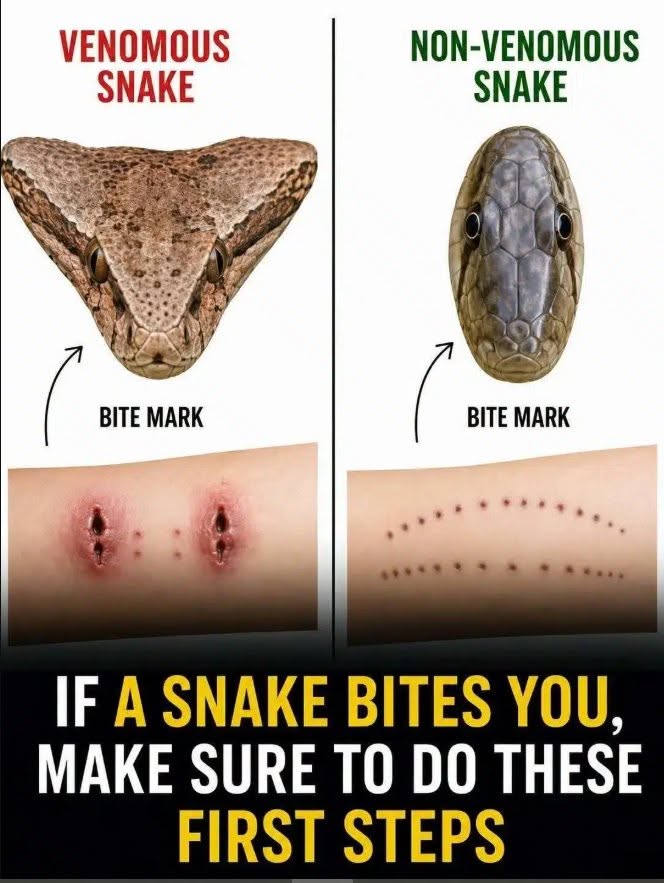
Even if the snake appears harmless or the bite does not hurt, medical evaluation is important because symptoms of venom poisoning may be delayed.
1. Immediate First Aid After a Snake Bite
Follow these steps as soon as possible:
Step 1: Move Away From the Snake
-
Move the victim away from the snake to prevent another bite.
-
Do not attempt to catch, kill, or handle the snake.
-
If safe, remember its color, size, pattern, and shape.
-
Take a photograph from a safe distance only if possible.
-
Do not waste time searching for or identifying the snake.
Step 2: Keep the Person Calm
-
Reassure the victim and encourage them to remain calm.
-
Panic and physical activity can increase heart rate and potentially accelerate venom circulation.
-
Ask the person to sit or lie down.
-
Avoid unnecessary walking or movement.
Step 3: Call Emergency Medical Services
-
Call your local emergency number immediately (911 in the United States).
-
Explain that a snake bite has occurred.
-
Give the exact location and describe the person’s symptoms.
-
Request an ambulance rather than allowing the victim to walk to a hospital.
Do not wait for symptoms to develop before seeking medical attention.
Step 4: Keep the Bitten Limb Still
-
Keep the bitten arm or leg as still as possible.
-
Use a splint or other firm support to immobilize the limb.
-
Avoid unnecessary movement of the affected body part.
-
Do not massage or manipulate the bite area.
Step 5: Remove Tight Clothing and Jewelry
-
Remove rings, bracelets, watches, shoes, and tight clothing near the bite.
-
Swelling may develop quickly.
-
Removing these items early can prevent additional pressure and circulation problems.
Step 6: Keep the Bite Area in a Neutral Position
-
Support the bitten limb comfortably.
-
Avoid excessive movement or pressure.
-
Do not elevate the limb above the heart as a routine snakebite treatment.
-
Follow emergency dispatcher’s instructions.
Step 7: Clean and Cover the Wound
-
If medical help is on the way and it does not delay transport, gently wash the bite with soap and clean water.
-
Cover the wound with a clean, dry dressing.
-
Do not scrub, rub, or massage the bite.
-
Avoid applying creams, oils, herbal medicines, or other substances.
Step 8: Observe and Record Symptoms
Watch the victim carefully while waiting for medical assistance.
If possible:
-
Note the exact time of the bite.
-
Observe whether swelling or discoloration is spreading.
-
Record when symptoms begin.
-
Tell medical professionals about any changes in breathing, consciousness, or pain.
You can mark the edge of visible swelling with a pen and write the time next to it, without delaying medical care.
CDC+12. Symptoms and Warning Signs After a Snake Bite
Symptoms vary depending on the snake species, the amount of venom injected, and the person’s health.
A. Local Symptoms
These affect the area around the bite.
-
Pain or burning sensation.
-
Swelling around the bite.
-
Redness or discoloration.
-
Bruising.
-
Bleeding from the bite.
-
Blisters around the affected area.
-
Tissue damage in severe cases.
B. General Symptoms
Venom may affect other parts of the body.
-
Nausea and vomiting.
-
Dizziness or weakness.
-
Excessive sweating.
-
Headache.
-
Abdominal pain.
-
Tingling or numbness.
-
Increased heart rate.
C. Severe and Life-Threatening Symptoms
Medical emergency
-
Difficulty breathing.
-
Drooping eyelids or blurred vision.
-
Difficulty speaking or swallowing.
-
Muscle weakness or paralysis.
-
Severe bleeding.
-
Fainting or unconsciousness.
-
Signs of shock, such as pale, cold, clammy skin.
-
Rapidly worsening swelling.
These symptoms require immediate emergency treatment. Do not wait for all symptoms to appear.
Mayo Clinic+23. What NOT to Do After a Snake Bite
Some traditional snakebite treatments can make the injury worse.
1. Do not apply a tourniquet.
A tight tourniquet can restrict blood circulation and cause additional tissue damage.
2. Do not cut the wound.
Cutting the bite will not remove venom and may cause serious bleeding or infection.
3. Do not suck out the venom.
Mouth suction and commercial suction devices do not effectively remove venom and may worsen injury.
4. Do not apply ice.
Ice can cause additional tissue damage and does not neutralize venom.
5. Do not allow unnecessary walking or exercise.
Physical activity can increase venom circulation.
6. Do not use traditional remedies.
Avoid herbs, chemicals, alcohol, electric shocks, or other unproven treatments.
cpr.heart.org+2Important: Do not use pressure-immobilization bandages routinely for snakebites in the United States. They can be harmful for pit viper bites, such as rattlesnake and copperhead bites. Recommendations differ in some countries and for particular snake species, so follow local expert guidance.
cpr.heart.org+24. What Happens at the Hospital?
Hospital treatment is essential because some snake venoms can affect the blood, nervous system, muscles, kidneys, and other organs.
Doctors may perform the following procedures:
1. Medical Examination
-
Examine the bite wound.
-
Check blood pressure, pulse, and breathing.
-
Assess swelling, pain, and other symptoms.
-
Evaluate neurological function.
2. Blood Tests
Doctors may order tests to check:
-
Blood clotting ability.
-
Platelet count.
-
Kidney function.
-
Signs of internal bleeding.
-
Other evidence of venom-related injury.
3. Antivenom Treatment
Antivenom is the main specific treatment for serious venomous snakebites when indicated.
-
It contains antibodies that neutralize specific snake venom toxins.
-
It is administered by healthcare professionals, usually through an IV.
-
The type and amount depend on the snake species, clinical condition, and response to treatment.
-
Patients are monitored for possible allergic reactions and other complications.
4. Additional Supportive Treatment
Depending on the patient’s condition, doctors may provide:
-
IV fluids.
-
Oxygen or breathing support.
-
Treatment for shock.
-
Blood products when necessary.
-
Pain management.
-
Wound care and monitoring.
-
Treatment for kidney or other organ complications.
Not every snakebite requires antivenom. Doctors determine treatment based on the symptoms, examination, and laboratory findings.
cpr.heart.org+25. Special Precautions for Children and Older Adults
Snakebites can be particularly dangerous for children because a similar amount of venom may have a greater effect on a smaller body.
Important precautions include:
-
Seek emergency medical attention immediately.
-
Keep the child calm and prevent unnecessary movement.
-
Do not allow the child to walk or run.
-
Remove tight clothing, shoes, and jewelry.
-
Do not give medicines or home remedies without medical advice.
-
Monitor breathing and consciousness.
-
Follow emergency medical instructions.
Older adults and people with existing medical vulnerabilities may also need closer monitoring.
6. How to Identify a Potentially Venomous Snake
In the United States, some medically important venomous snakes include:
-
Rattlesnake: Often has a rattle at the end of its tail.
-
Copperhead: Usually has copper-colored markings with hourglass-shaped bands.
-
Cottonmouth: Often has a dark body and is associated with aquatic habitats.
-
Coral snake: Has distinctive colored bands, although patterns vary by species.
Never approach a snake to identify it. A photograph taken from a safe distance may help medical professionals, but identification should never delay treatment.
7. How to Prevent Snake Bites
Prevention is always better than treatment.
Follow these safety precautions:
-
Wear protective footwear and long trousers when walking in grassy or wooded areas.
-
Avoid putting your hands into holes, bushes, or piles of leaves.
-
Use a flashlight when walking outdoors at night.
-
Keep your surroundings clean and remove unnecessary piles of wood and debris.
-
Never attempt to touch, catch, or kill snakes.
-
Keep children and pets away from snakes.
-
Check shoes and outdoor equipment before using them.
-
Learn about the venomous snake species found in your area.
8. Quick Snake Bite First Aid Checklist
Use this checklist to remember the most important actions.
First aid action checklist
0/9 completed
9. Important Things to Remember
-
Every suspected venomous snakebite needs urgent medical assessment.
-
Do not wait for swelling, pain, or other symptoms.
-
Keep the victim calm and minimize movement.
-
Never cut, suck, squeeze, or apply ice to the wound.
-
Do not apply a tourniquet.
-
Antivenom may be necessary and should be administered by qualified medical professionals.
-
Never delay hospital treatment to identify or capture the snake.
10. Emergency Contacts and Reliable Information
If you are in the United States:
-
911: Emergency medical assistance.
-
Poison Control: 1-800-222-1222: Poison-related advice and assistance.
For further information, consult:
Conclusion
A snakebite can become life-threatening if proper treatment is delayed. The most important first steps are to move away from the snake, call emergency services, keep the victim calm and still, immobilize the affected limb, and seek immediate medical care.
Remember: Do not attempt home treatment for a potentially venomous snakebite. Prompt professional medical care and appropriate antivenom can save lives.
-