-
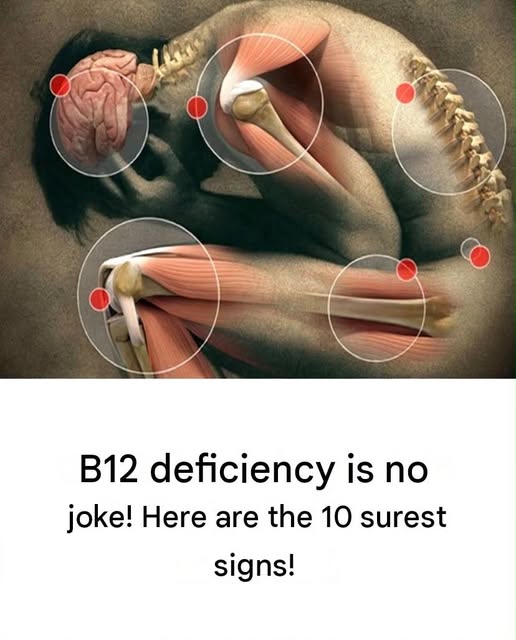
Vitamin B12 deficiency can be serious because B12 is essential for healthy red blood cells, nerve function, and DNA production. The symptoms can develop gradually and sometimes be mistaken for ordinary tiredness or aging.
10 important signs of vitamin B12 deficiency
1. Persistent fatigue and weakness
You may feel unusually tired, weak, or drained, even after a full night’s sleep. B12 deficiency can cause anemia, reducing oxygen delivery to tissues.
2. Pale or yellowish skin
Anemia may make the skin look paler than usual. In some cases, the breakdown of red blood cells can cause a subtle yellowish tint.
3. Tingling or numbness
A pins-and-needles sensation in the hands or feet can signal nerve damage. This is an important symptom not to ignore.
4. Balance or walking problems
B12 deficiency can affect the nerves involved in coordination, sometimes causing unsteadiness or difficulty walking.
5. Memory or concentration difficulties
You may experience brain fog, forgetfulness, or difficulty concentrating. These symptoms have many possible causes, including B12 deficiency.
6. A sore, red, or smooth tongue
Glossitis can make your tongue swollen, tender, or unusually smooth. Mouth ulcers may also occur.
7. Dizziness or lightheadedness
Anemia associated with B12 deficiency may cause dizziness, especially when standing up or exerting yourself.
8. Mood changes
Irritability, low mood, or depressive symptoms can sometimes accompany B12 deficiency.
9. Digestive problems or reduced appetite
Some people experience a reduced appetite, constipation, diarrhea, or unexplained weight loss.
10. Shortness of breath or heart palpitations
When B12 deficiency causes significant anemia, you may become breathless with activity or notice a racing heartbeat.
Who is at greater risk?
You may be more likely to develop B12 deficiency if you:
-
Follow a vegan diet without reliable B12 supplementation.
-
Are over age 50 and absorb less B12 from food.
-
Have pernicious anemia, celiac disease, or certain digestive conditions or surgeries.
-
Take metformin or long-term acid-reducing medicines.
-
Have difficulty absorbing nutrients.
What should you do if you recognize these signs?
-
Get tested. A healthcare professional may recommend a complete blood count and a vitamin B12 blood test. Sometimes methylmalonic acid testing helps clarify borderline results.
-
Don’t rely on symptoms alone. These signs are not proof of B12 deficiency, and other conditions can cause the same symptoms.
-
Don’t delay assessment. Untreated B12 deficiency can cause nerve damage that may become permanent. A clinician can recommend appropriate treatment, including tablets or injections depending on the cause and severity.
Seek urgent medical attention for sudden or severe weakness, new difficulty walking, chest pain, or severe shortness of breath.
The most important takeaway: Persistent fatigue combined with tingling, numbness, or balance problems deserves medical evaluation. Vitamin B12 deficiency is treatable, and early diagnosis can help prevent lasting complications.
-