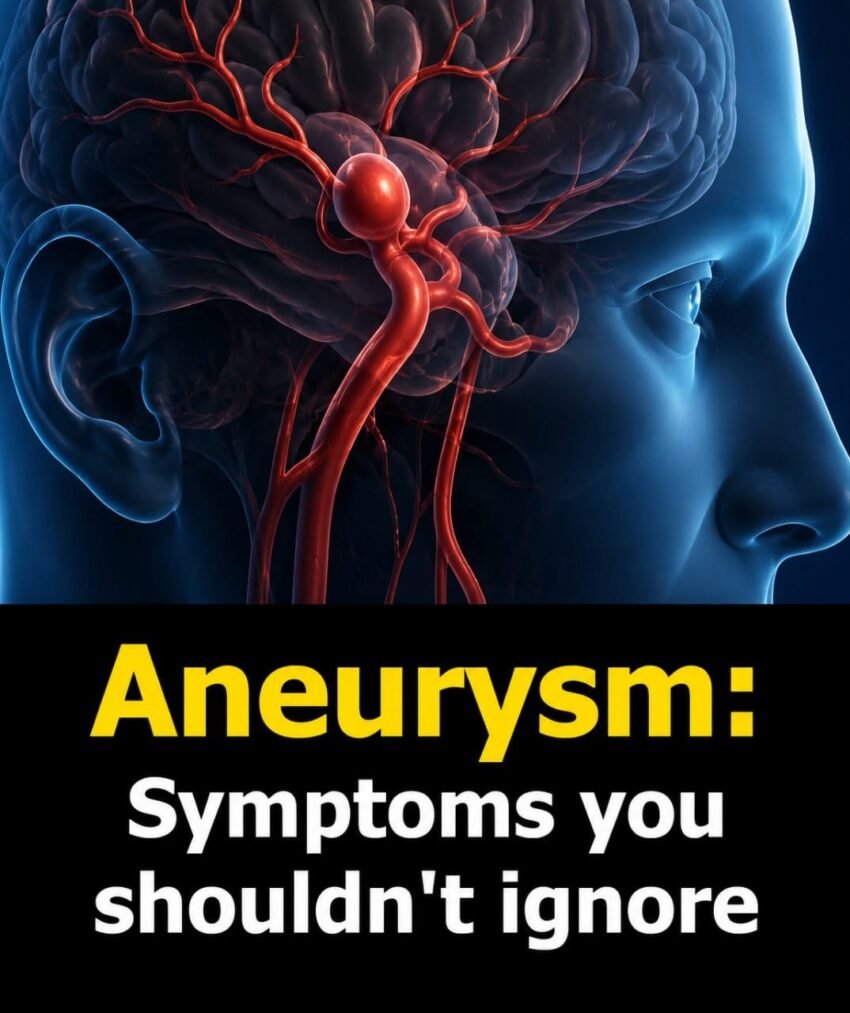
An Aneurysm is a weakened area in the wall of a blood vessel that bulges outward. Some aneurysms remain small and never cause problems, while others can grow, leak, or rupture. A ruptured aneurysm is a medical emergency that can lead to severe internal bleeding, permanent disability, or death.
Types of aneurysms
The most common types include:
- Brain aneurysm: Forms in an artery in the brain.
- Abdominal aortic aneurysm: Occurs in the large artery (aorta) in the abdomen.
- Thoracic aortic aneurysm: Develops in the aorta within the chest.
- Peripheral aneurysm: Can occur in arteries of the legs, groin, neck, or arms.
Warning signs you should never ignore
1. Sudden, severe headache (brain aneurysm)
This is one of the most important warning signs.
People often describe it as:
- “The worst headache of my life”
- A thunderclap headache that reaches maximum intensity within seconds
- A headache unlike any they’ve had before
This may indicate a ruptured brain aneurysm.
2. Vision changes
Watch for:
- Double vision
- Blurred vision
- Loss of vision
- Drooping eyelid
- Dilated pupil
These can occur if an aneurysm presses on nerves around the eye.
3. Severe neck pain or stiffness
A ruptured brain aneurysm can cause:
- Neck stiffness
- Pain when moving the neck
- Sensitivity to light
4. Sudden confusion or difficulty speaking
Signs include:
- Trouble understanding speech
- Slurred speech
- Confusion
- Memory problems
These symptoms require immediate medical evaluation.
5. Weakness or numbness
Especially if it affects only one side of the body:
- Weak arm or leg
- Facial drooping
- Difficulty walking
- Loss of coordination
6. Loss of consciousness
A ruptured aneurysm may cause:
- Fainting
- Collapse
- Difficulty waking up
- Coma
This is a life-threatening emergency.
7. Seizures
New-onset seizures, especially together with a severe headache or confusion, may be a sign of bleeding in the brain.
8. Sudden severe chest pain
This can indicate a thoracic aortic aneurysm that is tearing or rupturing.
The pain may:
- Be sharp or tearing
- Spread to the back, neck, or shoulders
- Come on suddenly
9. Severe abdominal or back pain
An abdominal aortic aneurysm may cause:
- Deep abdominal pain
- Lower back pain
- Pain in the side
- Pain that doesn’t improve
If the aneurysm ruptures, the pain is usually sudden and extremely severe.
10. Pulsating lump in the abdomen
Some people with an abdominal aortic aneurysm notice:
- A throbbing sensation near the belly button
- A pulsating abdominal mass
Not everyone can feel this.
11. Rapid heartbeat, dizziness, or shock
If an aneurysm ruptures, symptoms may include:
- Fast heartbeat
- Pale, clammy skin
- Severe dizziness
- Low blood pressure
- Collapse
This requires emergency treatment immediately.
Risk factors
Your risk is higher if you:
- Smoke or have smoked
- Have high blood pressure
- Have high cholesterol
- Are over age 65
- Have a family history of aneurysms
- Have certain inherited connective tissue disorders
- Have Atherosclerosis
- Use stimulant drugs such as cocaine
When to seek emergency care
Call your local emergency services immediately if you or someone else develops:
- A sudden, severe “worst-ever” headache
- Loss of consciousness
- Sudden weakness or paralysis
- Difficulty speaking
- Sudden vision loss
- Severe chest pain
- Severe abdominal or back pain with dizziness or fainting
Do not try to drive yourself if these symptoms are severe.
How aneurysms are diagnosed
Doctors may use:
- Computed tomography angiography
- Magnetic resonance angiography
- Cerebral angiography
- Ultrasound (commonly for abdominal aortic aneurysms)
Treatment
Treatment depends on the aneurysm’s size, location, and risk of rupture. It may include:
- Careful monitoring with regular imaging
- Blood pressure control
- Quitting smoking
- Surgery to repair the aneurysm
- Minimally invasive procedures such as endovascular repair or coiling (for selected aneurysms)
Can aneurysms be prevented?
You can lower your risk by:
- Not smoking
- Controlling blood pressure
- Managing cholesterol and diabetes
- Exercising regularly
- Eating a heart-healthy diet
- Maintaining a healthy weight
- Discussing screening with your healthcare provider if you have a strong family history or are at increased risk
Key takeaway
Many aneurysms cause no symptoms until they become large or rupture. Seek emergency medical care immediately if you experience a sudden, severe headache, sudden neurological symptoms (such as weakness or difficulty speaking), severe chest pain, or severe abdominal or back pain—these can be signs of a life-threatening aneurysm. Early diagnosis and treatment can greatly improve outcomes.