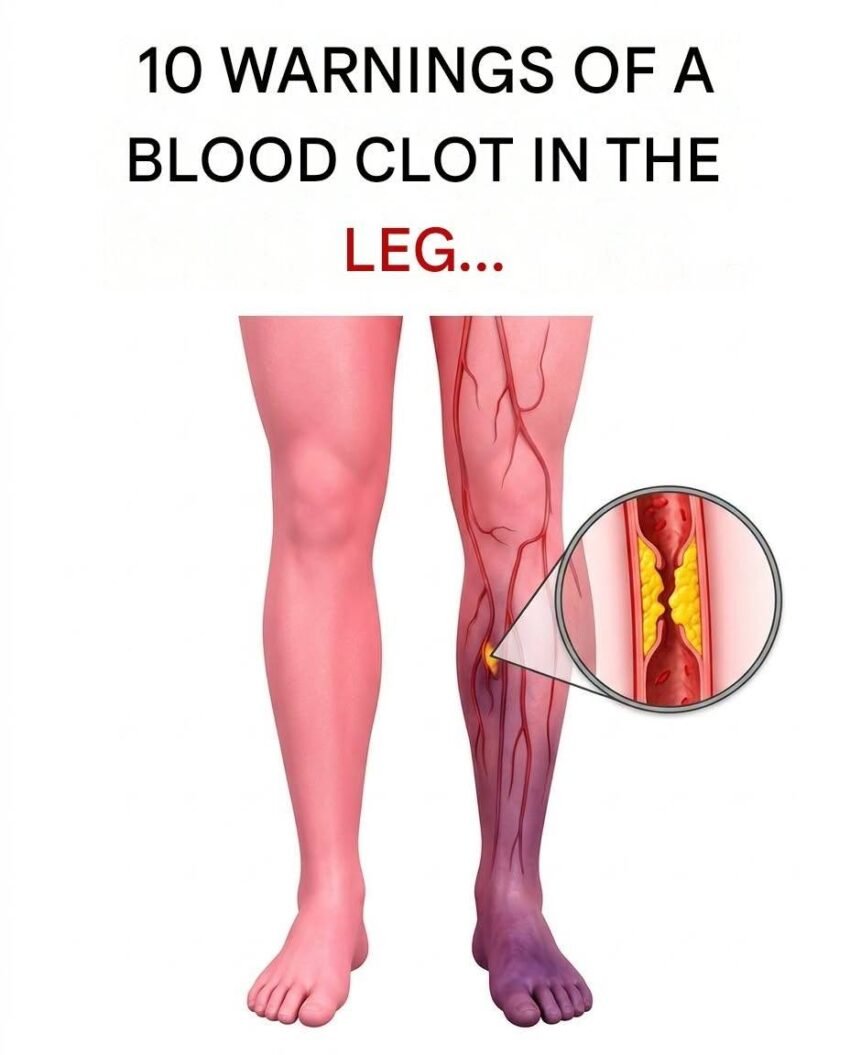
Blood clots can be life-threatening if they block blood flow to vital organs. Some clots are harmless and help stop bleeding after an injury, but others form inside blood vessels without a good reason and require urgent medical attention.
Common Types of Dangerous Blood Clots
1. Deep Vein Thrombosis (DVT)
A DVT is a blood clot that usually forms in a deep vein of the leg, thigh, or pelvis. Less commonly, it can occur in the arm.
Signs and symptoms:
- Swelling in one leg (or one arm)
- Pain or tenderness, often described as a cramp or soreness
- Warm skin over the affected area
- Red or discolored skin
- Enlarged surface veins
Why it’s dangerous:
A piece of the clot can break off and travel to the lungs, causing a pulmonary embolism.
2. Pulmonary Embolism (PE)
A pulmonary embolism occurs when a blood clot travels to the lungs and blocks blood flow.
Signs and symptoms:
- Sudden shortness of breath
- Sharp chest pain, especially when taking a deep breath
- Rapid heartbeat
- Cough, sometimes with bloody mucus
- Feeling lightheaded, faint, or dizzy
- Low oxygen levels (blue lips or fingertips in severe cases)
This is a medical emergency. Call emergency services immediately if these symptoms occur.
3. Stroke (Blood Clot in the Brain)
A clot blocking blood flow to the brain causes an ischemic stroke.
Warning signs (remember FAST):
- Face drooping
- Arm weakness
- Speech difficulty
- Time to call emergency services
Other symptoms may include:
- Sudden confusion
- Vision problems
- Difficulty walking
- Severe dizziness
- Sudden severe headache
4. Heart Attack
A clot can block blood flow to the heart muscle.
Symptoms:
- Chest pressure, tightness, or pain
- Pain spreading to the arm, shoulder, neck, jaw, or back
- Shortness of breath
- Cold sweat
- Nausea or vomiting
- Lightheadedness
Immediate medical treatment greatly improves outcomes.
Who Is at Higher Risk?
Risk factors include:
- Long periods of sitting (such as long flights or bed rest)
- Recent surgery or major injury
- Pregnancy and the weeks after childbirth
- Smoking
- Obesity
- Cancer and some cancer treatments
- Birth control pills or hormone therapy containing estrogen
- Older age
- Family history of blood clots
- Certain inherited clotting disorders
How to Help Reduce Your Risk
- Stay physically active.
- Move your legs regularly during long trips.
- Drink enough fluids.
- Maintain a healthy weight.
- Avoid smoking.
- Take prescribed blood-thinning medication exactly as directed if your doctor recommends it.
- Follow your healthcare provider’s advice after surgery or hospitalization.
When to Seek Emergency Care
Seek emergency medical attention immediately if you have:
- Sudden shortness of breath
- Chest pain
- Coughing up blood
- Sudden weakness or numbness on one side of the body
- Difficulty speaking or understanding speech
- Fainting
- A swollen, painful, warm, red leg—especially if symptoms affect only one leg
These symptoms can indicate a serious blood clot that requires prompt treatment.
Important: Many conditions can cause symptoms similar to blood clots, so symptoms alone cannot confirm the diagnosis. Healthcare professionals use tests such as ultrasound, CT scans, blood tests (including D-dimer in some cases), and other imaging to determine whether a blood clot is present. If you think you may have a blood clot, seek medical evaluation promptly rather than trying to diagnose it yourself.