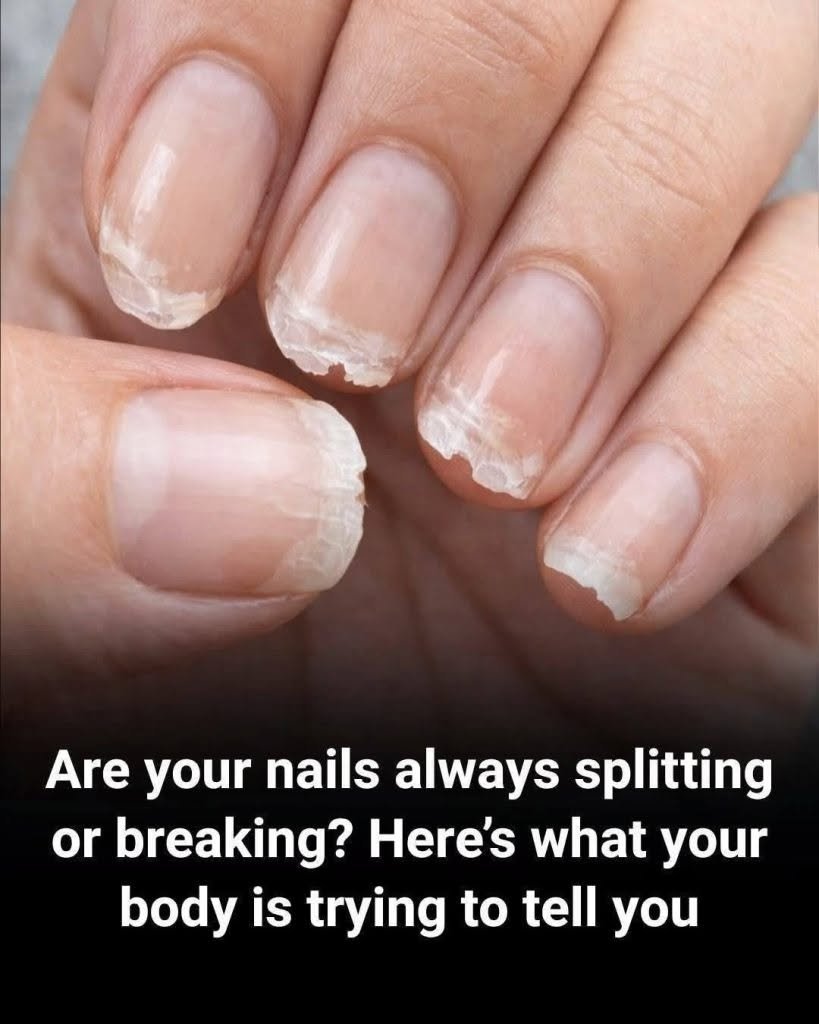
Brittle or fragile nails (also called onychoschizia when nails split and onychorrhexis when they develop lengthwise ridges and cracks) are common. Sometimes they are caused by everyday habits, but they can also be a clue to nutritional deficiencies, medical conditions, or aging.
What healthy nails should look like
Healthy nails are usually:
- Smooth and consistent in color
- Strong but flexible
- Free of deep cracks or splitting
- Growing steadily (fingernails typically grow about 3 mm per month)
If your nails have become brittle over weeks or months, it’s worth considering what may have changed.
Common causes of brittle nails
1. Frequent exposure to water and chemicals (most common)
Repeated cycles of getting nails wet and then drying out can weaken them.
Examples include:
- Washing dishes without gloves
- Frequent handwashing
- Swimming often
- Using harsh soaps or detergents
- Regular use of nail polish remover, especially those containing acetone
Signs:
- Peeling layers
- Splitting at the tips
- Dry-looking nails
2. Aging
As people age, nails naturally lose some moisture and become more brittle.
This is a normal process and often affects both fingernails and toenails.
3. Iron deficiency
Low iron can reduce oxygen delivery to tissues, including the nail matrix where nails grow.
Signs may include:
- Thin, brittle nails
- Spoon-shaped nails (curving upward)
- Fatigue
- Pale skin
- Dizziness
- Shortness of breath
Iron deficiency is one of the more common nutritional causes of nail changes.
4. Vitamin B12 deficiency
Vitamin B12 is important for healthy cell production.
Possible symptoms:
- Brittle nails
- Tingling or numbness in the hands and feet
- Memory problems
- Fatigue
- Weakness
5. Folate deficiency
Low folate can affect rapidly growing tissues.
Symptoms may include:
- Weak nails
- Fatigue
- Mouth sores
- Pale skin
6. Biotin deficiency (rare)
Biotin (vitamin B7) deficiency is uncommon, but when it occurs it can contribute to:
- Brittle nails
- Hair thinning
- Skin rash
Most people get enough biotin through their diet.
7. Zinc deficiency
Zinc is important for nail growth.
Signs include:
- Slow-growing nails
- White spots (although these are more often due to minor injury)
- Brittle nails
- Frequent infections
- Slow wound healing
8. Protein deficiency
Nails are primarily made of keratin, a protein.
Not getting enough protein can lead to:
- Thin, weak nails
- Slow nail growth
- Hair loss
- Muscle loss
9. Low thyroid hormone (hypothyroidism)
An underactive thyroid slows many body processes.
Symptoms include:
- Dry, brittle nails
- Dry skin
- Weight gain
- Feeling cold
- Constipation
- Fatigue
- Hair thinning
10. Poor circulation
Reduced blood flow to the nail matrix can weaken nail growth.
This may occur in:
- Diabetes
- Peripheral artery disease
- Certain autoimmune conditions
Skin conditions that affect nails
Psoriasis
Nail psoriasis can cause:
- Pitting (small dents)
- Thickened nails
- Crumbling nails
- Nail separation from the nail bed
Eczema
Chronic eczema around the hands may lead to:
- Brittle nails
- Rough nail surface
- Nail ridges
Fungal nail infection
Usually affects toenails more than fingernails.
Signs include:
- Thick nails
- Yellow or brown discoloration
- Brittle, crumbly nails
- Distorted nail shape
Autoimmune diseases
Conditions such as:
- Systemic lupus erythematosus
- Rheumatoid arthritis
- Sjögren syndrome
may sometimes affect nail health through inflammation or reduced blood flow.
Hormonal changes
Hormonal fluctuations during:
- Pregnancy
- Menopause
- Thyroid disorders
can alter nail strength and growth.
Dehydration
Not drinking enough fluids does not usually cause brittle nails by itself, but dehydration can contribute to dryness, especially alongside frequent water or chemical exposure.
Medications
Some medicines can weaken nails, including:
- Certain chemotherapy drugs
- Oral retinoids (used for acne)
- Some medications that affect the immune system
What brittle nails may be telling you
| Nail appearance | Possible explanation |
|---|---|
| Peeling in layers | Excess water exposure, chemicals, aging |
| Vertical ridges | Aging, dehydration, nutritional deficiency (sometimes) |
| Spoon-shaped nails | Iron deficiency |
| Thick, yellow, crumbly nails | Fungal infection |
| Pitted nails | Psoriasis |
| White lines across several nails | Illness, injury, or certain medications |
| Very slow nail growth | Thyroid problems, poor nutrition, aging |
How to improve nail health
You can often strengthen nails by:
- Eating enough protein
- Including iron-rich foods (lean meats, beans, lentils, spinach)
- Getting adequate zinc (seafood, meat, nuts, seeds)
- Eating foods with B vitamins (eggs, dairy, fish, whole grains)
- Moisturizing your hands and nails daily
- Wearing gloves when cleaning or washing dishes
- Limiting acetone-based nail polish remover
- Avoiding biting or picking at nails
- Keeping nails trimmed to reduce splitting
If you suspect a nutrient deficiency, it’s best to confirm it with a healthcare professional before taking high-dose supplements, as unnecessary supplementation can sometimes be harmful.
When to see a healthcare professional
Consider medical evaluation if:
- Brittle nails develop suddenly without an obvious cause.
- Only one nail changes significantly or becomes persistently deformed.
- You also have fatigue, weight changes, numbness, hair loss, or other symptoms that could suggest an underlying condition.
- Nails become painful, swollen, or show signs of infection.
- The problem persists despite several months of protecting and moisturizing your nails.
A healthcare professional may recommend blood tests such as:
- Complete blood count (CBC)
- Iron studies (including ferritin)
- Vitamin B12 and folate levels
- Thyroid function tests (TSH and free T4)
- Zinc level in selected cases
- Blood glucose testing if diabetes is a concern
Key point
In many people, brittle nails are simply due to repeated exposure to water, detergents, or aging. However, when brittle nails occur alongside symptoms like fatigue, hair loss, weight changes, numbness, or persistent skin changes, they may be an early sign of an underlying nutritional deficiency or medical condition that deserves evaluation.