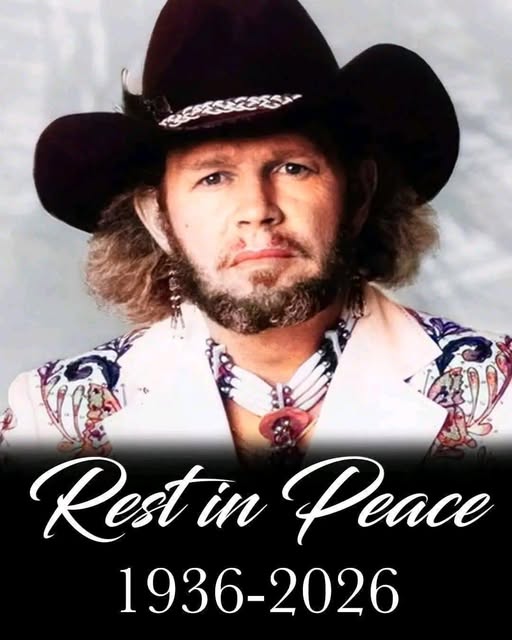
If you mean David Allan Coe, the controversial outlaw-country legend who died at 86, here is a detailed overview based on current reporting.
David Allan Coe, Outlaw Country Legend, Dies at 86
, one of the most unconventional and controversial figures in American country music, died on April 29, 2026, at age 86. His wife, Kimberly Hastings Coe, confirmed his death, and a representative said he died at about 5 p.m. The cause of death was not publicly disclosed.
Coe leaves behind a complicated legacy. He was celebrated as an important figure in the outlaw-country movement, but his career was also marked by controversy, provocative lyrics, a troubled early life and stories about his past that were sometimes difficult to separate from legend.
A difficult childhood and years in prison
David Allan Coe was born September 6, 1939, in Akron, Ohio. His childhood and young adulthood were turbulent, and he spent time in reformatories before serving a prison sentence in Ohio from 1963 to 1967 for possession of burglary tools.
Music became particularly important to him during his years behind bars. Coe later said that music was something prison authorities could not take away from him—he could continue creating songs in his head even when isolated.
After his release in 1967, he headed to Nashville to pursue a career in music. His unusual appearance and personality immediately set him apart from the polished Nashville establishment.
The beginning of his recording career
Coe released his debut album, Penitentiary Blues, in 1970. The record drew heavily on his experiences and established the rough-edged persona that would follow him throughout his career.
He subsequently became associated with the emerging outlaw-country movement, alongside artists such as Willie Nelson and Waylon Jennings. Unlike the conventional Nashville sound, outlaw country emphasized independence, working-class themes, rebelliousness and a less polished musical identity.
Coe became known as the “Mysterious Rhinestone Cowboy,” performing in flamboyant clothing and cultivating an intentionally mysterious image.
His biggest songs
Although Coe’s own recordings made him famous, his songwriting reached an even wider audience through other performers.
One of his best-known compositions was “Take This Job and Shove It,” which became a major hit for Johnny Paycheck in 1977. The song became an enduring working-class anthem and helped define the rebellious attitude associated with country music of the era.
He also wrote “Would You Lay With Me (In a Field of Stone),” which became a major hit for Tanya Tucker in 1974.
His own best-known recordings included:
- “You Never Even Called Me by My Name”
- “The Ride”
- “Mona Lisa Lost Her Smile”
- “Longhaired Redneck”
- “Willie, Waylon and Me”
He was also the first country artist to record “Tennessee Whiskey,” the Dean Dillon–Linda Hargrove composition that later became a country standard through recordings by George Jones and, decades later, Chris Stapleton.
“You Never Even Called Me by My Name”
Perhaps the song most closely associated with Coe himself was “You Never Even Called Me by My Name.”
The song was written by Steve Goodman, with John Prine also involved in its creation, and Coe’s recording became a major country hit in 1975. Its humorous ending became particularly famous because it deliberately poked fun at the conventions and clichés of country music.
A central figure in outlaw country
Coe’s career overlapped with some of the most important names in outlaw country. He toured or performed alongside artists including Willie Nelson, Neil Young and Kid Rock, while developing a fiercely loyal audience of his own.
He also appeared in the influential documentary Heartworn Highways, which documented the Texas/Nashville songwriter scene and the musicians who helped shape the outlaw-country aesthetic.
His appearance—long hair, tattoos, rhinestone clothing and an unpredictable stage persona—made him look very different from the mainstream country stars of the period.
A controversial legacy
Coe’s reputation has always been complicated.
Two of his albums, Nothing Sacred (1978) and Underground Album (1982), contained extremely explicit material. Some of the songs have been criticized for racist, homophobic and sexually offensive content.
Coe later said that some of this material was originally intended for private audiences and that he no longer performed those songs in concert. Nevertheless, the recordings remain an unavoidable part of discussions about his legacy.
His stories about his prison experiences and connections to the Outlaws motorcycle club also contributed to an almost mythical public persona. Journalists noted over the years that some of the stories surrounding his life were exaggerated or difficult to verify.
Later years
Coe continued recording and performing for decades. His final album was released in 2006 and involved members of the heavy-metal band Pantera, including Dimebag Darrell.
His health and public appearances became more limited in later years. His wife said in 2021 that he had been hospitalized with COVID-19, and he subsequently made relatively few public appearances.
He also experienced serious financial and legal problems. In 2016, he was ordered to pay more than $980,000 in restitution to the IRS after pleading guilty to tax-related charges and received three years of probation.
His legacy
David Allan Coe was never an easy artist to categorize. He could be a gifted songwriter, a powerful performer, a rebel, a provocateur and a deeply controversial figure all at once.
His influence is particularly evident in the outlaw-country tradition, where authenticity, independence and rejection of Nashville conventions became central themes. Songs such as “Take This Job and Shove It,” “The Ride,” “You Never Even Called Me by My Name” and “Tennessee Whiskey” ensured that his songwriting would remain part of country music history.
His death at 86 therefore marks the end of one of the strangest and most unconventional careers in American country music—a career in which the line between the man, the musician and the legend was often deliberately blurred.
Sources: · ·
If you meant a different country music legend who died at 86, tell me the name (or paste the headline), and I’ll give you the full detailed article about that person.