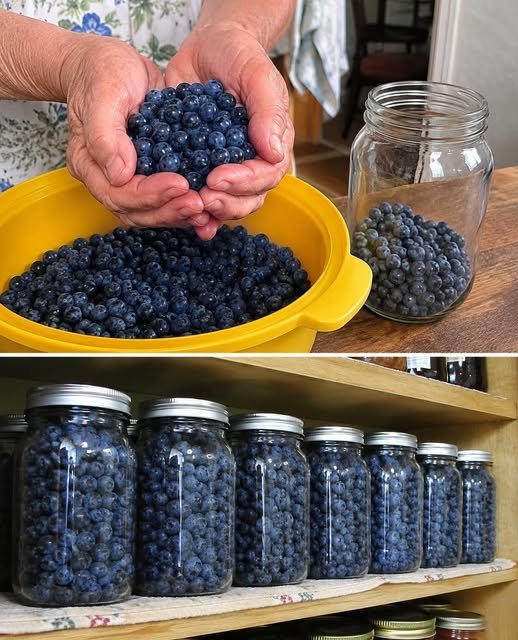
Fresh blueberries can stay good for 1–2 weeks in the refrigerator, but with the right storage methods, they can last several months in the freezer while keeping much of their flavor and nutrition. Here’s a detailed guide on how to store them properly.
Why Blueberries Spoil Quickly
Blueberries naturally contain moisture, and their thin skin can easily be damaged. Mold grows rapidly if berries are:
Stored while wet.
Kept in an airtight container without airflow.
Left at room temperature for too long.
Mixed with spoiled berries.
One moldy berry can quickly spread mold to the rest.
How to Store Fresh Blueberries in the Refrigerator
Step 1: Sort the Berries
As soon as you bring blueberries home:
Remove any moldy, bruised, or squished berries.
Pick out leaves or stems.
This prevents spoilage from spreading.
Step 2: Don’t Wash Them Yet
Wait until you’re ready to eat them.
Washing before storage leaves moisture on the berries, encouraging mold growth.
Step 3: Store in a Breathable Container
The best options include:
The original ventilated container (clamshell).
A shallow container lined with paper towels.
A container with small ventilation holes.
Paper towels absorb excess moisture.
Step 4: Refrigerate Immediately
Store blueberries:
At 32–40°F (0–4°C).
In the main part of the refrigerator, not the door where temperatures fluctuate.
Shelf Life
Fresh-picked: 10–14 days
Store-bought: 7–10 days (sometimes longer if very fresh)
Optional Vinegar Wash (Helps Reduce Mold)
Some people use a vinegar rinse to kill mold spores.
How
Mix:
1 part white vinegar
3 parts water
Soak berries for about 30 seconds.
Rinse thoroughly with clean water.
Dry completely using paper towels.
Refrigerate in a dry container.
If berries are even slightly damp, mold may still develop.
How to Freeze Blueberries for Months
Freezing is the best way to keep blueberries for long-term storage.
Step 1: Wash (Optional)
If you wash them:
Dry them completely.
Moisture creates ice crystals that affect texture.
Step 2: Freeze Individually
Spread berries in a single layer on a baking tray.
Freeze for 2–3 hours.
This prevents them from freezing into one large clump.
Step 3: Transfer to Freezer Bags
Place frozen berries into:
Freezer-safe zip bags
Airtight freezer containers
Remove as much air as possible before sealing.
Label the Date
Write the freezing date on the bag.
Shelf Life
Best quality: 8–12 months
Safe to eat beyond that if continuously frozen, though quality may gradually decline.
Can You Refreeze Them?
If blueberries thawed in the refrigerator and remained cold, they can usually be refrozen, though their texture may become softer.
If they sat at room temperature for more than 2 hours, it’s best to discard them.
How to Tell If Blueberries Have Gone Bad
Discard berries if you notice:
White or gray fuzzy mold
Soft, mushy texture
Leaking juice
Wrinkled skin with unpleasant odor
Fermented or sour smell
Storage Tips That Really Work
✔ Keep berries dry until use.
✔ Remove spoiled berries immediately.
✔ Store in a shallow layer rather than piling them deep.
✔ Avoid sealing wet berries in airtight containers.
✔ Use clean, dry containers.
✔ Refrigerate soon after purchase.
✔ Freeze extras before they begin to soften.
Best Storage Method by Time
Storage Method Temperature Expected Shelf Life
Countertop Room temperature 1–3 days
Refrigerator 32–40°F (0–4°C) 7–14 days
Freezer 0°F (-18°C) or below 8–12 months (best quality)
Freeze-dried (sealed) Cool, dry pantry 1–2 years or more
Key Takeaway
For the longest freshness:
Short term (up to 2 weeks): Store unwashed blueberries in a breathable container lined with paper towels in the refrigerator.
Long term (up to a year): Freeze the berries individually on a tray first, then transfer them to airtight freezer bags. This keeps them easy to use in smoothies, baking, oatmeal, or desserts without thawing the entire batch.