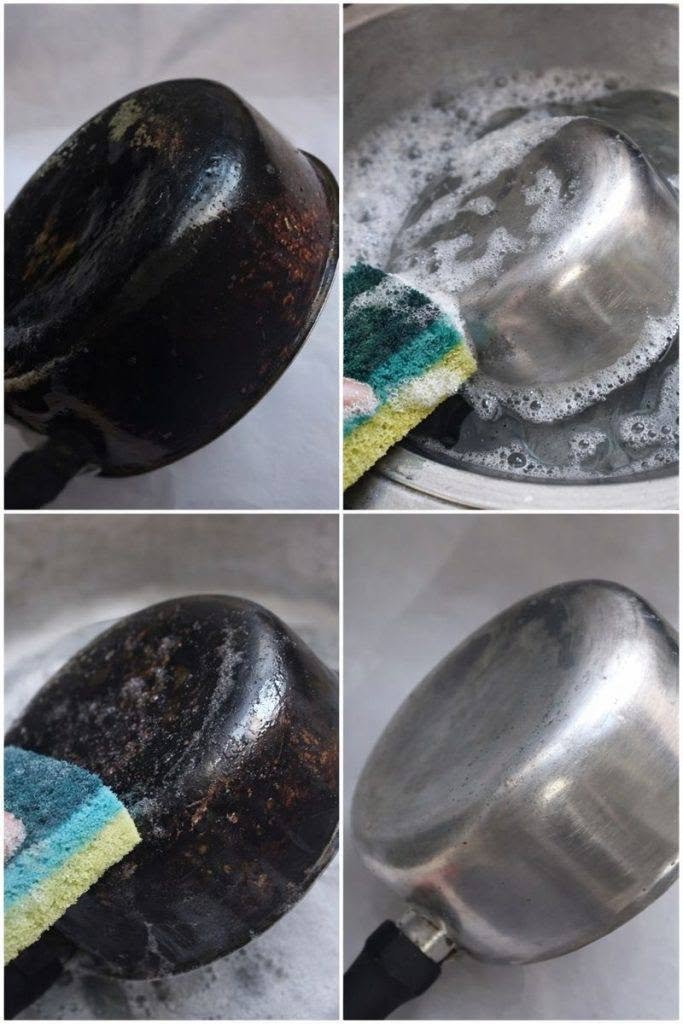
Absolutely — for the underside of pots and pans, especially burnt-on grease and brown/black discoloration, this method works well.
DIY Pot & Pan Bottom Cleaner
Ingredients
- 2 tablespoons baking soda
- 1 tablespoon dishwashing liquid
- 1–2 tablespoons white vinegar
- A few drops of water, if needed
- A non-scratch sponge or soft scrubber
- An old toothbrush for edges and grooves
- Paper towels or a clean cloth
Step-by-step
- Remove loose dirt
- Let the pan cool completely.
- Wipe the underside with a damp cloth to remove loose grease and food particles.
- Make the cleaning paste
- Mix 2 tablespoons baking soda with 1 tablespoon dish soap.
- Add vinegar a little at a time until you have a thick, spreadable paste. It will fizz at first.
- Coat the bottom
- Spread a generous layer over the stained underside.
- Concentrate on areas with burnt grease, brown buildup, or black marks.
- For very stubborn areas, make the layer slightly thicker.
- Let it sit
- Leave the paste on for 20–30 minutes.
- For heavy, old buildup, you can leave it for up to 1 hour, keeping the surface slightly damp.
- Scrub
- Wet your non-scratch sponge and scrub in small circular motions.
- Use an old toothbrush around the rim and any grooves.
- Don’t use excessive force initially—let the paste loosen the buildup.
- For stubborn burnt-on spots
- Sprinkle a little additional baking soda onto the damp surface.
- Add a few drops of dish soap.
- Scrub again with a stronger sponge appropriate for the pan’s material.
- Rinse thoroughly
- Wash away all residue with warm water.
- Follow with normal dish soap to remove any remaining grease.
- Dry and polish
- Dry immediately with a clean towel.
- For stainless-steel cookware, wipe with a microfiber cloth to bring back the shine.
Important: match the method to your pan
- Stainless steel: Baking soda and dish soap are generally suitable; a non-scratch scrubber can handle tougher buildup.
- Aluminum: Avoid prolonged exposure to vinegar or other acidic cleaners, which can discolor the metal. Use a gentler baking-soda paste and rinse promptly.
- Nonstick-coated exterior: Avoid aggressive abrasive scrubbing that could damage the coating.
- Cast iron: Don’t soak it or leave acidic cleaners sitting on it. Clean according to cast-iron care instructions and re-season if necessary.
- Copper: Use a copper-appropriate cleaner rather than treating it like stainless steel.
Tip: If the underside is extremely black and crusted, don’t try to remove everything in one aggressive scrubbing session. Two or three shorter treatments are safer for the cookware and usually produce a better result.