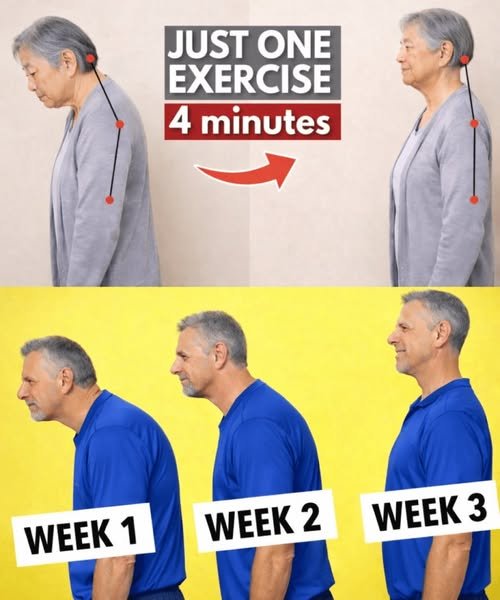
A “4-minute routine” can be a helpful starting point for improving forward head posture, but no exercise program can reliably “fix” it in just a few minutes a day. Also, there is no strong scientific evidence that “Japan’s oldest doctor” developed or endorsed a specific 4-minute routine for correcting forward head posture. Improvements usually come from consistent practice over several weeks or months.
For adults over 60, the safest and most effective approach is a gentle combination of neck mobility, chin tuck exercises, upper back strengthening, and chest stretching.
Why Forward Head Posture Happens After 60
Forward head posture (FHP) occurs when the head gradually moves in front of the shoulders. Every inch (2.5 cm) the head moves forward increases the load on the neck muscles.
Common causes include:
- Looking down at phones and tablets
- Reading for long periods
- Weak upper back muscles
- Tight chest muscles
- Arthritis or age-related spinal changes
- Poor sitting posture
Common Symptoms
- Neck pain and stiffness
- Rounded shoulders
- Headaches
- Shoulder tension
- Difficulty looking upward
- Balance problems in some people
Gentle 4-Minute Daily Routine
Perform these exercises slowly. None should cause sharp pain.
Minute 1: Chin Tucks
Purpose: Strengthens the deep neck muscles.
Steps
- Sit tall in a chair.
- Look straight ahead.
- Pull your chin backward, as if making a “double chin.”
- Keep your eyes level.
- Hold for 5 seconds.
- Relax.
Repeat 8–10 times.
Avoid:
- Tilting your head up or down.
- Using excessive force.
Minute 2: Shoulder Blade Squeezes
This strengthens the muscles between the shoulder blades.
Steps
- Sit or stand tall.
- Relax your shoulders.
- Gently pull your shoulder blades together.
- Imagine holding a pencil between them.
- Hold for 5 seconds.
- Relax.
Repeat 10 times.
Minute 3: Chest Stretch
Tight chest muscles often pull the shoulders forward.
Doorway Stretch
- Stand in a doorway.
- Place forearms on each side.
- Step one foot forward.
- Lean until you feel a gentle stretch across the chest.
- Hold for 20–30 seconds.
- Repeat twice.
Do not bounce.
Minute 4: Neck Extension and Upper Back Mobility
Seated Thoracic Extension
- Sit in a sturdy chair.
- Place hands behind your head.
- Lift your chest gently.
- Look slightly upward.
- Hold for 5 seconds.
- Return to neutral.
Repeat 8–10 times.
Bonus Exercise: Wall Alignment
Stand with:
- Heels 2–4 inches from the wall
- Buttocks against the wall
- Upper back touching
- Back of the head gently touching if comfortable
Hold for 30 seconds.
This helps your body recognize better alignment.
Daily Habits That Help
Raise Your Screen
Keep the top of your computer monitor at eye level.
Hold Phones Higher
Bring the phone toward your eyes instead of bending your neck.
Take Movement Breaks
Every 30–45 minutes:
- Stand up
- Roll your shoulders
- Walk for 1–2 minutes
Sleep Position
A pillow that keeps your neck in a neutral position (not too high or too low) may help reduce overnight strain.
When You May Notice Results
With regular practice:
- 1–2 weeks: Less neck stiffness
- 3–6 weeks: Improved posture awareness
- 6–12 weeks: Better neck muscle endurance and a modest improvement in posture
If arthritis or spinal changes contribute to the posture, complete correction may not be possible, but symptoms often improve.
Safety Tips for Adults Over 60
Stop exercising and seek medical advice if you experience:
- Severe or worsening neck pain
- Pain spreading into the arm
- Numbness or tingling
- Weakness in the arms or hands
- Dizziness or fainting
- Loss of balance during exercises
If you have osteoporosis, recent neck surgery, severe arthritis, or a history of stroke, consult your healthcare provider or a physical therapist before starting a new neck exercise routine.
Key Takeaway
A gentle 4-minute daily routine can support better posture over time, but there is no evidence that any single routine—regardless of who is said to recommend it—can “fix” forward head posture quickly. The best results come from consistent daily exercises, strengthening the upper back and neck, stretching the chest, and improving posture during everyday activities.