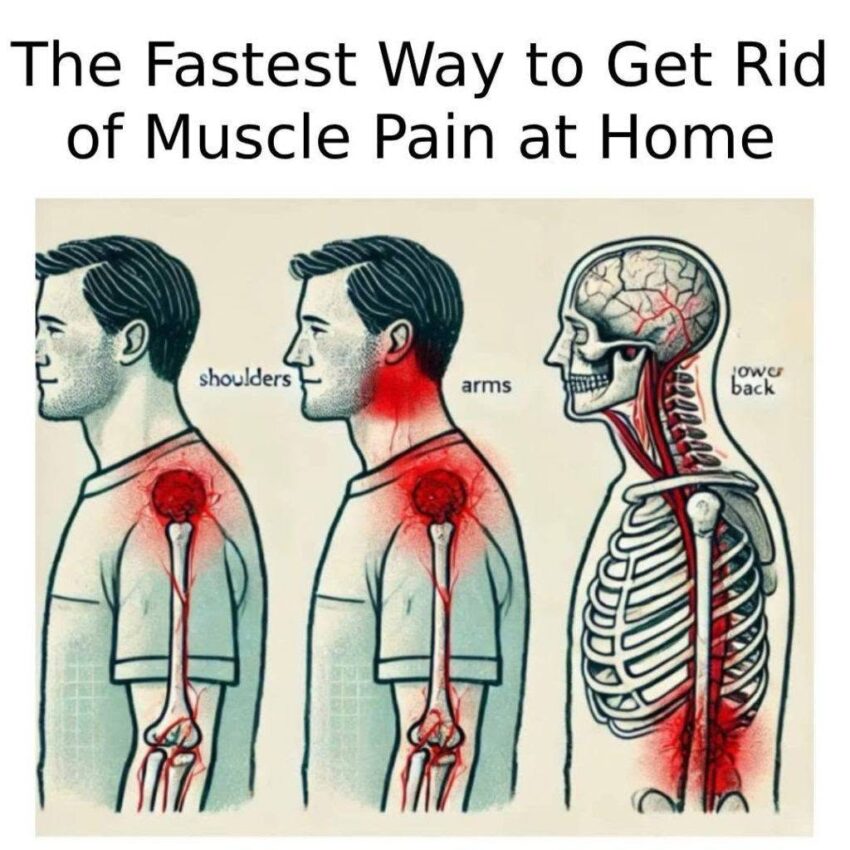
If you mean the achy, stiff muscles that appear hours after a workout or unfamiliar physical activity, this is usually delayed-onset muscle soreness (DOMS). It commonly becomes noticeable within about 12–24 hours, can be worst over the next couple of days, and usually settles within 3–5 days.
A
ACSM
The important point is that most home remedies reduce discomfort rather than dramatically speed muscle repair. Here are the approaches that are most useful.
1. Keep moving — but make it easy
One of the best things you can do for ordinary workout soreness is light activity rather than complete bed rest.
Try:
A 10–30 minute easy walk.
Gentle cycling.
Easy swimming.
Light mobility exercises.
Very gentle stretching.
Light movement can make sore muscles feel less stiff, although there isn’t strong evidence that it actually makes the underlying muscle recover faster. If movement causes significant pain, stop and rest instead.
A
ACSM
+1
Avoid: another hard workout targeting the same severely sore muscles.
For example, if your legs are extremely sore after squats, an easy walk is reasonable; another heavy squat workout probably isn’t.
2. Use heat for stiffness and tightness
A warm shower, bath, heating pad, or warm towel can be particularly soothing when the muscles feel tight and stiff.
Heat can relax muscles and increase blood flow, which may temporarily reduce discomfort.
M
Mayo Clinic News Network
A practical approach is:
Use comfortably warm—not scalding—water.
Apply heat for around 15–20 minutes.
Follow it with gentle movement.
Heat is especially appealing for generalized post-workout stiffness.
3. Try cold when there’s acute pain or swelling
Cold can temporarily numb pain and reduce swelling.
You can use:
An ice pack.
A bag of frozen vegetables wrapped in a thin towel.
A cold pack designed for injuries.
Don’t put ice directly against bare skin. For an acute muscle injury, Mayo Clinic recommends approximately 15–20 minutes at a time, with a protective cloth between the ice and skin.
M
Mayo Clinic
For ordinary DOMS, however, you don’t need ice. It is mainly a comfort measure.
4. Gentle massage can help
Massage may temporarily decrease the feeling of soreness and tenderness.
You can use:
Your hands.
A foam roller.
A massage ball.
A professional massage.
Keep the pressure comfortable rather than painful. Aggressively digging into an already damaged, extremely tender muscle isn’t necessary.
The American College of Sports Medicine notes that massage can be useful for reducing the symptoms of DOMS, but reducing pain doesn’t necessarily mean the muscle has completely recovered.
A
ACSM
5. Drink enough fluids
Good hydration supports normal recovery, particularly if you’ve been sweating heavily.
Drink water regularly and replace fluids lost through exercise. If you’ve had a prolonged, very sweaty workout, particularly in hot conditions, an electrolyte-containing drink or food can also be reasonable. ACSM emphasizes hydration before, during and after exercise as part of recovery.
A
ACSM
However, drinking huge amounts of water won’t make DOMS disappear faster. Hydrate normally rather than forcing excessive fluids.
6. Eat enough protein and overall food
Your muscles need energy and amino acids to repair themselves.
After strenuous exercise, prioritize a normal meal containing:
Protein: eggs, Greek yogurt, milk, fish, chicken, tofu, beans, lentils, etc.
Carbohydrates: rice, potatoes, oats, fruit, whole grains, etc.
Healthy fats: nuts, seeds, olive oil, avocado, etc.
Fruits and vegetables for micronutrients.
You don’t need an expensive “recovery” product. A normal balanced diet is sufficient for most people.
A useful example after a hard workout is Greek yogurt + fruit + oats, or rice + chicken/tofu + vegetables.
7. Get plenty of sleep
Sleep is one of the most underrated parts of recovery.
Aim for roughly 7–9 hours for most adults and give yourself enough time to recover when you’ve substantially increased your training.
Instead of trying to eliminate soreness with increasingly aggressive treatments, prioritize:
sleep + adequate food + hydration + appropriate activity + time.
8. Stretch gently—but don’t force it
Gentle stretching can feel good when muscles are stiff.
For example, after a leg workout you might perform gentle:
Quadriceps stretches.
Hamstring stretches.
Calf stretches.
Hip mobility exercises.
But don’t force a painful stretch or assume stretching will prevent DOMS. Research summarized by ACSM indicates that stretching hasn’t been shown to prevent or significantly reduce DOMS.
A
ACSM
Think of stretching as a comfort/mobility strategy, not a cure.
9. Over-the-counter pain medication can help—but use it carefully
For significant soreness, OTC pain relievers such as acetaminophen or NSAIDs such as ibuprofen/naproxen can reduce muscle pain. Mayo Clinic lists these among options for muscle pain.
M
Mayo Clinic
+1
But don’t automatically take them after every workout.
NSAIDs such as ibuprofen and naproxen can cause problems in some people, particularly with certain kidney, stomach, cardiovascular, or medication-related risks. Follow the package directions and ask a healthcare professional or pharmacist if you’re unsure whether they’re appropriate for you.
Also, masking pain isn’t the same as being recovered. ACSM specifically notes that symptom relief doesn’t necessarily mean the muscle has recovered.
A
ACSM
10. Don’t try to “sweat out” severe soreness
A common misconception is that you should do another intense workout to “flush out” soreness.
That’s unnecessary.
If you’re mildly sore, light exercise is fine. If you’re very sore, weak, or your normal movement is significantly impaired, give the muscles more recovery time. ACSM advises avoiding strenuous exercise when symptoms are severe.
A
ACSM
What actually works best?
For ordinary DOMS, I’d prioritize the following:
Remedy Helps discomfort? Speeds actual recovery?
Light walking/movement ✅ Often Unclear/limited evidence
Heat/warm shower ✅ Often Not clearly
Ice/cold ✅ Sometimes Not necessarily
Gentle massage ✅ Often May have limited effect
Gentle stretching ✅ May feel good ❌ Not proven to prevent DOMS
Adequate hydration ✅ Supports recovery Important for normal recovery
Good nutrition/protein ✅ Supports recovery ✅ Important for muscle repair
Sleep ✅ ✅ Very important
Pain medication ✅ ❌ Treats symptoms, not recovery
Another hard workout ❌ Usually not ❌ Can make things worse
The American College of Sports Medicine emphasizes that DOMS generally resolves on its own and that gradually increasing training load is one of the best ways to reduce how severe future episodes become.
A
ACSM
A simple 24-hour recovery routine
If you trained yesterday and you’re sore today:
Morning
Drink normally according to thirst.
Eat a protein-containing breakfast.
Take a gentle 10–20 minute walk.
Afternoon
Continue normal daily activities if comfortable.
Avoid another intense workout for the severely sore muscle group.
Eat a balanced meal containing protein and carbohydrates.
Evening
Take a warm shower or bath.
Do 5–10 minutes of gentle mobility/stretching.
Optional: gentle foam rolling or massage.
Get a full night’s sleep.
Next day
If soreness is improving, gradually return to normal training.
If you’re still extremely sore or weak, give yourself additional recovery time.
How to prevent severe soreness next time
The most effective strategy isn’t a special supplement or home remedy—it’s progressive training.
If you’re starting a new workout:
Don’t immediately do the maximum amount.
Increase weight, duration, distance, or intensity gradually.
Warm up before demanding exercise.
Learn proper technique.
Give a heavily trained muscle group adequate recovery time.
Don’t interpret extreme soreness as proof that you had a “better” workout.
Mayo Clinic specifically recommends taking things slowly when returning to exercise, while ACSM recommends gradually progressing into a new exercise program.
M
Mayo Clinic News Network
+1
When muscle soreness is NOT normal
Not every painful muscle is simply DOMS.
Seek urgent medical attention if severe muscle pain is accompanied by:
Dark/cola-colored urine
Marked muscle swelling
Extreme weakness
Severe pain that’s much greater than expected
Significant difficulty performing normal activities
These can be warning signs of rhabdomyolysis, a potentially serious condition involving muscle breakdown. Early medical treatment is important because severe cases can damage the kidneys and cause other complications.
C
CDC
You should also seek medical evaluation for muscle pain associated with trouble breathing, dizziness, severe injury, high fever/stiff neck, or pain that doesn’t improve with appropriate home care.
M
Mayo Clinic
Bottom line
For typical post-workout soreness, the most sensible combination is:
light movement + adequate food/protein + hydration + good sleep + heat or cold for comfort + gentle massage if it feels good + time.
You don’t have to eliminate every bit of soreness, and more pain does not mean a better workout. DOMS normally improves over several days as the muscles adapt.
A
ACSM
If you tell me which muscles are sore (legs, arms, back, chest, etc.), what exercise caused it, and how severe the soreness is from 1–10, I can give you a specific 1-day or 3-day muscle-recovery plan.