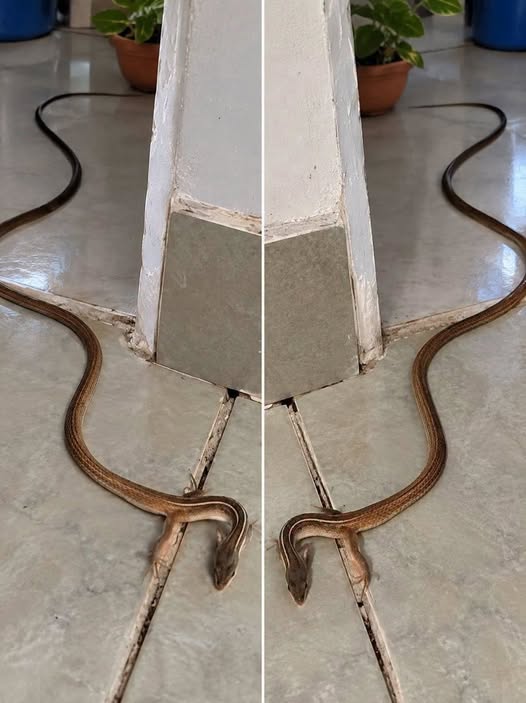
If This Snake Enters Your Home: What You Should Do and What It Means
If a snake enters your home, the most important thing is to stay calm, keep your distance, and avoid trying to catch or kill it. A snake inside a house can be frightening, but many snakes avoid humans and enter buildings accidentally while searching for shelter, warmth, water, or prey.
What you should do depends on the snake’s species, your location, and where it is hiding.
1. Why might a snake enter your home?

Looking for shelter
Snakes may enter through gaps under doors, cracks in walls, open windows, garages, or spaces around pipes. They may be seeking a quiet place to hide.

Searching for food
Some snakes follow rodents, frogs, lizards, or other small animals. If your home has mice, the snake may be attracted by available prey.

Seeking suitable temperatures
Depending on the weather and species, a snake may seek a cooler, shaded area during hot weather or a sheltered place when temperatures drop.

Accidentally entering
A snake may slip inside through an open door or while moving through a garden, storage area, or garage. Its presence does not necessarily mean that your home is infested.
2. What should you do immediately if a snake enters your house?

Step 1: Stay calm and move away.
Walk backward slowly and give the snake plenty of space. Sudden movements or attempts to corner it can make the situation more dangerous.

Step 2: Keep children and pets away.
Move everyone to a safe area. If you can safely leave the room, do so. Do not approach the snake to rescue a pet.

Step 3: Call a professional.
Contact local animal control or a licensed wildlife-removal specialist. If the snake is unidentified, treat it as potentially venomous.

Step 4: Do not chase it.
Do not hit it with a stick, try to grab its tail, trap it with your hands, or use glue traps. If it disappears under furniture, do not reach underneath to find it.
These precautions follow guidance from the U.S. Centers for Disease Control and Prevention .
3. How can you tell whether a snake is dangerous?


You should never decide whether a snake is safe based only on its color, size, or head shape.
-
Venomous snakes: Depending on the region, these may include rattlesnakes, copperheads, cobras, kraits, or other species.
-
Nonvenomous snakes: Many species, including numerous rat snakes and garter snakes, are harmless to people under normal circumstances. They may still bite if handled or threatened.
-
Small snakes: A small snake is not automatically harmless. Juvenile snakes can also pose a risk, depending on the species.
-
Dead snakes: Never touch a dead snake or its head; some venomous snakes can still inflict injury through reflexive biting.
If you cannot identify the species confidently, maintain your distance and seek professional help.
4. Does a snake entering your home have a spiritual or religious meaning?
People in different cultures have different beliefs about snakes entering a home. It is important to distinguish cultural traditions from established facts.
|
Belief or interpretation |
What it means in context |
|---|---|
|
Good luck or prosperity |
Some traditions associate certain snake encounters with fortune or wealth. |
|
Warning or bad omen |
Some folklore interprets an unexpected snake appearance as a warning. |
|
Spiritual symbolism |
Snakes can represent transformation, renewal, protection, or danger in different belief systems. |
|
A natural wildlife encounter |
From a scientific perspective, the snake is most likely responding to shelter, temperature, food, or an accidental opening. |
There is no reliable scientific evidence that a snake entering a home predicts death, wealth, marriage, misfortune, or a future event. You do not need to assume that something bad will happen.
If you are asking about a specific religious or cultural tradition, the interpretation may differ according to the tradition and the type of snake.
5. How can you prevent snakes from entering your home?


-
Seal gaps under exterior doors and around pipes, vents, and the foundation.
-
Repair damaged window screens and close openings in garages and sheds.
-
Keep grass trimmed and remove piles of wood, leaves, rubble, and other potential hiding places near the house.
-
Store food securely and address rodent problems, since rodents can attract snakes.
-
Check shoes, storage spaces, and outdoor equipment before putting your hands into dark or enclosed areas.
-
If snakes repeatedly appear, arrange a professional inspection to identify how they are entering.
These measures reduce the shelter and food sources that can attract snakes.
6. What if the snake bites someone?
Treat any suspected snakebite as a medical emergency.
-
Move away from the snake without trying to capture it.
-
Call your local emergency number immediately.
-
Keep the person calm and as still as possible.
-
Remove rings or other tight items near the affected limb before swelling develops.
-
Do not cut the wound, suck out venom, apply ice, or use a tight tourniquet.
-
Do not wait for symptoms to appear before seeking treatment.
Prompt medical care is essential, even if the bite initially appears minor.
Tell me which snake you mean
I can give you much more specific information if you tell me a little more.
1. Which snake are you asking about?
2. What information do you want?
3. Which country or region are you in? (Optional)
If the snake is currently inside your home, prioritize keeping your distance and contacting local wildlife professionals.