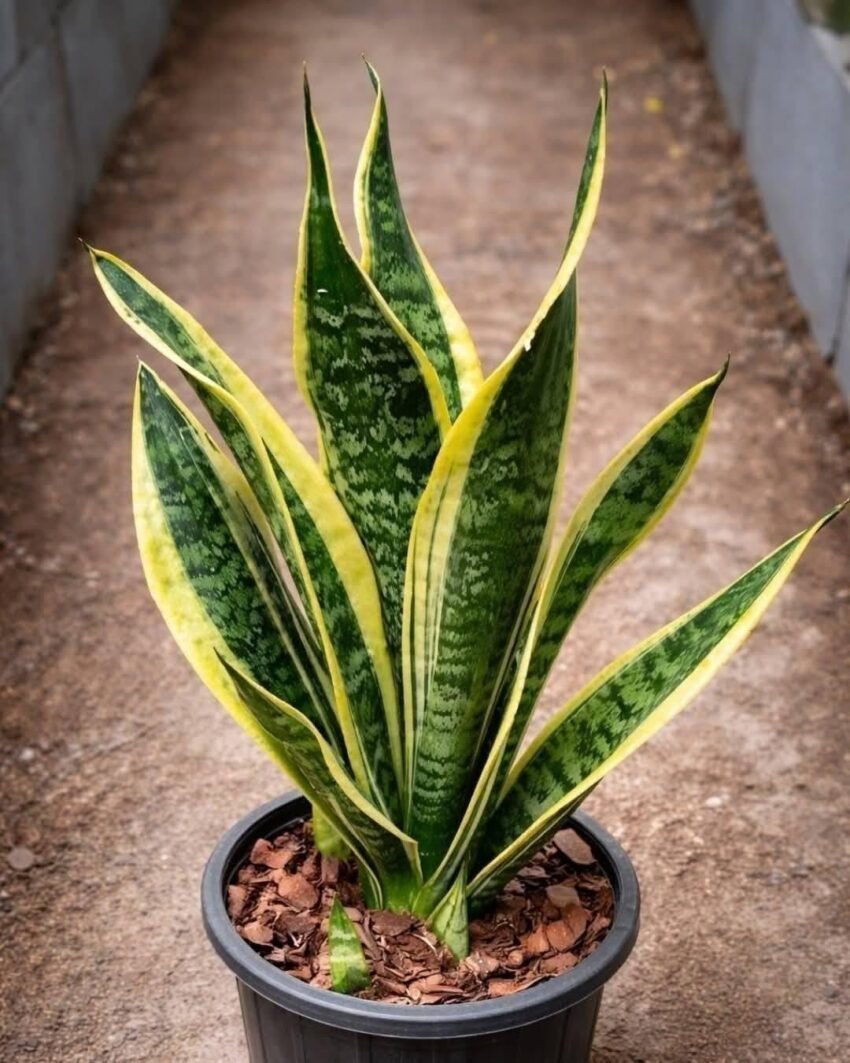
Yes. Sansevieria zeylanica is a popular, very hardy indoor plant, but there is an important botanical-name update: Kew currently accepts Dracaena zeylanica (L.) Mabb. as the scientific name, while Sansevieria zeylanica (L.) Willd. is treated as a synonym. It is native to southern India and Sri Lanka.
🌿 Sansevieria zeylanica — detailed information
Common names:
- Snake plant
- Mother-in-law’s tongue
- Bowstring hemp
- Zeylanica snake plant
It is a rhizomatous perennial with upright, sword-shaped leaves. The leaves are generally green with subtle gray-green horizontal markings and can grow roughly 17–50 cm or more under suitable conditions.
☀️ Light
This plant is remarkably adaptable.
- Best: bright, indirect light
- Also tolerates: medium and relatively low light
- A little gentle morning or evening sunlight is usually fine.
- Avoid suddenly moving a plant from low light into intense afternoon sun, as the leaves can scorch.
For stronger growth and better leaf markings, give it bright filtered light.
💧 Watering
This is where many snake plants are damaged.
Do not water on a fixed daily schedule. Instead:
- Put your finger several centimeters into the soil.
- If the soil is still moist, wait.
- When the soil has dried substantially, water thoroughly.
- Allow excess water to drain completely.
In winter or in a low-light room, it may need water considerably less often.
Overwatering is much more dangerous than underwatering. Constantly wet soil can cause root/rhizome rot.
🪴 Soil
Use a very well-draining potting mix.
A suitable mixture can contain:
- Regular indoor potting soil
- Perlite or pumice
- Coarse material such as orchid bark/sand
The objective is soil that doesn’t stay wet for a long time.
A pot with drainage holes is strongly recommended.
🌡️ Temperature
It prefers normal indoor temperatures.
- Ideal: approximately 18–30°C (65–86°F)
- Protect it from cold drafts and prolonged temperatures near freezing.
- Don’t place it directly against a very cold window during winter.
🌱 Fertilizer
It doesn’t require heavy feeding.
During active growth, a balanced houseplant fertilizer diluted according to its label every few weeks to once a month is generally sufficient.
Avoid excessive fertilizer—more fertilizer does not mean faster or healthier growth.
🌿 How it reproduces
Sansevieria/Dracaena zeylanica naturally produces underground rhizomes. New shoots can emerge beside the mother plant, eventually creating a clump.
The easiest propagation method is usually:
Division
- Remove the plant from its pot.
- Separate a healthy offshoot with its rhizome and roots.
- Plant it in well-draining soil.
- Keep watering conservative while it establishes.
Leaf propagation is possible in some Sansevieria, but division is preferable for maintaining the characteristics of the parent plant.
🌸 Does it flower?
Yes, although indoor plants don’t necessarily flower regularly.
Mature plants can produce a tall flower stalk with small, pale/greenish flowers. Kew’s botanical information describes the inflorescence as a spike-like raceme and the flowers as greyish green
Flowering is more likely when the plant is mature and has appropriate light and growing conditions.
🏠 Is it good for inside the house?
Yes. It’s one of the easier plants for indoor cultivation because it:
- tolerates periods of neglect
- doesn’t need frequent watering
- handles moderate/low light better than many houseplants
- occupies relatively little floor space
- is long-lived when not overwatered
A bright bedroom, living room, office, hallway with some natural light, or balcony protected from harsh weather can work well.
⚠️ Important: pets
There is a distinction worth making here. ASPCA lists the commonly cultivated snake plant Sansevieria trifasciata as toxic to dogs and cats, with saponins identified as the toxic principle and possible signs including nausea, vomiting, and diarrhea.
Because plants sold under the common name “snake plant” can be mislabeled or confused with different Sansevieria/Dracaena species, keep your plant away from pets that chew plants rather than assuming every snake-plant variety is harmless.
❌ Common problems
| Problem | Likely cause | What to do |
|---|---|---|
| Yellow/mushy leaves | Too much water | Reduce watering; check roots |
| Soft/mushy base | Root/rhizome rot | Remove rotten tissue and repot in dry, draining mix |
| Wrinkled leaves | Too dry for too long | Water thoroughly, then allow soil to dry |
| Brown crispy patches | Sun scorch or severe dryness | Move from harsh sun; correct watering |
| Slow growth | Low light | Move closer to bright indirect light |
| Fungus/gnats | Soil staying wet | Improve drainage and watering habits |
⭐ One important point about the name
If your plant label says “Sansevieria zeylanica,” don’t worry—the name isn’t necessarily wrong. Botanical classification has changed, and Kew currently places this species under Dracaena zeylanica.
If you have this exact plant at home, you can send me a photo of your Sansevieria zeylanica. I can then help you identify whether it really is zeylanica, assess its health, and tell you exactly where to place it, how often to water it, what soil/pot to use, and how to make it grow faster.