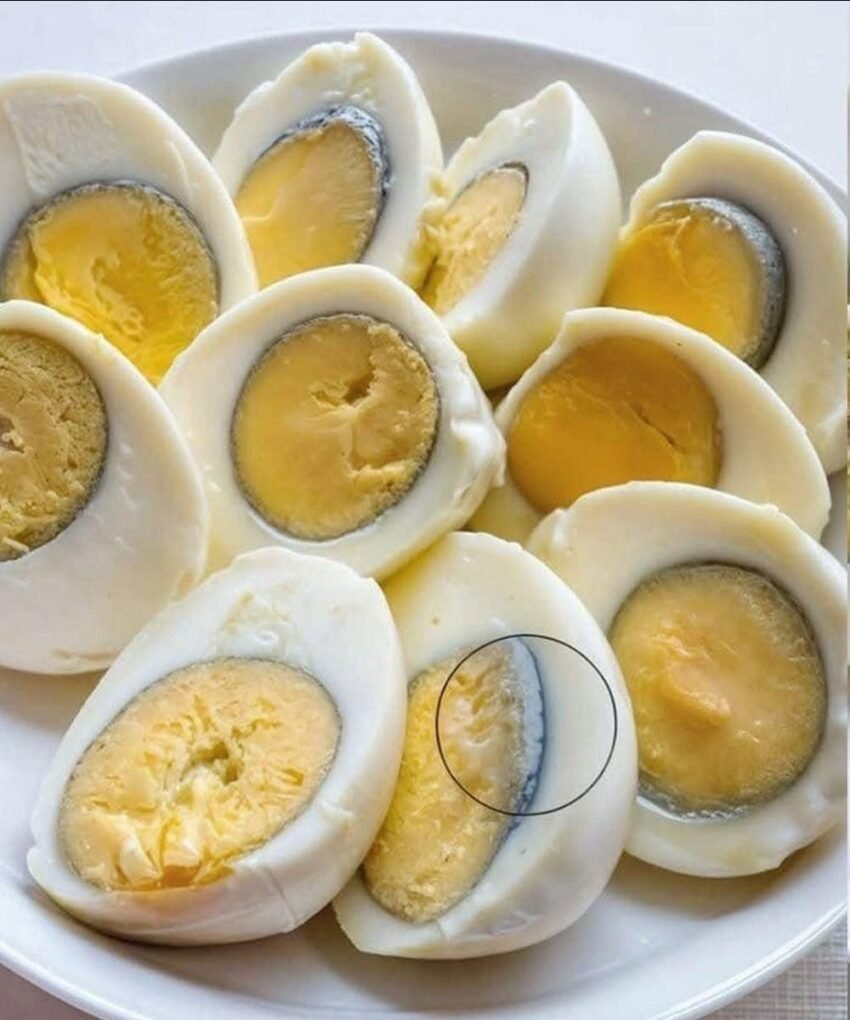
If a hard-boiled egg has a green or gray-green ring around the yolk, it is usually safe to eat. The ring forms because of a harmless chemical reaction during cooking, not because the egg has spoiled.
Why does the green ring form?
When eggs are cooked for too long or at too high a temperature:
- The egg white releases hydrogen sulfide gas (a sulfur-containing compound).
- The yolk contains iron.
- The hydrogen sulfide reacts with the iron at the surface of the yolk.
- This creates iron sulfide, which appears as a greenish-gray ring around the yolk.
Is it safe to eat?
Yes. A green ring:
- Does not mean the egg is rotten.
- Does not make the egg unsafe to eat.
- May slightly affect the texture or flavor, but it is still nutritious.
How to prevent the green ring
To avoid the discoloration:
- Place eggs in cold water and bring the water to a gentle boil.
- Once the water boils, remove the pot from the heat, cover it, and let the eggs sit for about:
- 9–12 minutes for large eggs.
- Immediately transfer the eggs to ice water for 5–10 minutes. This stops the cooking process and helps prevent the green ring.
When should you avoid eating an egg?
A green ring is harmless, but do not eat the egg if it:
- Has a strong rotten or sulfur smell before cooking.
- Has a slimy or unusual texture.
- Shows mold or obvious signs of spoilage.
- Has been left at room temperature for more than 2 hours.
In summary, a green ring around the yolk is a common result of overcooking and is not a sign of spoilage. Proper cooking and rapid cooling can prevent it.