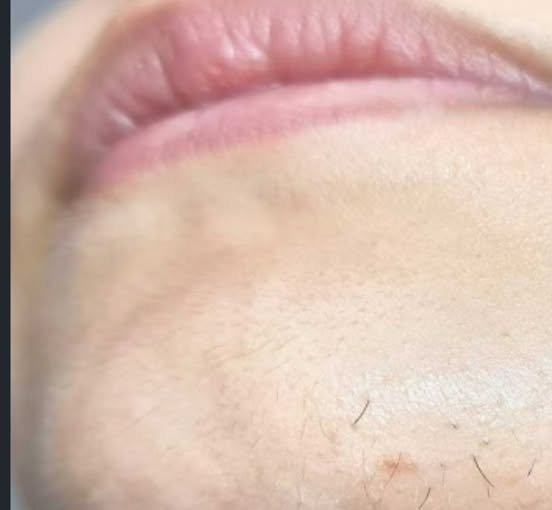
If you’re a woman who has noticed a few dark, coarse hairs on the chin, it does not automatically mean something is wrong. Facial hair can become more noticeable with age and hormonal changes. However, if the hair growth is new, increasing, or accompanied by other symptoms, it can sometimes be a clue to an underlying hormonal condition.
1. The medical term: hirsutism
When women develop thick, dark hair in areas where men typically grow terminal hair—such as the chin, upper lip, chest, abdomen, or back—it can be called hirsutism. Androgens, including testosterone, play an important role.
A couple of isolated chin hairs, however, aren’t necessarily hirsutism. Many women naturally develop some facial hair, particularly as they get older.
2. PCOS is one important possibility
One of the most common medical causes of hirsutism is polycystic ovary syndrome (PCOS). Increased androgen activity can cause chin or facial hair, acne, scalp hair thinning, and changes in menstrual cycles.
Chin hair is more suggestive of a hormonal issue when it occurs together with things such as:
- Irregular, infrequent, or absent periods
- New or worsening acne
- Thinning hair on the scalp
- Difficulty becoming pregnant
- Increased hair growth on the chest or abdomen
- Unexplained weight changes or signs of insulin resistance
Having chin hair alone does not mean you have PCOS.
3. Age and menopause can play a role
As estrogen and other reproductive hormones change during perimenopause and menopause, the balance between estrogen and androgen effects can change. Consequently, some women notice more coarse facial hairs while simultaneously experiencing other menopausal changes.
This can be completely benign, particularly when the change is gradual.
4. Sometimes medications are responsible
Certain medications or hormone-containing products can contribute to unwanted hair growth. Examples include testosterone, DHEA, danazol, and minoxidil; exposure to topical androgen products used by a partner can also occasionally matter.
Don’t stop a prescribed medication on your own. Instead, ask your doctor or pharmacist whether it could be contributing.
5. Less common hormonal conditions
Other conditions can cause excess androgen activity, including:
- Congenital adrenal hyperplasia
- Cushing syndrome
- Certain disorders of the adrenal glands
- Rarely, an androgen-producing ovarian or adrenal tumor
These are considerably less common than ordinary age-related facial hair or PCOS.
6. When chin hair deserves medical attention
The speed of the change matters.
It’s a good idea to see a healthcare professional if you’re developing significant new coarse facial hair, particularly if you also have menstrual changes or other signs of excess androgens.
Seek prompt medical evaluation if hair growth suddenly becomes much heavier or is accompanied by signs of virilization, such as:
- Voice becoming noticeably deeper
- Rapid scalp hair loss or male-pattern balding
- A substantial increase in muscle mass
- Significant new acne
- Enlargement of the clitoris
Rapid onset of these features is more concerning for a significant androgen excess and, rarely, an androgen-secreting tumor.
7. What your doctor may check
Evaluation generally starts with your medical and menstrual history and a physical examination. Depending on your symptoms, your clinician may order blood tests measuring hormones such as testosterone. Further testing or imaging may be appropriate if the hormone levels or symptoms suggest another condition.
The doctor may specifically ask:
- When did the chin hair start?
- Is it becoming more extensive?
- Are your periods regular?
- Have you developed acne?
- Are you losing scalp hair?
- Have you gained or lost significant weight?
- What medications and supplements do you take?
- Is there a family history of PCOS or excessive facial hair?
8. Can you remove the hair safely?
Yes. Shaving does not make hair grow back thicker or darker—it simply cuts the hair at the skin surface, which can make the blunt regrowth temporarily feel more noticeable.
Other options include:
- Tweezing
- Waxing
- Threading
- Depilatory creams
- Laser hair reduction
- Electrolysis
For medically significant hirsutism, doctors can also use treatments aimed at the underlying hormonal cause. Depending on the individual, options can include hormonal contraception, anti-androgen medication, or prescription facial-hair treatments.
Bottom line: A few chin whiskers are very common and often aren’t a sign of disease. But new, rapidly increasing coarse facial hair—especially together with irregular periods, acne, scalp hair loss, or other masculinizing changes—is worth discussing with a doctor. PCOS is a common explanation, while more serious causes are much rarer.