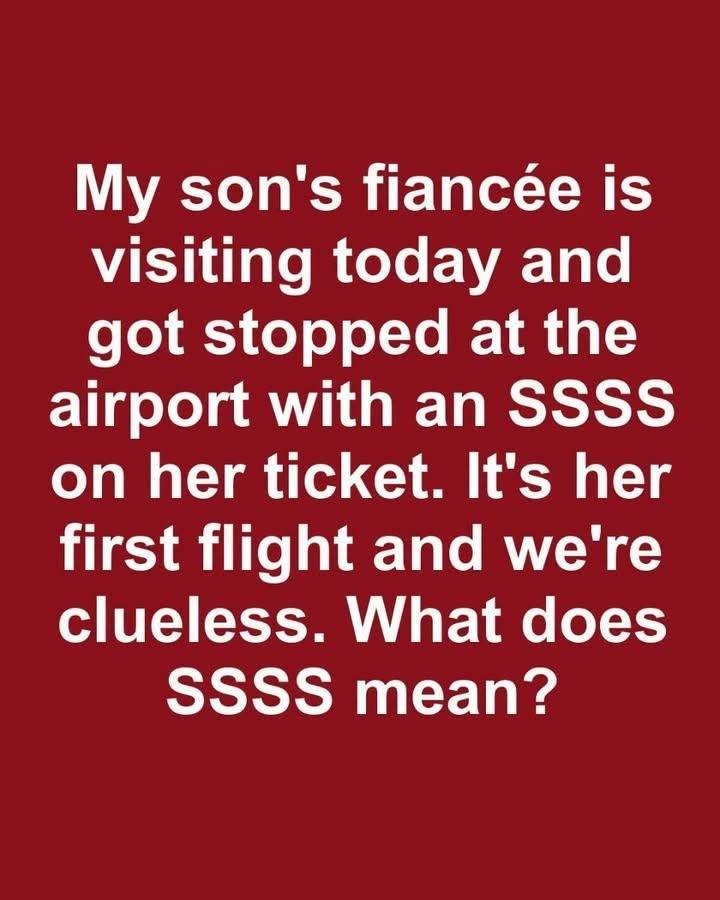
SSSS stands for Secondary Security Screening Selection.
If someone has “SSSS” printed on their boarding pass, it means they have been selected for additional security screening before boarding their flight. This is a security procedure used primarily for flights to, from, or within the United States.
Here’s what it usually involves:
- Extra identity verification: Security officers may ask for identification and additional questions about the trip.
- More thorough baggage inspection: Carry-on bags are often searched by hand, and electronic devices may be inspected.
- Enhanced personal screening: This can include additional screening beyond the standard metal detector or body scanner, such as a pat-down.
- Possible testing for explosives: Swabs may be taken from hands, shoes, electronics, or luggage to test for trace explosive residues.
- Extra time: The screening can add anywhere from 10 to 45 minutes (sometimes longer), so it’s important to arrive early.
Why does someone get SSSS?
The exact reasons are not disclosed, but common possibilities include:
- Being selected randomly.
- Certain travel patterns (such as last-minute one-way international tickets).
- Reservations that match specific security screening criteria.
- Additional screening required because of travel history or other factors identified by security systems.
Having SSSS does not mean the person is suspected of a crime or is on a watch list. Many travelers receive it occasionally due to random selection or automated screening criteria.
Will she still be able to fly?
In most cases, yes. The vast majority of people with SSSS complete the additional screening and board their flight normally. The main consequence is that the security process takes longer.
If your son’s fiancée is currently at the airport, the best advice is to:
- Cooperate with the screening officers.
- Allow extra time for the process.
- Keep identification and travel documents readily available.
- Answer any questions honestly and clearly.
If you tell me which airport she’s at and whether she’s flying to the U.S., from the U.S., or internationally, I can explain what the screening process is likely to look like there.