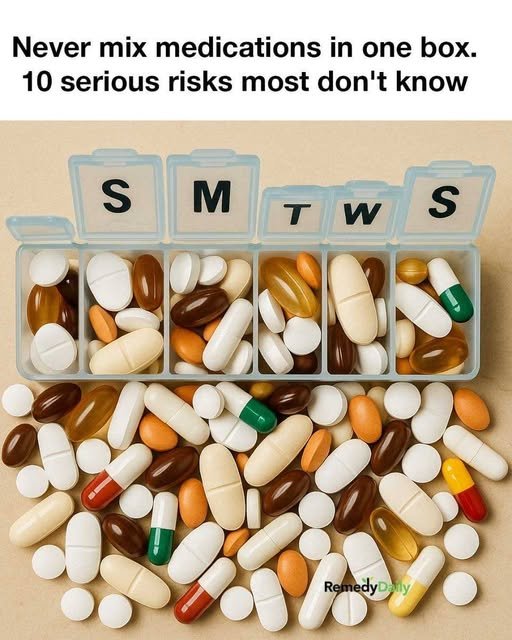
Here are 10 serious risks in detail:
- Medication Mix-Ups
- Pills often look similar in size, shape, or color.
- It becomes easy to take the wrong medication or the wrong dose.
- This can lead to treatment failure or dangerous side effects.
- Loss of Identification
- Once pills are removed from their original packaging, you lose important information such as:
- Drug name
- Strength (e.g., 5 mg vs. 50 mg)
- Expiration date
- Lot number (important during recalls)
- Once pills are removed from their original packaging, you lose important information such as:
- Reduced Effectiveness
- Some medications are sensitive to moisture, light, or air.
- Original containers are designed to protect them.
- Mixing them into another container can reduce their potency over time.
- Chemical or Physical Damage
- Although medications generally don’t chemically react just because they touch, some can scratch, crumble, absorb moisture, or contaminate each other.
- This can affect how well they work.
- Accidental Double Dosing
- If several medicines are mixed together, it’s easier to accidentally take two doses of one medication while missing another.
- This increases the risk of overdose or under-treatment.
- Emergency Situations Become More Difficult
- If you become ill or unconscious, doctors and emergency responders may not know what medications you have taken.
- This can delay proper treatment.
- Higher Risk for Children and Older Adults
- Mixed pills can confuse caregivers.
- Children may mistake colorful pills for candy if they find an unlabeled container.
- Older adults are especially vulnerable to medication errors.
- Problems During Travel
- Customs officers or airport security may question unlabeled medications.
- In some countries, carrying prescription medications outside their original labeled containers can create legal or practical issues.
- Medication Recall Issues
- If a manufacturer recalls a medication batch, you won’t know whether your pills are affected if they’ve been removed from the original container.
- Difficulty Tracking Side Effects
- If you experience a new symptom or allergic reaction, it becomes much harder to identify which medication caused it when pills are mixed together.
When is a pill organizer okay?
Using a weekly pill organizer is generally considered safe if:
- You fill it carefully according to your prescription.
- The organizer is kept clean and dry.
- You refill it regularly.
- You keep the original medication containers for reference.
- Your pharmacist or healthcare provider has not advised against transferring a specific medication (some medicines should remain in their original packaging).
Best Practices
- Keep medications in their original labeled containers whenever possible.
- Read the label before each dose.
- Use a labeled weekly pill organizer instead of mixing loose pills in one bottle.
- Store medications in a cool, dry place away from heat and humidity.
- Ask your pharmacist before transferring medications that are moisture- or light-sensitive.
If you take multiple medications every day, a pharmacist can also help you choose the safest way to organize them.