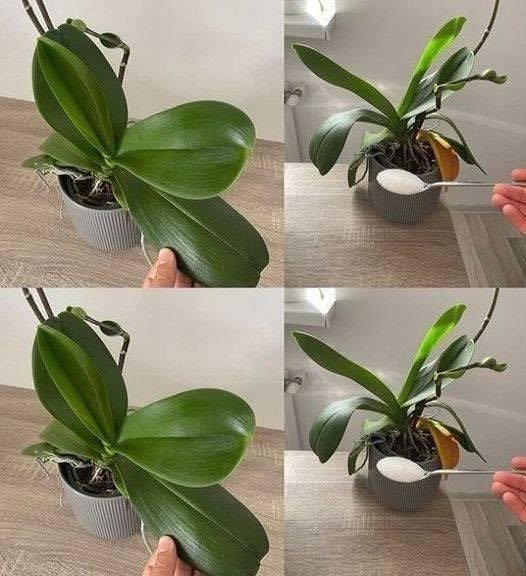
If the claim refers to a homemade fertilizer, here’s what it’s usually about and what actually works.
A Common Homemade Orchid Fertilizer
Many videos recommend mixing:
- 1 tablespoon of rice water, banana peel extract, or diluted yeast mixture
- 1 liter (about 1 quart) of water
These are said to provide nutrients such as potassium, phosphorus, or beneficial microbes. However, there is little scientific evidence that they cause continuous blooming, and some homemade mixtures can encourage mold, bacteria, or pests if overused.
What Orchids Really Need to Bloom
1. Bright, Indirect Light
- Place orchids near an east- or south-facing window with filtered light.
- Too little light is one of the most common reasons orchids fail to bloom.
2. Proper Fertilizer
Use a balanced orchid fertilizer such as 20-20-20 or a fertilizer specifically labeled for orchids.
- Mix at ¼ to ½ of the recommended strength.
- Feed every 2–4 weeks during active growth.
- Flush the pot with plain water once a month to remove fertilizer salts.
3. Correct Watering
- Water thoroughly, then allow the potting mix to dry slightly before watering again.
- Avoid leaving roots sitting in water, as this can cause root rot.
4. Humidity
Most orchids prefer 40–70% humidity. A humidity tray or room humidifier can help in dry environments.
5. Temperature
Many common orchids, especially Phalaenopsis (moth orchids), bloom better after experiencing cooler nighttime temperatures (about 16–18°C / 60–65°F) for a few weeks in autumn.
If You Want a Natural Supplement
You can occasionally use:
- Diluted rice water (unsalted and unseasoned)
- Diluted seaweed extract
- Fish emulsion (very diluted)
Use these only occasionally, not as a replacement for a balanced orchid fertilizer.
Can One Tablespoon Make Orchids Bloom Non-Stop?
No. There is no fertilizer—homemade or commercial—that will make orchids bloom continuously. Healthy orchids naturally go through cycles of growth, flowering, and rest. With proper care, many orchids bloom once or twice a year, and individual flower spikes can remain attractive for 2–4 months, depending on the species.
Consistent care—not a single ingredient—is the key to abundant orchid blooms.