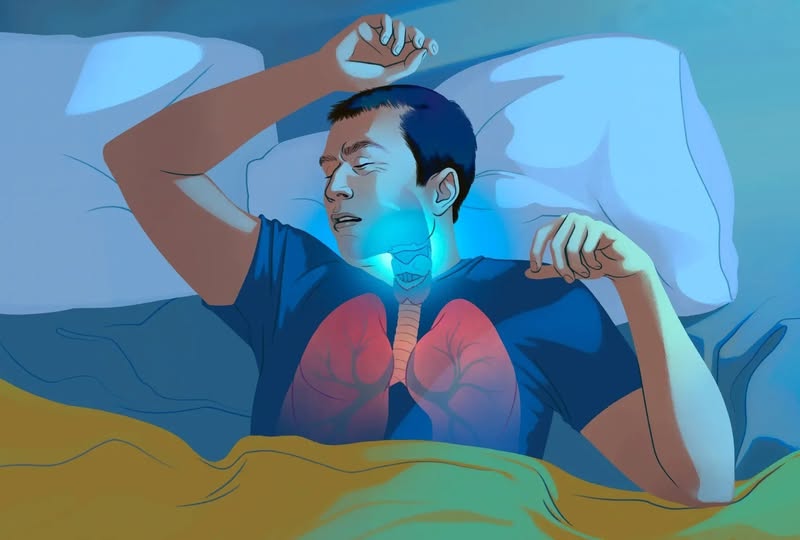
OSA and Your Life: A Guide to Your Daily Well-Being
OSA usually refers to obstructive sleep apnea, a common sleep-related breathing disorder in which the upper airway repeatedly becomes blocked during sleep. The blockage can cause breathing to stop and restart many times during the night, often accompanied by snoring, gasping, or brief awakenings.
OSA is more than a nighttime problem. Because it can repeatedly interrupt sleep, it can affect energy, concentration, mood, work, relationships, physical health, and safety during the day.
1. What happens during OSA?
When you fall asleep, the muscles supporting the throat naturally relax. In OSA, the airway becomes too narrow or collapses.
A typical cycle can look like this:
Relaxation of throat muscles → airway narrowing/blockage → reduced airflow → oxygen may fall → brain briefly arouses you → airway opens → breathing resumes → you fall back asleep
This may happen repeatedly without you remembering the awakenings.
Common nighttime signs include:
- Loud or persistent snoring
- Pauses in breathing noticed by another person
- Gasping, choking, or snorting during sleep
- Restless or fragmented sleep
- Waking with a dry mouth
- Frequent nighttime urination
- Difficulty staying asleep
During the day, OSA can cause:
- Excessive sleepiness
- Fatigue or low energy
- Difficulty concentrating
- Problems with memory or learning
- Morning headaches
- Irritability or mood changes
- Reduced ability to react quickly
Not everyone with OSA snores, and some people—particularly those sleeping alone—may not realize that their breathing is stopping.
2. How OSA can affect your everyday life
Energy and fatigue
One of the biggest effects of untreated OSA can be feeling exhausted despite spending what seems like enough time in bed.
Repeated breathing interruptions prevent normal, restorative sleep. As a result, you may wake up feeling as though you barely slept.
This can lead to:
- Needing several alarms to wake up
- Difficulty getting started in the morning
- Afternoon energy crashes
- Needing frequent caffeine
- Falling asleep while watching television or reading
- Reduced motivation to exercise or socialize
Importantly, sleepiness is not simply something you should accept as part of having OSA. Effective treatment can improve daytime alertness, although some people continue to experience sleepiness even after treatment and should discuss this with their healthcare professional.
Concentration, memory and work
Poor-quality sleep can make ordinary cognitive tasks harder.
You might notice:
- Forgetting appointments or conversations
- Making more mistakes
- Difficulty focusing during meetings or classes
- Taking longer to complete tasks
- Trouble making decisions
- Reduced productivity
- Difficulty learning new information
This is particularly important for jobs involving driving, machinery, heights, medical care, or other safety-sensitive responsibilities.
Mood and emotional well-being
Chronic sleep disruption can affect emotional regulation. Some people with OSA become more:
- Irritable
- Impatient
- Anxious
- Emotionally drained
- Less interested in social activities
If you notice significant depression, anxiety, or other mental-health symptoms, don’t assume OSA is necessarily the only cause. Discuss persistent symptoms with a healthcare professional.
3. OSA and relationships
OSA can affect partners as well as the person who has it.
Snoring can disturb a partner’s sleep. Your partner may also become worried after witnessing pauses in your breathing or gasping episodes.
Daytime fatigue can affect relationships differently—for example, you may have less energy for conversations, activities, intimacy, or family responsibilities.
Treating the underlying sleep disorder can therefore benefit the household, not just the individual.
4. OSA and physical health
Untreated OSA is associated with important health risks, including cardiovascular problems and high blood pressure. Treating OSA is therefore about more than simply stopping snoring.
Your overall treatment plan may also involve addressing other conditions such as obesity, hypertension, or metabolic problems when appropriate.
5. How OSA is diagnosed
If OSA is suspected, a healthcare professional may recommend a sleep study.
Depending on your circumstances, this may be:
- A home sleep apnea test, performed while you sleep at home.
- An in-lab polysomnography, where sleep, breathing, oxygen levels, heart rate and other measurements are monitored.
A home test can be useful, but it can sometimes miss sleep apnea. If symptoms strongly suggest OSA, your clinician may recommend an in-lab study even if a home test doesn’t show the condition.
The sleep study can help determine the severity of OSA, often expressed using the apnea-hypopnea index (AHI)—the number of breathing disturbances per hour of sleep.
6. Treatment: CPAP and other options
CPAP
CPAP (continuous positive airway pressure) is one of the most common and effective treatments for OSA.
A CPAP machine delivers pressurized air through a mask while you sleep. The pressure helps keep the upper airway open, reducing or preventing breathing interruptions.
The goal isn’t merely to “wear a machine.” The goal is to achieve better-quality sleep and safer, healthier daytime functioning.
Getting used to CPAP
CPAP can take some adjustment.
Common problems include:
- Mask discomfort
- Air leakage
- Dry mouth
- Nasal congestion
- Dry or irritated nose
- Feeling claustrophobic
- Difficulty falling asleep with the mask
- Feeling uncomfortable with the airflow
These problems don’t necessarily mean CPAP won’t work for you. A different mask, better fitting, humidification, ramp settings, or another PAP configuration may help. Your healthcare team or equipment provider can help troubleshoot these issues.
Don’t simply stop treatment because the first mask or setting is uncomfortable. Contact your care team so the problem can be addressed.
Other treatments
Depending on the severity and characteristics of your OSA, alternatives or additions may include:
- Oral appliances that reposition the jaw
- Positional therapy
- Weight management
- Exercise and other lifestyle measures
- Treatment of nasal obstruction or allergies
- Specific surgical procedures
- Other airway devices in selected patients
The appropriate treatment depends on your individual diagnosis and should be discussed with a qualified healthcare professional.
7. Lifestyle habits that can help
Lifestyle changes are important whether or not you use CPAP.
Maintain a healthy weight
For people who have excess weight, weight reduction can decrease the severity of OSA. Even relatively modest weight loss may improve symptoms, although it should not automatically be considered a replacement for prescribed OSA treatment.
Exercise regularly
Regular physical activity can improve general health and may improve OSA symptoms, even when significant weight loss doesn’t occur.
A commonly recommended target is around 30 minutes of moderate activity on most days, adjusted for your fitness level and medical circumstances.
Pay attention to sleep position
For some people, OSA is worse when sleeping on the back.
Sleeping on your side may help keep the airway more open. This is called positional therapy.
Avoid alcohol close to bedtime
Alcohol can relax the muscles in the throat and worsen airway obstruction. Avoiding alcohol, particularly around bedtime, can therefore be helpful.
Don’t smoke
Smoking can contribute to airway inflammation and irritation. Quitting is beneficial for overall respiratory and cardiovascular health and may help OSA symptoms.
Establish consistent sleep habits
Try to:
- Keep a regular bedtime.
- Wake at approximately the same time each day.
- Give yourself adequate time for sleep.
- Exercise regularly.
- Limit caffeine later in the day.
- Avoid large meals close to bedtime.
- Reduce stimulating screen use before bed.
Mayo Clinic sleep specialists recommend aiming for roughly 7–9 hours of sleep for most adults.
8. OSA and driving safety
This is particularly important.
If OSA causes significant daytime sleepiness, driving can become dangerous because you may have slower reaction times or unexpectedly fall asleep.
If you’re struggling to stay awake while driving, don’t try to “push through” it with coffee, loud music, open windows, or other tricks. Stop driving and address the underlying sleepiness with your healthcare professional.
Effective PAP treatment has been associated with reduced sleepiness and reduced crash risk.
9. What if you’re still tired despite CPAP?
This is a common and important question.
Some people continue to experience daytime sleepiness after beginning CPAP. Possible explanations can include:
- Insufficient sleep duration
- Inconsistent CPAP use
- Mask leakage
- Inadequate pressure
- Residual respiratory events
- Another sleep disorder
- Medication effects
- Depression or other health conditions
- Other causes of fatigue
Don’t automatically assume that CPAP has “failed.” Your clinician can review your machine’s data, mask fit, treatment effectiveness, sleep schedule and other possible causes. Some people need additional evaluation even when OSA treatment appears technically adequate.
10. A practical daily routine for someone with OSA
Morning
- Wake at a consistent time.
- Remove and clean your PAP equipment as instructed.
- Get some natural morning light.
- Give yourself time to become fully alert before driving.
- Notice how rested or sleepy you feel.
During the day
- Stay physically active.
- Avoid excessive caffeine, particularly late in the day.
- Pay attention to unusual daytime sleepiness.
- Avoid driving if you’re struggling to stay awake.
- Maintain regular meals and healthy habits.
Evening
- Avoid alcohol near bedtime.
- Avoid large meals close to sleep.
- Begin winding down before bed.
- Prepare your CPAP/PAP equipment.
- Make sure your mask is comfortable and correctly positioned.
- Follow your prescribed treatment every time you sleep, including naps when advised.
Night
- Use your prescribed PAP treatment consistently.
- Sleep in your recommended position if positional therapy is part of your treatment.
- If you repeatedly wake because of mask problems, leaks, congestion, or pressure discomfort, contact your care team rather than abandoning treatment.
11. What you should monitor
A useful OSA well-being checklist is:
| Area | Ask yourself |
|---|---|
| Sleep | Am I sleeping long enough and relatively continuously? |
| Breathing | Am I still snoring, gasping, or having witnessed pauses? |
| Energy | Do I feel rested in the morning? |
| Alertness | Am I sleepy during work, school, or driving? |
| Mood | Am I unusually irritable or emotionally drained? |
| CPAP/PAP | Am I using it consistently and comfortably? |
| Mask | Is there leakage, irritation, or discomfort? |
| Health | Are my weight, blood pressure and other conditions being managed? |
| Follow-up | Have I discussed persistent symptoms with my healthcare professional? |
12. When you should seek medical advice
Talk to a healthcare professional if you have symptoms such as:
- Loud habitual snoring
- Witnessed pauses in breathing
- Gasping or choking during sleep
- Significant daytime sleepiness
- Morning headaches
- Persistent fatigue despite adequate sleep
- Difficulty concentrating
- Sleepiness while driving
- Problems tolerating CPAP
- Continued symptoms despite using CPAP consistently
If you’re falling asleep while driving or performing a safety-sensitive task, treat that as an urgent safety issue and don’t continue the activity.
13. The most important message
Living well with OSA is very achievable. The objective is not simply to eliminate snoring—it is to restore effective nighttime breathing, improve sleep quality, increase daytime alertness and protect long-term health.
For many people, the combination of appropriate OSA treatment + consistent sleep habits + physical activity + healthy weight management when appropriate + avoiding factors that worsen airway obstruction can substantially improve daily life.
And if CPAP is uncomfortable, don’t assume you have to choose between suffering with it and going untreated. Mask selection, machine settings, humidification and alternative therapies can often be discussed with your healthcare team.
Important: This information is educational and doesn’t replace an evaluation by a sleep physician or other healthcare professional. OSA severity and the best treatment vary considerably between individuals.