-
Passenger Plane Crash Triggers Emergency Response as Officials Investigate — Detailed Explanation
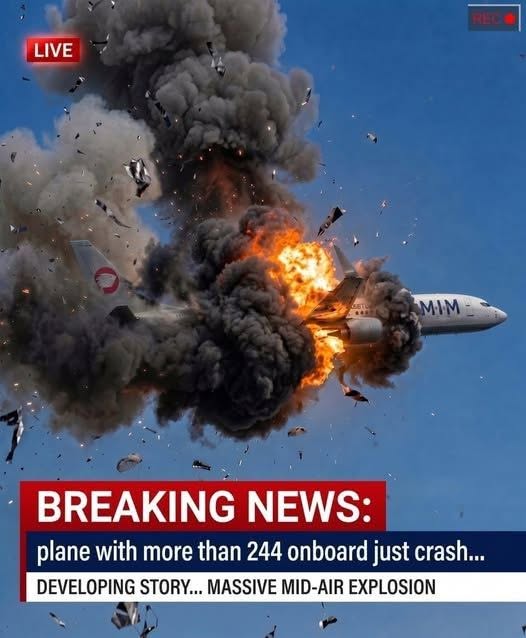
The headline “Passenger Plane Crash Triggers Emergency Response as Officials Investigate” suggests an aircraft accident that prompted an immediate rescue operation, followed by an official investigation into what caused the incident.
I searched for the exact headline associated with MenuFiyat, but I couldn’t verify the original article from the available search results. Several real aviation incidents have similar descriptions, so it is important not to confuse this headline with a different crash.
Here is a detailed explanation of what the headline means, how emergency responses work, and what investigators typically examine.
1. What the headline tells us
-
“Passenger Plane Crash” — An aircraft carrying passengers may have crashed, suffered a serious landing accident, or left a runway. The headline alone does not establish which type of incident occurred.
-
“Triggers Emergency Response” — Firefighters, airport rescue teams, emergency medical personnel, police, and other agencies may be deployed to protect passengers and manage hazards.
-
“Officials Investigate” — Aviation authorities generally examine the circumstances of the accident to determine what happened and identify ways to prevent similar incidents.
Important: The headline itself does not confirm the crash location, airline, aircraft type, number of passengers, casualties, or cause.
2. How an emergency response to a plane crash unfolds
Stage 1: Emergency alert and dispatch
Air traffic controllers, airport staff, or aircraft crew notify emergency services. Rescue vehicles are dispatched, nearby runways may be closed, and airport operations may be restricted.
Stage 2: Fire suppression and rescue
Firefighters attempt to control flames and prevent further damage. Rescue personnel search for survivors, evacuate people from the aircraft, and address immediate hazards such as leaking fuel.
Stage 3: Medical assistance
Paramedics assess injured passengers and crew, prioritize treatment according to the severity of injuries, and transport people to hospitals when necessary.
Stage 4: Securing the crash site
Authorities restrict access, document the wreckage, collect physical evidence, and preserve flight records and other materials that could help establish the sequence of events.
These are the typical stages of an aviation emergency, not a verified account of the specific MenuFiyat story.
3. What investigators look for
Aviation accident investigations are generally designed to establish the facts and prevent future accidents, rather than simply assign blame.
Investigation area
What officials examine
Aircraft condition
Engines, landing gear, flight controls, structural damage, and maintenance history
Flight data recorder
Aircraft speed, altitude, heading, engine performance, and control inputs
Cockpit voice recorder
Relevant cockpit conversations, alarms, and background sounds
Weather
Wind, visibility, rainfall, thunderstorms, and other environmental conditions
Pilot and crew actions
Procedures, training, communications, and decisions during the flight
Airport infrastructure
Runway condition, lighting, obstacles, emergency equipment, and air traffic control communications
Investigators may also interview witnesses, review surveillance footage, examine radar information, and consult the aircraft manufacturer.
The precise scope depends on the type of accident and the evidence available.
4. What could have caused the crash?
Without the original report, no specific cause can responsibly be attributed to this incident. Investigators commonly consider several possibilities:
-
Mechanical or technical failure: A malfunction involving an engine, landing gear, flight controls, or another aircraft system.
-
Weather-related factors: Strong winds, heavy rain, reduced visibility, or wind shear.
-
Runway overrun: An aircraft fails to stop within the available runway during landing or aborting a takeoff.
-
Bird strike: A bird collides with the aircraft and potentially damages an engine or other component.
-
Human or operational factors: Errors, communication difficulties, procedural issues, or a combination of circumstances.
A crash may involve several contributing factors. Investigators usually need substantial evidence before identifying a probable cause, and an early news report should not be treated as a final finding.
5. A real example of a similar emergency
One documented example is the September 6, 2026, cargo-plane crash at Miami International Airport.
According to the National Transportation Safety Board and reporting by ABC News, an Amazon-contracted Boeing 767 cargo aircraft operated by 21 Air overran the runway while landing. The aircraft struck vehicles, killing five people and injuring five others. Approximately 200 emergency personnel responded, and investigators recovered the flight data and cockpit voice recorders. Officials examined possible mechanical, weather, crew-performance, and operational factors.
ABC News+1This is a separate, confirmed incident, not necessarily the crash described in the MenuFiyat headline.
6. What happens after the initial response?
Once the immediate danger has been addressed, authorities typically proceed with several tasks:
-
Identify victims and notify their families.
-
Document the wreckage and examine the aircraft’s systems.
-
Analyze recorded flight data and cockpit communications.
-
Interview witnesses and relevant personnel.
-
Publish preliminary findings when appropriate.
-
Complete a final investigation report and issue safety recommendations if warranted.
The investigation may take weeks or months, depending on the complexity of the accident. A preliminary report can describe established facts without determining the final cause.
7. Where to find the exact MenuFiyat article
I couldn’t confirm the original story through the headline search, so I don’t want to give you unverified details about deaths, injuries, or the crash location.
You can share the direct MenuFiyat article link or paste the article text here. I’ll then explain the specific incident in detail, including:
-
The date, location, airline, and aircraft involved.
-
What reportedly happened before and during the crash.
-
Confirmed deaths, injuries, and rescue efforts.
-
Statements from police, aviation authorities, and investigators.
-
The suspected cause versus what has actually been confirmed.
-
The latest available investigation findings and what remains unknown.
That will allow me to give you a detailed, incident-specific account rather than a general explanation based only on the headline.
-