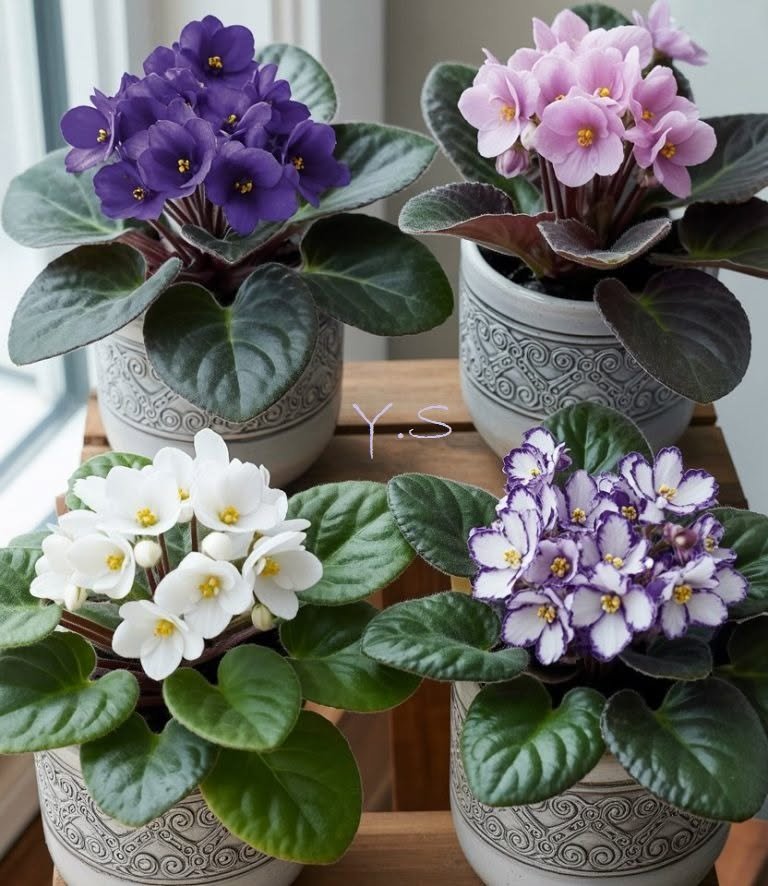
Here’s a detailed guide explaining the myth, the mistakes, and the correct way to shape African violets.
Pruning Myth: The Fatal Mistake That Will Ruin Your African Violets (and How to Shape Them Correctly!)
African violets are among the most rewarding flowering houseplants. Their colorful blooms and soft, velvety leaves can last year-round when cared for properly. However, improper pruning is one of the biggest reasons these plants stop flowering or decline.
Many gardeners accidentally damage their African violets because they follow incorrect advice such as:
- Remove lots of leaves to encourage flowers.
- Cut the center leaves to make the plant bushier.
- Trim leaves regularly like other houseplants.
- Remove healthy foliage to improve airflow.
These practices can do far more harm than good.
Why Leaves Matter
Unlike many plants, African violet leaves are the plant’s “solar panels.”
Each leaf:
- Produces energy through photosynthesis.
- Stores nutrients.
- Supports flower production.
- Helps maintain the plant’s balance.
Every healthy leaf contributes to future blooms.
Removing too many healthy leaves means the plant has less energy to produce flowers.
The Biggest Pruning Mistake
The most damaging mistake is removing healthy middle leaves.
The crown (center) is where:
- New leaves form.
- Flower buds develop.
- Future growth begins.
If the center is damaged:
- Growth may stop.
- Flowers disappear.
- The crown can rot if injured.
- The plant may become permanently misshapen.
Never cut leaves from the center unless they are diseased or severely damaged.
Another Common Mistake: Over-Pruning
Some gardeners remove one-third or even half the leaves because they think it helps blooming.
The opposite usually happens.
Over-pruning causes:
- Slower growth
- Fewer flowers
- Weak roots
- Stress
- Delayed recovery
- Increased disease risk
African violets prefer to keep most of their healthy foliage.
Which Leaves Should You Remove?
Only remove leaves that are:
- Yellow
- Brown
- Soft
- Diseased
- Broken
- Dry
- Severely damaged
These leaves no longer benefit the plant.
Removing them allows the plant to direct energy toward healthy growth.
Remove the Oldest Bottom Leaves
African violets grow in circles called rows.
The oldest leaves are always at the bottom.
As new leaves appear in the center:
- Older leaves naturally age.
- They eventually become limp or yellow.
Removing these oldest leaves keeps the plant neat and encourages new growth.
How to Remove Leaves Correctly
Instead of cutting halfway through the stem:
- Hold the leaf stem close to the base.
- Twist gently.
- Pull sideways until it snaps cleanly.
Or use sterilized scissors to cut the stem close to the crown without damaging surrounding tissue.
Always avoid tearing the stem.
Shape Your African Violet Properly
A healthy African violet should look like a perfect circle when viewed from above.
The leaves should:
- Spread evenly.
- Form symmetrical rows.
- Grow outward evenly.
- Leave the center open for new growth.
Good symmetry allows:
- Better light exposure
- More blooms
- Attractive appearance
Rotate the Pot
Plants naturally lean toward light.
Rotate the pot about one-quarter turn every week.
Benefits include:
- Even leaf growth
- Balanced crown
- Symmetrical shape
- Better flowering
Remove Suckers
Some African violets develop extra crowns called suckers.
These small side shoots:
- Compete for nutrients.
- Reduce flowering.
- Distort the plant’s shape.
Carefully remove suckers when they are small by gently pinching or cutting them at their base with a clean, sterilized tool.
Deadhead Old Flowers
Spent flowers continue to consume energy.
Remove:
- Wilted blooms
- Brown flower stems
- Dry flower stalks
Deadheading encourages the plant to produce fresh flower buds.
Watch for “Neck” Growth
Over time, lower leaves drop naturally.
This creates a bare stem called a neck.
If it becomes too long:
- Repot the plant slightly deeper.
- Cover the neck with fresh potting mix.
- Alternatively, rejuvenate the plant by removing the lower stem and rerooting the crown if the neck is very long.
This helps restore stability and encourages new root growth.
Sterilize Your Tools
Dirty scissors can spread diseases.
Before pruning:
- Clean tools with rubbing alcohol or a disinfectant.
- Wipe blades between plants.
- Keep tools dry to reduce the risk of infection.
Don’t Prune After Repotting
Repotting already stresses the plant.
Wait about 2–4 weeks, or until you see active new growth, before doing any additional pruning beyond removing damaged or dead leaves.
Seasonal Pruning
African violets can grow year-round indoors.
Prune:
- Whenever dead leaves appear.
- After flowering cycles.
- During routine maintenance.
There is no strict pruning season, but avoid removing many healthy leaves at once.
Signs You’ve Pruned Too Much
Watch for:
- Slow growth
- Drooping leaves
- Smaller flowers
- No blooms
- Weak crown
- Yellowing remaining leaves
Recovery may take several weeks or even months as the plant rebuilds its leaf canopy.
Best Pruning Routine
Every few weeks:
- Remove dead flowers.
- Remove yellow bottom leaves.
- Check for suckers.
- Rotate the pot.
- Inspect for pests and diseases.
- Wipe dusty leaves gently with a soft, damp cloth if needed.
This simple routine keeps the plant healthy without excessive pruning.
Tips for a Beautifully Shaped African Violet
- Keep 8–15 healthy leaves, depending on the variety and plant size.
- Never remove healthy center leaves.
- Remove only old, damaged, or diseased foliage.
- Rotate the pot weekly for even growth.
- Remove spent flowers promptly.
- Maintain a symmetrical rosette.
- Avoid over-pruning.
Final Thoughts
The biggest pruning myth is that removing more leaves leads to more flowers. In reality, African violets bloom best when they have a full, healthy rosette of leaves to produce the energy needed for flowering. By removing only old or damaged foliage, protecting the central crown, rotating the plant regularly, and maintaining a balanced shape, you can enjoy a compact, attractive African violet that produces abundant blooms for many months.