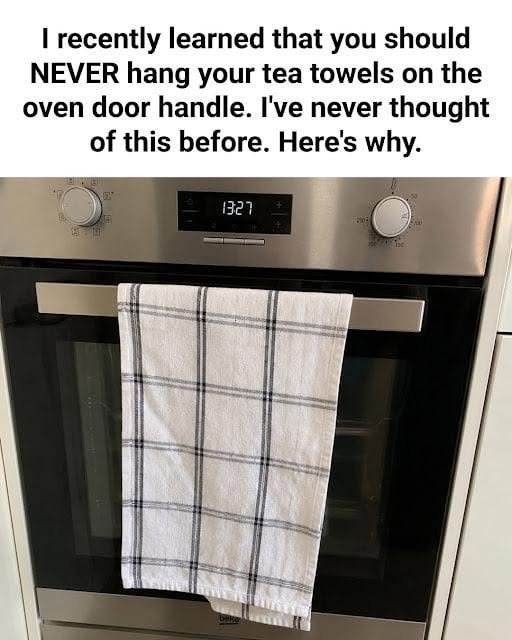
The Hidden Kitchen Hazard: Why That Tea Towel on the Oven Door Is a Recipe for Disaster (And Safer Ways to Keep Your Kitchen Flowing)
Many people drape a tea towel over the oven door handle without giving it a second thought. It’s convenient, keeps a towel within easy reach, and has become a common sight in home kitchens. However, what seems like a harmless habit can create several safety, hygiene, and maintenance concerns.
While hanging a towel on an oven handle is not always dangerous, certain situations can significantly increase the risk of accidents, burns, or even fires. Understanding these risks can help make your kitchen a safer place without sacrificing convenience.
Why People Hang Tea Towels on Oven Doors
The habit is popular because it offers several practical benefits:
- Keeps towels within arm’s reach
- Saves drawer space
- Makes drying hands convenient
- Adds decorative style to the kitchen
- Helps organize frequently used towels
Although these advantages are real, safety experts recommend paying attention to how and when towels are stored on oven handles.
Hidden Hazards of Hanging Tea Towls on Oven Doors
1. Increased Fire Risk
The biggest concern is fire.
Tea towels are usually made from:
- Cotton
- Linen
- Polyester blends
- Microfiber
These materials can ignite or melt if exposed to sufficient heat.
Risk Factors
The danger increases when:
- The towel hangs close to an open gas flame.
- The oven door becomes extremely hot during self-cleaning.
- The towel accidentally touches a hot cooktop.
- Grease or cooking oil has soaked into the fabric.
- The towel is hanging over a vent that releases hot air.
Greasy towels are especially hazardous because oil burns much more easily than clean fabric.
2. Oven Vent Heat
Many ovens release hot air through vents located:
- Above the oven door
- Below the control panel
- Behind the stovetop
A towel covering these vents can:
- Become excessively hot
- Reduce proper airflow
- Trap heat around appliance components
Although most modern ovens are designed to operate safely, blocking vents is generally not recommended by manufacturers.
3. Accidental Door Opening
A towel hanging from the handle can sometimes catch on:
- Clothing
- Aprons
- Jewelry
- Pots and pans
This may accidentally pull the oven door open.
Possible consequences include:
- Burns
- Tripping
- Hot food spilling
- Children reaching a hot oven more easily
4. Burn Hazards
When the oven has been operating at high temperatures, the handle itself may become warm.
Someone grabbing the towel without realizing how hot the area is may experience:
- Minor burns
- Reflexive pulling
- Dropping hot cookware
5. Cross-Contamination
Many households use one towel for multiple purposes:
- Drying hands
- Wiping counters
- Holding hot dishes
- Cleaning spills
This creates an ideal opportunity for bacteria to spread.
Common contaminants include:
- Raw chicken juices
- Meat juices
- Egg residue
- Dirt from countertops
Using the same towel repeatedly without washing increases the chance of transferring germs to clean dishes or hands.
6. Grease Buildup
Kitchen towels absorb:
- Cooking oils
- Steam
- Food particles
- Smoke residue
Over time they become:
- Dirty
- Smelly
- More flammable
- Less sanitary
A towel left hanging for several days can collect a surprising amount of grease.
7. Pet Hazards
Curious pets often investigate dangling fabrics.
Cats may:
- Climb on the towel
- Pull it down
Dogs may:
- Grab it
- Drag it around the house
If the towel catches cookware or opens the oven door, injuries can occur.
8. Child Safety Concerns
Young children naturally grab anything hanging within reach.
A child pulling a towel may accidentally:
- Open the oven door
- Pull hot food toward themselves
- Knock over cookware
- Cause burns
This is especially dangerous while cooking.
Self-Cleaning Oven Dangers
Self-cleaning cycles can reach temperatures exceeding 800°F (425°C).
During these cycles:
- The oven exterior becomes hotter than normal.
- Handles may warm considerably.
- Nearby fabrics become much hotter than expected.
It is best not to leave any towels hanging on the oven during a self-cleaning cycle.
Gas Stove Considerations
Gas ranges present additional concerns.
Loose towels can accidentally contact:
- Burner flames
- Hot grates
- Escaping heat
Even a small flame can ignite dry fabric very quickly.
Electric Oven Risks
Electric ovens do not have open flames at the front, but towels can still:
- Cover ventilation openings
- Trap heat
- Become hot enough to scorch
- Touch nearby hot cookware
Why Professional Kitchens Rarely Do This
Commercial kitchens typically avoid hanging towels on oven doors because they prioritize:
- Fire prevention
- Efficient movement
- Hygiene
- Food safety
- Compliance with safety regulations
Kitchen staff usually keep towels:
- Tucked into aprons
- Stored on designated hooks
- Placed in sanitized towel bins
Safer Alternatives
Instead of hanging towels on the oven handle, consider these options:
1. Wall Hooks
Install hooks away from heat sources.
Benefits:
- Easy access
- Better airflow
- Reduced fire risk
2. Cabinet Towel Bars
Attach towel bars to cabinet doors.
Advantages:
- Convenient location
- Keeps towels off hot appliances
3. Drawer Storage
Fold clean towels inside a nearby drawer.
This keeps them:
- Clean
- Dry
- Protected from grease
4. Dedicated Hand Towels
Use separate towels for different purposes.
For example:
- One for drying hands
- One for drying dishes
- One for cleaning counters
- One for handling hot cookware
This helps reduce cross-contamination.
5. Wash Towels Frequently
Kitchen towels should be washed regularly, especially if they become:
- Wet
- Greasy
- Soiled with raw meat juices
Frequent washing improves hygiene and reduces odor and fire risk.
Tips for Safer Kitchen Habits
- Keep towels away from burners and oven vents.
- Replace heavily worn or damaged towels.
- Avoid leaving greasy towels hanging in the kitchen.
- Use oven mitts or heat-resistant gloves for hot cookware instead of regular tea towels.
- Never leave cooking unattended when towels or other fabrics are near heat.
- Keep children and pets away from hot cooking areas.
- Ensure towels do not interfere with opening or closing appliance doors.
Common Myths
Myth: “I’ve always kept my towel on the oven door, so it’s safe.”
Reality: Many people do this without incident, but the risk depends on factors such as oven design, towel placement, cooking method, and whether the towel is clean or greasy.
Myth: “Cotton towels can’t catch fire easily.”
Reality: Cotton is a natural fiber, but it is still combustible and can ignite when exposed to enough heat or an open flame.
Myth: “A towel on the handle helps cool the oven.”
Reality: A towel does not cool the oven and may trap heat near vents if it obstructs airflow.
Best Practice
If you choose to hang a tea towel on your oven handle, reduce the risk by ensuring that:
- It is clean and dry.
- It does not block any oven vents.
- It hangs well away from burners or heating elements.
- It is removed during high-temperature cooking or self-cleaning cycles.
- It cannot be easily grabbed by children or pets.
For the safest kitchen setup, store towels on a dedicated hook or towel bar away from heat-producing appliances.
Conclusion
Keeping a tea towel on the oven door is a widespread habit, but it comes with potential safety and hygiene concerns that are easy to overlook. Fire hazards, blocked oven vents, accidental door opening, cross-contamination, and risks to children and pets are all reasons to rethink this practice.
A few simple changes—such as storing towels on wall hooks or cabinet bars, using separate towels for different tasks, and keeping fabrics away from heat sources—can help maintain both convenience and a safer, cleaner kitchen.