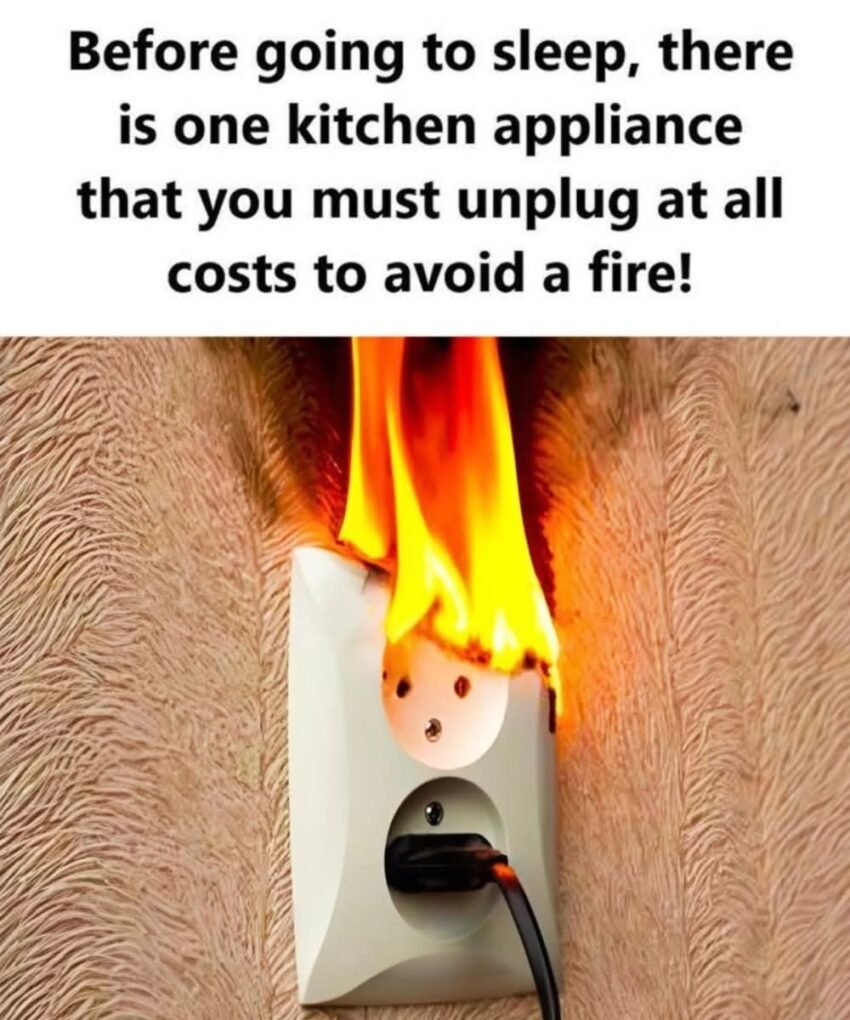
Many articles and social media posts claim there is one kitchen appliance you should always unplug at night to prevent house fires. In reality, there isn’t a single appliance that guarantees safety if unplugged, but some small countertop appliances deserve extra attention because they contain heating elements or electrical components.
Appliances that are often recommended to unplug
1. Toasters and toaster ovens
These can pose a fire risk if:
Crumbs accumulate near the heating elements.
The appliance malfunctions.
Something flammable is placed on or near it.
Safety tips:
Empty the crumb tray regularly.
Keep paper towels, bread bags, and curtains away.
Unplug when not in use if practical.
2. Coffee makers
Older or damaged coffee makers can overheat or develop electrical faults.
Safety tips:
Turn the machine off after brewing.
Unplug if you won’t be using it for an extended period.
Replace damaged cords or malfunctioning units.
3. Air fryers
Air fryers operate at high temperatures and have been involved in some reported fire incidents due to electrical failures or misuse.
Safety tips:
Place on a heat-resistant, stable surface.
Keep vents unobstructed.
Clean grease buildup regularly.
Unplug after use once the appliance has cooled.
4. Electric kettles
Most modern kettles have automatic shut-off features, but unplugging them when not in use can eliminate the small risk from electrical faults.
5. Electric grills, waffle makers, and sandwich presses
These appliances use heating elements and should always be switched off, allowed to cool, and unplugged after use.
Why unplugging can help
Unplugging:
Removes power from the appliance.
Eliminates standby power use for that device.
Reduces the chance that an electrical fault in the appliance could occur while it is energized.
However, unplugging does not prevent all house fires. Fires can also result from faulty wiring, overloaded outlets, damaged extension cords, unattended cooking, candles, or other hazards.
Appliances that are generally designed to stay plugged in
Some kitchen appliances are intended to remain connected to power, such as:
Refrigerators
Freezers
Built-in microwaves
Built-in dishwashers (unless servicing them)
Unplugging these routinely is generally unnecessary and may be impractical.
General kitchen fire prevention
Never leave cooking unattended.
Replace damaged power cords immediately.
Avoid overloading electrical outlets or power strips.
Keep appliances clean and free of grease and food debris.
Keep flammable items away from heat sources.
Install working smoke alarms and test them regularly.
Use appliances according to the manufacturer’s instructions.
If an appliance emits a burning smell, sparks, or smoke, stop using it until it has been inspected or replaced.
Bottom line
If there’s one small kitchen appliance that many safety experts suggest unplugging when it’s not in use, it’s the toaster or toaster oven, because of the combination of heating elements and combustible crumb buildup. More broadly, it’s good practice to unplug small heating appliances after they’ve cooled if doing so is practical. The most important fire-prevention measures, however, are proper maintenance, safe use, and functioning smoke alarms—not unplugging a single appliance alone.