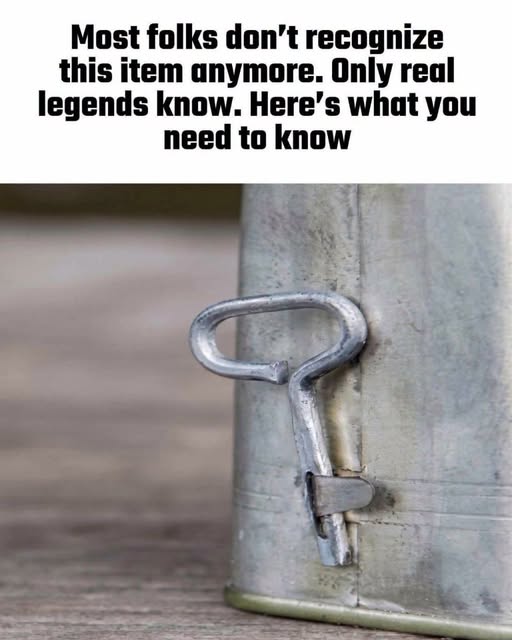
The Little Piece of Metal That Once Had an Important Job
The phrase “The Little Piece of Metal That Once Had an Important Job” sounds like a story about an ordinary metal object that was once essential to everyday life but has gradually become forgotten because technology has changed.
It could refer to an old key, a typewriter part, a railway token, a metal coin, a sewing-machine component, or another small object from the past. Without a picture or the object’s name, it isn’t possible to identify the exact item with certainty.
Here is a detailed exploration of the idea, including the history, purpose, and significance of small metal objects that once played important roles in people’s lives.
1. What could this little piece of metal be?

A. The safety pin
Invented by Walter Hunt in 1849, the safety pin is a small bent wire with a spring and protective clasp. It was designed to fasten fabric while keeping its sharp point covered. Hunt reportedly invented it while trying to pay off a debt.

B. A typewriter component
Small metal levers and springs helped old typewriters transfer a keypress into a printed letter. These components were essential before computers and modern printers replaced many traditional typing machines.

C. A railway ticket punch
Conductors used metal punching tools to mark tickets and show that they had been checked. Such tools were part of the routine of railway travel before electronic ticketing became widespread.

D. An old metal key
Before electronic locks, a key’s carefully shaped teeth aligned internal parts of a lock, allowing a person to open or secure a door, chest, cabinet, or other container.
2. Why were small metal objects so important?
Throughout history, small metal components have made complicated tasks possible. Their importance often came from three main qualities:
-
Strength: Metal could withstand repeated use and pressure better than many softer materials.
-
Precision: Carefully shaped parts could fit together, move, lock, or transmit force.
-
Durability: Many metal objects could serve people for years with proper maintenance.
A tiny spring inside a machine, for example, might be just as important to its operation as its larger visible parts. If the spring broke, the entire mechanism could stop working.
3. How did these objects become obsolete?
Many once-essential objects lost their original jobs as technology advanced.
-
Manual tools were replaced by automation. Electronic systems took over some tasks once performed by hand.
-
New materials changed product design. Plastic, composite materials, and modern alloys offered alternatives to traditional metal components.
-
Digital technology changed daily routines. Electronic locks, digital tickets, and computer-based systems reduced the need for certain older tools.
-
Manufacturing methods evolved. Modern machines can combine functions that once required several separate parts.
However, becoming obsolete does not mean an object has no value. Old components can help historians understand how people worked, travelled, communicated, and solved everyday problems.
4. Why does the object still matter today?
A small metal object can tell a surprisingly large story. Its shape may reveal how it was manufactured, wear marks may show how often it was used, and its materials may indicate the technology available when it was made.
Museums preserve objects like these because they connect modern life with the practical knowledge and ingenuity of earlier generations.
The larger lesson is that an object’s importance is not determined by its size. A small piece of metal may once have been essential to a machine, a profession, or an entire way of life.
Could you share a little more about the title? Is “The Little Piece of Metal That Once Had an Important Job” the title of a particular article, video, or story, or are you trying to identify an old metal object? If you share a photo or a little context, I can give you the specific object’s history, original purpose, inventor, date, and how it became obsolete.