It looks like you’re asking about “The shocking reason why your outlets are installed” and want a detailed explanation. Here’s a full breakdown.
The Shocking Reason Why Your Electrical Outlets Are Installed the Way They Are
Electrical outlets (also called power sockets or receptacles) are not placed randomly in your walls. Their location, height, shape, and design are the result of decades of electrical safety rules, building standards, and practical engineering.
1. Outlet Height Is Designed for Safety and Convenience
Most wall outlets are installed about 12–18 inches (30–45 cm) above the floor in many homes. This height is a compromise:
- Easy access: You can plug in appliances without bending too far.
- Protection from water: Keeping outlets above floor level reduces the chance of contact with spilled liquids.
- Cable management: It allows furniture to sit closer to walls while still providing access.
However, there is no universal height requirement everywhere. Local building codes determine the exact placement.
2. The Ground Hole Is Not Decorative — It Protects You
Many people notice that modern outlets have three openings:
- Two vertical slots:
- One for the hot wire (carries electricity)
- One for the neutral wire (returns electricity)
- A round or U-shaped hole:
- The ground connection
The ground wire is a safety path. If an appliance develops a fault and electricity reaches its metal body, the ground wire provides a low-resistance route back to the electrical panel. This helps trip a breaker and reduce the risk of electric shock.
Without grounding, a person touching the faulty appliance could become the path electricity uses.
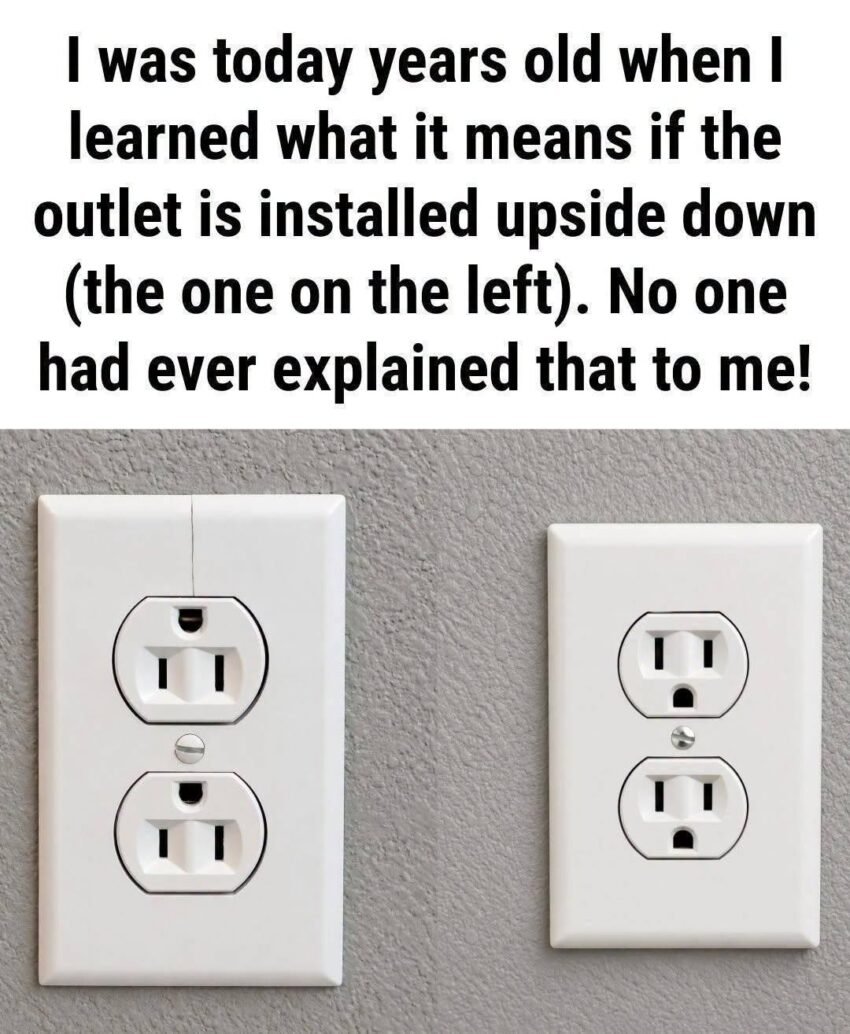
3. Why Are Outlets Installed Upside Down Sometimes?
You may see outlets installed with the ground hole on top instead of the bottom.
This is often intentional.
Ground-up installation can provide extra safety:
If a plug is partially pulled out and a metal object falls behind it, the object is more likely to hit the ground connection first rather than bridge the hot and neutral terminals.
Some electricians prefer this orientation, especially in commercial environments.
4. Why Aren’t Outlets Everywhere?
It may seem convenient to have an outlet every few feet, but there are reasons they are limited:
Cost
Each outlet requires:
- Electrical boxes
- Wiring
- Labor
- Circuit planning
Circuit Load Limits
Every circuit can safely handle only a certain amount of electricity.
Too many high-power devices on one circuit can cause:
- Overheating
- Tripped breakers
- Fire hazards
5. Why Kitchens and Bathrooms Have Special Outlets
Rooms with water require additional protection.
You may see special outlets marked:
GFCI (Ground-Fault Circuit Interrupter)
These outlets constantly monitor electricity flow.
If they detect a tiny imbalance — such as electricity leaking through water or a person — they can shut off power extremely quickly.
They are commonly required in:
- Bathrooms
- Kitchens
- Garages
- Outdoor areas
- Laundry rooms
6. Why Are Some Outlets Controlled by Wall Switches?
Older homes often have switched outlets because lamps were historically the main source of room lighting.
Instead of installing expensive ceiling lights, builders provided:
- A wall switch near the door
- A nearby outlet connected to the switch
- A lamp plugged into that outlet
Turning on the switch turned on the lamp.
7. Why Are Outlets Usually Not Installed Behind Furniture?
Builders try to place outlets where they remain usable.
A hidden outlet behind:
- A cabinet
- Large appliance
- Permanent furniture
may be difficult to access and could encourage unsafe use of extension cords.
8. Why Do Some Outlets Feel Loose or Fall Out?
A common issue is worn-out outlet contacts.
Inside an outlet are metal contacts that grip the plug blades. Over time:
- Frequent plugging/unplugging
- Cheap outlets
- Heavy plugs pulling downward
can weaken those contacts.
A loose outlet can create:
- Poor electrical connection
- Heat buildup
- Possible fire risk
Replacing a worn outlet is usually safer than trying to tighten it.
9. Why Are Electrical Outlets Different Around the World?
Different countries use different outlet designs because electrical systems developed independently.
Differences include:
- Voltage levels
- Plug shapes
- Safety standards
- Historical engineering decisions
Examples:
- United States: typically around 120 volts
- Many European countries: around 230 volts
- Pakistan: commonly around 230 volts
Higher voltage can transmit power more efficiently, but safety systems are essential because electric shock risks increase.
10. The “Hidden” Reason: Outlets Are Placed Around Human Behavior
The biggest reason outlets are installed where they are is to match how people live.
Designers consider:
- Where people place furniture
- Where appliances are used
- Walking paths
- Lighting needs
- Safety requirements
- Accessibility
A well-designed electrical system is almost invisible — it works quietly in the background until you need it.
Key Takeaway
The placement and design of outlets are the result of safety engineering, electrical physics, building codes, and human habits. The small holes in your wall represent a carefully designed system intended to deliver electricity while reducing the risk of shock, overheating, and fire.