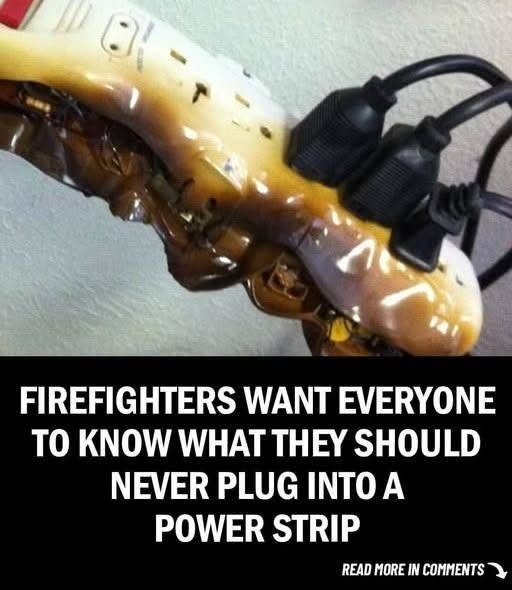
Using a power strip correctly is important because overloading it or plugging in high-power appliances can cause overheating, melted wires, damaged electronics, electrical fires, or tripped circuit breakers. Below are the types of devices that should never (or only very cautiously) be plugged into a standard power strip.
1. Space Heaters
Space heaters consume a large amount of electricity—typically 1,500 watts or more. Standard power strips are not designed to carry that much continuous power.
Why it’s dangerous:
- Can overheat the power strip.
- May melt internal wiring.
- Increases the risk of electrical fires.
Safer option: Plug the heater directly into a wall outlet.
2. Air Conditioners
Portable and window air conditioners require a high starting current when the compressor turns on.
Why it’s dangerous:
- Can overload the strip.
- May damage the air conditioner.
- Creates a fire hazard.
Safer option: Use a dedicated wall outlet.
3. Refrigerators and Freezers
Although refrigerators don’t constantly use high power, their compressors draw a large surge of electricity when starting.
Why it’s dangerous:
- High startup current can overload power strips.
- May shorten appliance life.
- Can cause voltage drops affecting other devices.
Safer option: Plug directly into a wall outlet.
4. Microwave Ovens
Microwaves often use between 800 and 1,500 watts.
Why it’s dangerous:
- High power consumption overheats power strips.
- Can trip circuit breakers.
- May damage the strip.
Safer option: Connect directly to a wall outlet.
5. Coffee Makers
Coffee makers use heating elements that require significant electrical power.
Why it’s dangerous:
- Heating elements draw heavy current.
- Can overload inexpensive power strips.
Safer option: Plug into a wall outlet.
6. Toasters and Toaster Ovens
These appliances use powerful heating elements.
Why it’s dangerous:
- Very high wattage.
- Risk of overheating and fire.
Safer option: Use a dedicated wall outlet.
7. Hair Dryers and Curling Irons
Hair styling tools often use 1,000–2,000 watts.
Why it’s dangerous:
- Can exceed the strip’s maximum rating.
- May overheat wiring.
Safer option: Plug directly into the wall.
8. Electric Kettles
Electric kettles heat water very quickly because they consume large amounts of electricity.
Why it’s dangerous:
- High continuous electrical load.
- Increased risk of overheating.
Safer option: Use a wall outlet.
9. Washing Machines and Dryers
These appliances require large amounts of power, especially dryers.
Why it’s dangerous:
- Power strips cannot safely handle their electrical demand.
- Serious fire risk.
Safer option: Dedicated wall outlet.
10. Another Power Strip (Daisy Chaining)
Connecting one power strip into another is called daisy chaining.
Why it’s dangerous:
- Easily overloads the electrical circuit.
- Increases heat buildup.
- Violates many electrical safety codes.
Safer option: Use a single appropriately rated power strip or install additional outlets.
11. Large Power Tools
Examples include:
- Circular saws
- Air compressors
- Table saws
- Welders
Why it’s dangerous:
- High startup current.
- May damage the strip or trip breakers.
Safer option: Use a dedicated outlet.
12. Portable Electric Radiators
Oil-filled and ceramic radiators use powerful heating elements.
Why it’s dangerous:
- Continuous high electrical load.
- Can overheat extension cords and power strips.
Safer option: Plug directly into a wall outlet.
What Is Safe to Plug Into a Power Strip?
Power strips are generally suitable for low-power electronics, such as:
- Computers
- Monitors
- Phone chargers
- Wi-Fi routers
- TVs
- Game consoles
- Lamps
- Speakers
Always check that the combined wattage of everything plugged into the strip stays below its rated capacity (commonly 1,800 watts on a 15-amp, 120-volt circuit in North America; ratings vary by country).
General Safety Tips
- Never cover a power strip with rugs, furniture, or blankets.
- Replace any strip that is cracked, scorched, or damaged.
- Avoid using extension cords as permanent wiring.
- Do not overload outlets with multiple high-power devices.
- Use surge protectors for sensitive electronics such as computers and televisions.
- Purchase power strips that are certified by a recognized safety testing organization for your country.
Following these guidelines helps reduce the risk of overheating, equipment damage, electric shock, and electrical fires while extending the life of your appliances and electrical system.