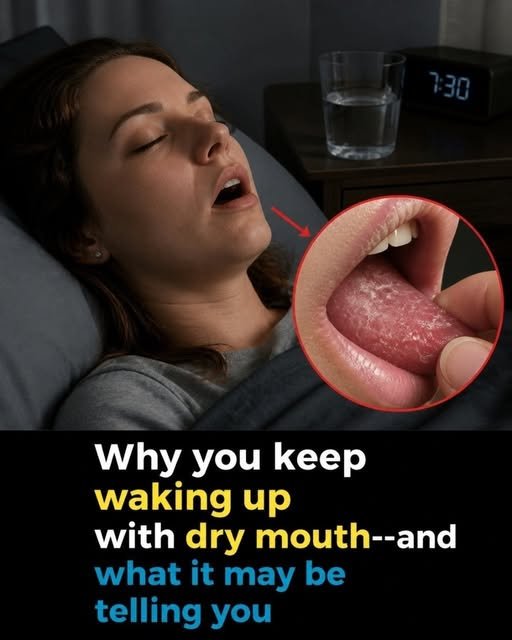
Waking up with a dry mouth is common, but if it happens frequently, it may be a sign that something needs attention. Saliva plays an important role in keeping your mouth healthy by washing away bacteria, protecting your teeth, and helping with digestion. When saliva production decreases during the night, you may wake up with a dry, sticky feeling in your mouth.
What Your Body Might Be Telling You
1. You’re Dehydrated
The most common cause of dry mouth is not drinking enough water during the day. Hot weather, exercise, fever, vomiting, or diarrhea can also lead to dehydration.
Signs:
- Dry mouth and lips
- Dark yellow urine
- Feeling thirsty
- Headache
- Fatigue
Solution:
- Drink enough water throughout the day.
- Limit alcohol and excessive caffeine.
- Eat water-rich foods like watermelon, cucumber, and oranges.
2. You’re Breathing Through Your Mouth
Sleeping with your mouth open—often due to nasal congestion, allergies, or snoring—can dry out your mouth overnight.
Signs:
- Dry mouth only in the morning
- Snoring
- Sore throat upon waking
- Bad breath
Solution:
- Treat nasal congestion with saline nasal spray or a humidifier.
- Sleep on your side if snoring is an issue.
- Consult a healthcare provider if mouth breathing is frequent.
3. Side Effect of Medications
Many medications reduce saliva production.
Common medications include:
- Antihistamines
- Antidepressants
- Blood pressure medications
- Decongestants
- Some pain relievers
Solution:
- Do not stop medication without medical advice.
- Ask your doctor if an alternative is available.
- Sip water regularly and use sugar-free gum or lozenges to stimulate saliva.
4. Diabetes
High blood sugar levels can cause excessive thirst and dry mouth.
Other symptoms:
- Frequent urination
- Increased hunger
- Blurred vision
- Fatigue
- Slow-healing wounds
Solution:
- Get your blood sugar checked if symptoms persist.
- Follow your doctor’s treatment plan if diagnosed.
- Maintain a healthy diet and regular exercise.
5. Sleep Apnea
People with sleep apnea often breathe through their mouths or use CPAP machines, both of which can contribute to dry mouth.
Symptoms:
- Loud snoring
- Pauses in breathing during sleep
- Daytime sleepiness
- Morning headaches
Solution:
- Discuss symptoms with a sleep specialist.
- If using a CPAP machine, ask about a heated humidifier.
6. Smoking or Tobacco Use
Smoking reduces saliva production and irritates the tissues in your mouth.
Effects:
- Persistent dry mouth
- Bad breath
- Increased risk of gum disease
- Tooth decay
Solution:
- Quit smoking or reduce tobacco use.
- Stay hydrated.
- Seek support if you need help quitting.
7. Stress and Anxiety
Stress can affect your body’s normal saliva production.
Symptoms:
- Dry mouth during stressful situations
- Rapid heartbeat
- Trouble sleeping
Solution:
- Practice relaxation techniques such as meditation or deep breathing.
- Maintain a regular sleep schedule.
- Seek professional support if anxiety becomes overwhelming.
8. Salivary Gland Disorders or Autoimmune Diseases
Conditions such as Sjögren’s syndrome can damage the glands that produce saliva.
Symptoms:
- Constant dry mouth
- Dry eyes
- Difficulty swallowing
- Frequent dental problems
Solution:
- Consult a healthcare provider for evaluation.
- Prescription medications may help stimulate saliva production.
Home Remedies for Dry Mouth
- Drink water regularly throughout the day.
- Keep a glass of water by your bed.
- Chew sugar-free gum or suck on sugar-free lozenges.
- Use an alcohol-free mouthwash made for dry mouth.
- Run a humidifier in your bedroom at night.
- Avoid smoking and excessive alcohol.
- Reduce caffeine intake if it worsens symptoms.
- Maintain good oral hygiene by brushing twice daily and flossing.
When to See a Doctor
Seek medical advice if:
- Dry mouth lasts for more than two weeks.
- You have difficulty swallowing or speaking.
- You develop frequent cavities or gum disease.
- You notice white patches in your mouth (possible oral infection).
- Dry mouth is accompanied by excessive thirst, frequent urination, or unexplained weight loss.
- You have loud snoring, pauses in breathing during sleep, or excessive daytime fatigue.
Key Takeaway
Occasional dry mouth is usually caused by dehydration or sleeping with your mouth open and often improves with simple lifestyle changes. However, persistent dry mouth can be linked to medications, diabetes, sleep apnea, autoimmune conditions, or other health issues. If the problem continues or is accompanied by other symptoms, it’s important to consult a healthcare professional for proper evaluation and treatment.