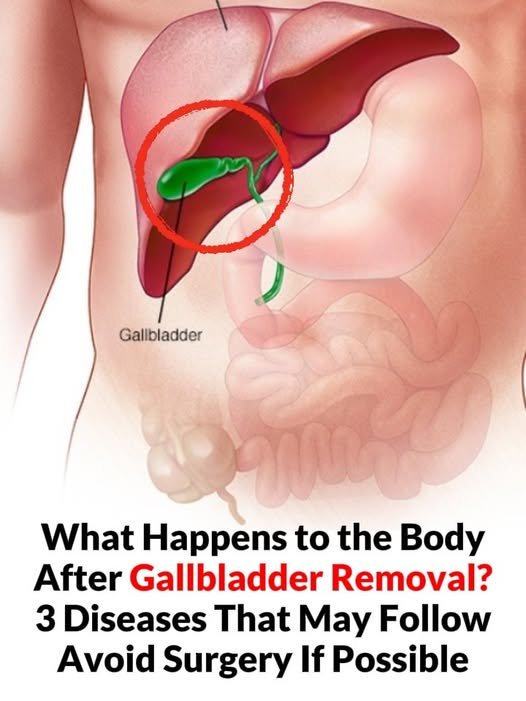
After gallbladder removal (a surgery called cholecystectomy), most people digest food normally—but the way bile flows in your body changes permanently. This can lead to some long-term digestive effects, and in a smaller group of people, certain medical conditions may develop.
🟢 What changes in the body after gallbladder removal?
The gallbladder normally acts as a storage pouch for bile (a digestive fluid made by the liver). It releases bile in controlled bursts when you eat fatty food.
After removal:
- Bile is no longer stored
- It flows continuously from the liver into the intestine
- The intestine receives bile in a less controlled, more constant stream
- Fat digestion still happens, but it is less “efficiently timed”
Most people adapt within weeks to months.
⚠️ 3 conditions that may follow gallbladder removal
These are not guaranteed diseases everyone gets, but known post-surgery complications or syndromes.
1. 🧪 Postcholecystectomy syndrome
This is a collection of symptoms that can appear after gallbladder removal.
What it includes:
- Persistent upper abdominal pain
- Bloating and indigestion
- Nausea after meals
- Fat intolerance (especially fried foods)
Why it happens:
- Bile flow changes
- Possible leftover gallstones in bile ducts
- Sphincter of Oddi dysfunction (muscle controlling bile release)
Important note:
It does NOT mean the surgery failed—it just means the digestive system is still adapting or there is another underlying issue.
2. 💩 Bile acid diarrhea
This is one of the most common long-term effects after gallbladder removal.
What happens:
- Excess bile acids spill into the intestines
- This irritates the colon
- Leads to frequent, watery diarrhea
Symptoms:
- Urgent need to go to toilet after meals
- Loose stools, especially after fatty food
- Abdominal cramping
Why it occurs:
Without a gallbladder, bile is not released in controlled amounts, so too much reaches the intestine at once.
3. 🦠 Small intestinal bacterial overgrowth (SIBO)
Some people develop an imbalance of gut bacteria after gallbladder removal.
What happens:
- Bacteria grow excessively in the small intestine
- They interfere with digestion and absorption
Symptoms:
- Gas and bloating
- Abdominal discomfort
- Diarrhea or constipation
- Nutrient deficiencies in long-term cases
Possible link:
Changes in bile flow may reduce its natural antibacterial effect in the gut.
🧠 Key reality check (important)
- Most people do NOT develop serious disease
- About 70–90% live normally after recovery
- Mild issues like loose stools or bloating are the most common
- Severe complications are relatively uncommon
🥗 Lifestyle adjustments that help
- Eat smaller, more frequent meals
- Reduce very fatty or fried foods (especially early after surgery)
- Increase fiber slowly
- Stay hydrated
- Probiotics may help gut balance (in some cases)
If you want, I can also explain:
- What foods to avoid after gallbladder removal
- How long digestion takes to normalize
- Or signs that indicate a complication vs normal recovery