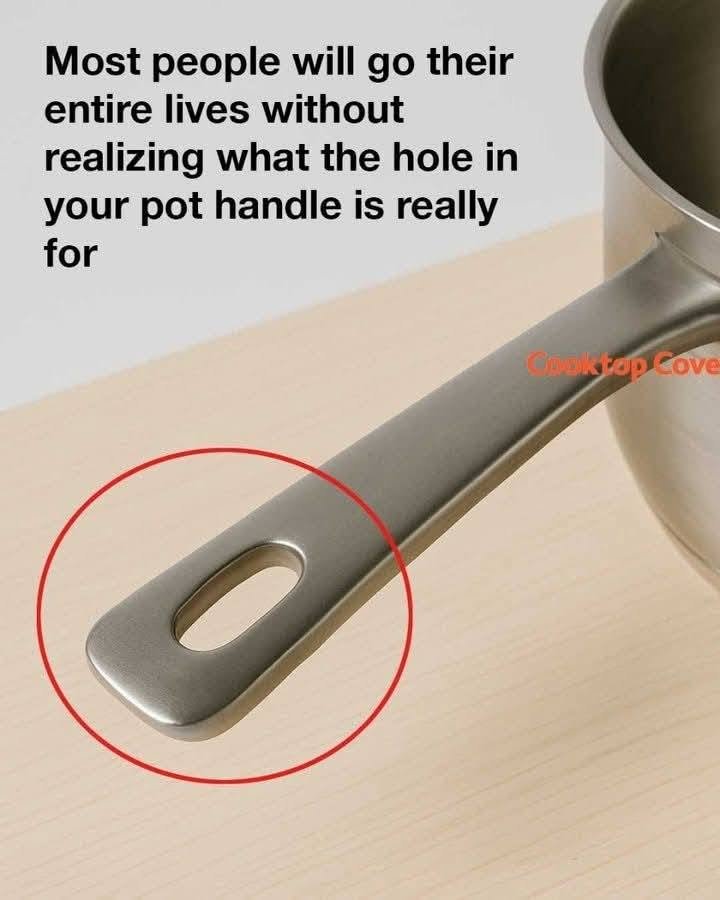
The hole in a pot handle is a small design feature, but it has several clever purposes. It is not just there for decoration—it solves practical problems in the kitchen.
1. Holding a cooking spoon
The most common use is to hold a spoon or spatula while cooking. You can place the handle of your spoon through the hole, leaving the spoon’s cooking end hanging over the pot.
Benefits:
- Keeps the spoon from lying on a dirty counter.
- Prevents sauce, oil, or food from dripping everywhere.
- Keeps the spoon within easy reach while cooking.
2. Hanging storage
The hole allows you to hang the pot on a wall hook or kitchen rack.
Benefits:
- Saves cabinet space.
- Keeps cookware organized and easy to access.
- Allows pots to dry properly after washing.
3. Better grip and handling
A hole reduces the amount of material in the handle, making it:
- Lighter and easier to hold.
- More comfortable to grip.
- Less likely to become slippery from heat or moisture.
4. Heat management
The gap can help reduce how much heat travels from the pot body toward the end of the handle. It does not make the handle cold, but it can slightly improve comfort and handling.
5. Manufacturing and design efficiency
From an engineering perspective, adding a hole:
- Uses less material.
- Reduces weight.
- Makes the handle easier to manufacture in some designs.
- Gives the handle extra structural shape.
6. A simple example of “hidden” design thinking
A pot handle hole is a good example of human-centered design: a tiny feature that combines storage, cleanliness, convenience, and manufacturing benefits. Many everyday objects have similar small details that are easy to ignore but were carefully designed to solve common problems.