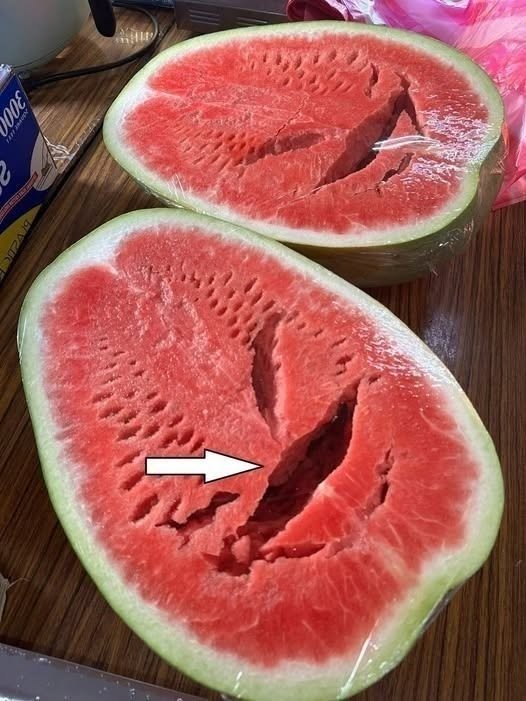
Here’s what it usually means:
1. “Hollow heart” (most common cause)
Watermelons can develop internal cracks or gaps called hollow heart.
This happens when:
- The fruit grows very quickly
- Pollination was uneven
- Temperature and moisture fluctuated during growth
Result: the flesh can split inside, creating cracks or hollow spaces.
It is safe to eat but texture may be dry or less sweet in some parts.
2. Growth stress (rapid expansion)
If the watermelon gets a lot of water after a dry period, the inside can expand faster than the flesh can handle.
This causes:
- Internal splitting
- Fibrous cracks
Again, this is not harmful, just a farming/texture issue.
3. Over-ripening or aging after harvest
If a watermelon is stored too long or gets very ripe:
- The flesh can start separating
- Cracks or soft “grainy” textures may appear
This is when quality declines.
If it smells fermented or tastes off, then you should avoid eating it.
4. Rare case: internal breakdown or fermentation
If you notice:
- Sour or alcoholic smell
- Fizzy texture
- Slimy flesh
Then it may be starting to ferment. In that case, don’t eat it.
Important truth about the viral warning
Cracked watermelon flesh is not automatically toxic or poisonous. Most of the time it’s just a natural growth defect.
When you should actually stop eating it:
- Bad smell (sour/rotten)
- Mushy, slimy texture
- Mold anywhere inside
- Strange fermentation taste
Bottom line
Internal cracks = usually harmless plant growth issue
Not an emergency, not a poison sign
If you want, you can describe or upload what your watermelon looked like, and I can tell you more specifically whether it was safe or not.