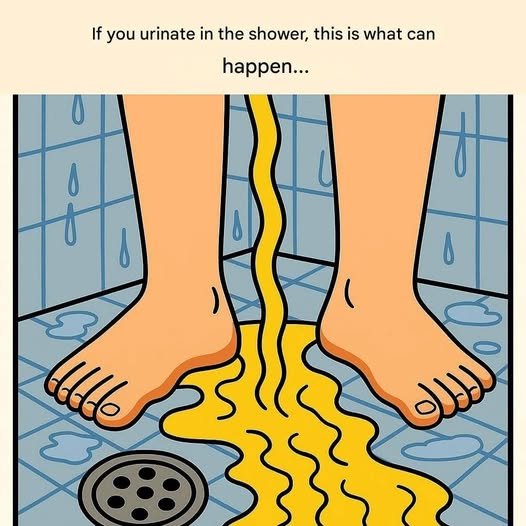
Peeing in the shower is more common than many people realize, and for most healthy people it is not inherently harmful. However, there are a few practical, hygiene, and health considerations.
What happens when you pee in the shower?
1. The urine is washed away
- Fresh urine from a healthy person is mostly water (about 95%), along with urea, salts, and other waste products.
- When you urinate while the shower is running, the urine is diluted immediately and goes down the drain with the shower water.
2. It generally doesn’t damage plumbing
- Normal household plumbing is designed to handle wastewater.
- Urine does not harm pipes or drains under typical conditions.
3. Hygiene considerations
- If the urine is washed away promptly with running water, the risk of leaving behind germs is low.
- It’s still a good idea to rinse the shower floor afterward, especially in shared showers.
- Clean your shower regularly to prevent buildup of soap scum, bacteria, and mold.
Are there health risks?
For most healthy adults, peeing in the shower occasionally is unlikely to cause health problems. However:
- If you have a urinary tract infection (UTI), your urine may contain higher levels of bacteria. While the running water dilutes it, good cleaning practices are still important.
- If you have open cuts or wounds on your feet, avoid standing in communal showers regardless of whether people urinate there, because public showers can harbor organisms that cause athlete’s foot or plantar warts.
What about public or shared showers?
There are additional considerations:
- In a shared household shower, some people may find it unhygienic or unpleasant, so it’s courteous to consider others’ preferences.
- In gyms, pools, or locker rooms, urinating in the shower is generally discouraged because it is a shared public space.
Does it save water?
Yes. If you urinate during a shower instead of flushing a toilet, you avoid one toilet flush, which can save water. Modern toilets typically use about 1.28–1.6 gallons (4.8–6 liters) per flush, while older toilets may use significantly more.
Common myths
- “Urine is completely sterile.” Not exactly. Healthy urine usually contains very few microorganisms, but it is not considered sterile.
- “Peeing in the shower causes fungal infections.” There is no evidence that your own urine causes athlete’s foot or similar fungal infections.
- “It can train your brain to pee whenever you hear running water.” Some pelvic health specialists suggest that regularly urinating in response to running water could, in some people, strengthen an association between the sound of running water and the urge to urinate. The evidence is limited, but if you notice increasing urgency or bladder symptoms, it’s reasonable to avoid making it a habit.
Bottom line
For a healthy person in their own shower, peeing while the water is running is generally considered low risk from a medical standpoint. The main concerns are courtesy in shared spaces, routine bathroom hygiene, and avoiding making it a conditioned habit if you experience bladder urgency.