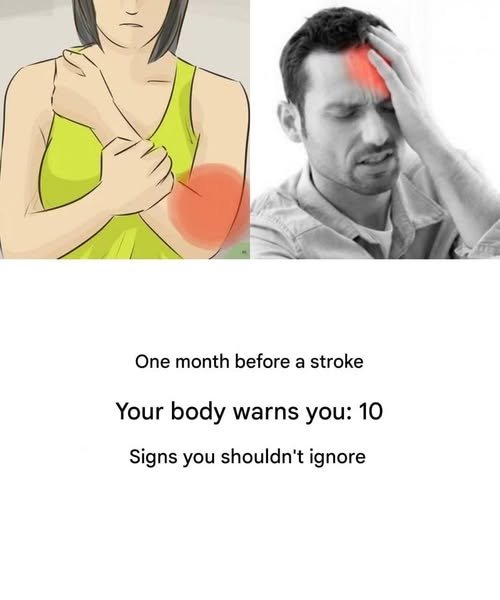
Here are 10 symptoms that may occur before a stroke or TIA and should never be ignored.
1. Sudden Weakness or Numbness
- Weakness or numbness in the face, arm, or leg.
- Usually affects one side of the body.
- You may have trouble lifting one arm or walking.
Why it happens: Blood flow to the brain is interrupted, affecting movement and sensation.
2. Difficulty Speaking or Understanding Speech
- Slurred speech.
- Trouble finding words.
- Difficulty understanding what others are saying.
This is one of the most common stroke symptoms.
3. Sudden Vision Problems
- Blurred vision.
- Double vision.
- Partial or complete loss of vision in one or both eyes.
These symptoms may last only a few minutes during a TIA.
4. Severe Headache
- A sudden, intense headache unlike your usual headaches.
- May be accompanied by nausea, vomiting, or neck stiffness.
This is especially concerning for a hemorrhagic (bleeding) stroke.
5. Dizziness or Loss of Balance
- Feeling dizzy.
- Trouble walking.
- Loss of coordination.
- Frequent unexplained falls.
This may indicate involvement of the cerebellum or brainstem.
6. Facial Drooping
- One side of the face sags.
- Uneven smile.
- Difficulty closing one eye.
Ask the person to smile—if one side doesn’t move normally, seek emergency care.
7. Temporary Episodes That Go Away (TIA)
Symptoms may last a few minutes to an hour, then completely disappear:
- Weakness
- Numbness
- Speech difficulty
- Vision changes
A TIA is a medical emergency. About 1 in 5 people who have a TIA will have a stroke within 90 days, and the risk is highest in the first 48 hours if untreated.
8. Sudden Confusion
- Difficulty thinking clearly.
- Memory problems.
- Trouble following simple instructions.
- Acting unusually confused.
9. Difficulty Swallowing
- Choking while eating.
- Feeling like food gets stuck.
- Drooling.
Although less common, this can occur if the stroke affects muscles involved in swallowing.
10. Sudden Extreme Fatigue (Less Specific)
Some people report:
- Unusual exhaustion.
- Feeling unusually weak.
- Lack of energy.
Important: Fatigue by itself is not a reliable warning sign of stroke because it has many other possible causes.
The FAST Test
If you suspect someone is having a stroke, remember FAST:
- F – Face: Ask them to smile. Does one side droop?
- A – Arms: Ask them to raise both arms. Does one drift downward?
- S – Speech: Is speech slurred or strange?
- T – Time: Call your local emergency services immediately. Time is critical because some stroke treatments are only effective within a few hours of symptom onset.
Major Risk Factors
You are at higher risk if you have:
- High blood pressure (the biggest risk factor)
- Diabetes
- High cholesterol
- Atrial fibrillation (an irregular heartbeat)
- Smoking
- Obesity
- Physical inactivity
- Excessive alcohol use
- Older age
- Previous stroke or TIA
- Family history of stroke
How to Lower Your Risk
- Keep blood pressure under control.
- Don’t smoke or vape nicotine.
- Exercise regularly (at least 150 minutes per week if appropriate for you).
- Eat a diet rich in vegetables, fruits, whole grains, and lean proteins.
- Maintain a healthy weight.
- Control diabetes and cholesterol.
- Take prescribed medications consistently.
- Limit alcohol.
When to Seek Emergency Care
Call emergency medical services immediately if you or someone else develops any of these sudden symptoms:
- Weakness or numbness on one side
- Trouble speaking or understanding speech
- Vision loss
- Severe dizziness or inability to walk
- Sudden, severe headache
- Facial drooping
Even if symptoms disappear after a few minutes, do not ignore them. They could be a TIA, which often precedes a major stroke and requires urgent medical evaluation. Early treatment can significantly reduce the risk of a disabling stroke.