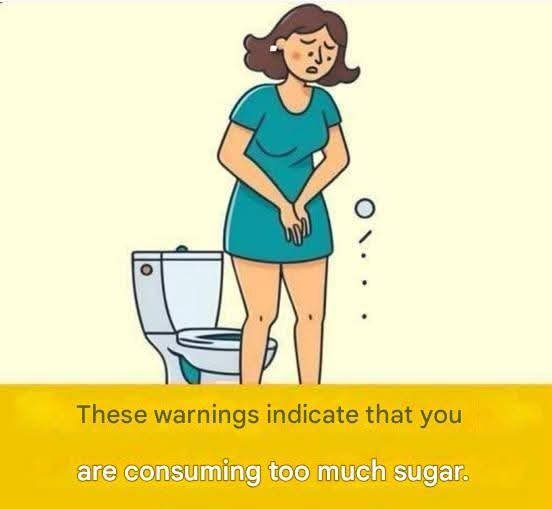
Eating a lot of added sugar doesn’t always cause obvious symptoms right away, but consistently high sugar intake can be associated with several warning signs and health effects.
1. Frequent Hunger
Sugar-rich foods can cause rapid rises and falls in blood sugar, which may leave you feeling hungry again soon after eating.
2. Weight Gain
Excess sugar adds calories without providing much satiety, making it easier to consume more calories than your body needs.
3. Increased Belly Fat
High intake of sugary drinks and foods is associated with greater accumulation of abdominal fat over time.
4. Energy Crashes
A temporary energy boost after eating sugar may be followed by feelings of fatigue or sluggishness.
5. Frequent Cravings
Regular consumption of very sweet foods can make you crave them more often and make less-sweet foods seem less satisfying.
6. Tooth Decay
Sugar feeds bacteria in the mouth, increasing the risk of cavities and dental problems.
7. Skin Problems
Some studies suggest diets high in added sugars may contribute to acne and skin aging in susceptible individuals.
8. Mood Changes
Rapid fluctuations in blood sugar can sometimes be associated with irritability, difficulty concentrating, or mood swings.
9. Elevated Blood Sugar Levels
Consistently high sugar intake can contribute to insulin resistance and increase the risk of developing Type 2 Diabetes.
10. Increased Risk of Fatty Liver
Large amounts of added sugar, especially fructose from sweetened beverages, may contribute to Nonalcoholic Fatty Liver Disease in some people.
How Much Added Sugar Is Recommended?
The American Heart Association recommends limiting added sugar to:
Men: no more than 36 grams (9 teaspoons) per day.
Women: no more than 25 grams (6 teaspoons) per day.
Common Sources of Hidden Sugar
Soft drinks and energy drinks
Sweetened tea and coffee
Candy and desserts
Breakfast cereals
Flavored yogurt
Packaged snacks
Ketchup, sauces, and salad dressings
If you’re concerned about your sugar intake, reducing sugary drinks is often one of the most effective first steps. Replacing them with water, unsweetened tea, or sparkling water can significantly lower daily sugar consumption.