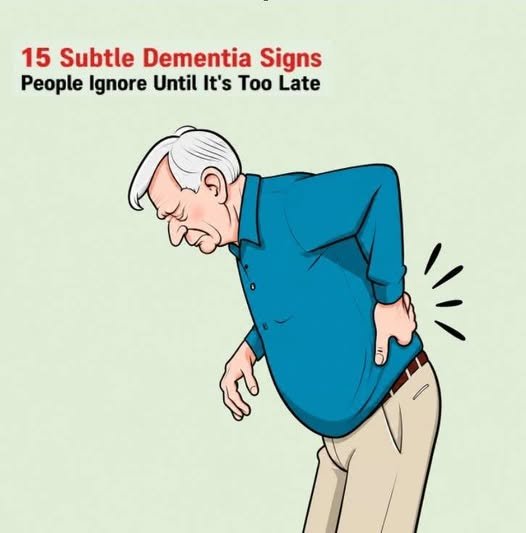
Many of the early signs of dementia can be subtle and may be mistaken for normal ageing, stress, or fatigue. However, persistent changes that interfere with daily life should be evaluated by a healthcare professional. Here are 15 commonly overlooked signs, along with detailed explanations.
1. Frequent Memory Loss That Disrupts Daily Life
Occasionally forgetting names or appointments is common. With dementia, a person may:
- Forget recently learned information repeatedly.
- Ask the same questions over and over.
- Depend heavily on notes or family members.
- Forget important dates or events.
2. Difficulty Planning or Solving Problems
A person may struggle with:
- Following recipes they once knew well.
- Managing household bills.
- Keeping track of monthly expenses.
- Concentrating on tasks that require multiple steps.
3. Trouble Completing Familiar Tasks
Routine activities become surprisingly difficult, such as:
- Driving to familiar places.
- Operating household appliances.
- Remembering the rules of favourite games.
- Completing work responsibilities.
4. Confusion About Time or Place
People with dementia may:
- Lose track of dates or seasons.
- Forget where they are.
- Not understand how they arrived somewhere.
- Become confused about the passage of time.
5. Problems Understanding Visual Information
This isn’t simply poor eyesight. It may involve:
- Difficulty judging distances.
- Trouble recognising faces.
- Problems reading.
- Difficulty distinguishing colours or contrasts.
- Increased risk of falls.
6. Difficulty Finding the Right Words
Someone may:
- Pause frequently during conversations.
- Use incorrect words.
- Repeat themselves.
- Call everyday objects by unusual names.
- Stop speaking because they can’t remember a word.
7. Misplacing Items and Losing the Ability to Retrace Steps
Everyone misplaces things occasionally. Dementia may cause someone to:
- Put keys in the refrigerator.
- Place a wallet in unusual locations.
- Accuse others of stealing because they cannot find items.
- Be unable to retrace their actions.
8. Poor Judgement or Decision-Making
Examples include:
- Giving away large sums of money.
- Falling for scams more easily.
- Neglecting personal hygiene.
- Wearing inappropriate clothing for the weather.
- Making risky financial decisions.
9. Withdrawal from Social Activities
The person may:
- Stop attending social gatherings.
- Lose interest in hobbies.
- Avoid conversations.
- Withdraw from family and friends due to embarrassment or confusion.
10. Mood and Personality Changes
Dementia can affect emotional regulation, leading to:
- Anxiety.
- Depression.
- Irritability.
- Suspicion of others.
- Fearfulness.
- Unusual emotional outbursts.
11. Increased Difficulty Following Conversations
They may:
- Lose track of discussions.
- Interrupt inappropriately.
- Struggle to understand jokes or sarcasm.
- Forget what someone just said.
12. Reduced Sense of Direction
People may:
- Become lost in familiar neighbourhoods.
- Have trouble following maps.
- Forget familiar routes.
- Need increasing assistance when travelling.
13. Changes in Sleep Patterns
Some individuals experience:
- Sleeping much more during the day.
- Restlessness at night.
- Waking frequently.
- “Sundowning,” where confusion worsens in the late afternoon or evening.
14. Difficulty Managing Finances
Early signs include:
- Missing bill payments.
- Unusual spending habits.
- Difficulty balancing a cheque book or bank account.
- Confusion over simple financial transactions.
15. Repeating Stories or Questions
A person may:
- Tell the same story multiple times in one conversation.
- Ask identical questions repeatedly.
- Forget they already received an answer.
When Should You Be Concerned?
One or two isolated symptoms do not necessarily mean someone has dementia. However, an evaluation is recommended if:
- Symptoms become frequent.
- Daily activities are affected.
- Family or friends notice significant changes.
- Memory or thinking problems progressively worsen.
Conditions That Can Mimic Dementia
Several treatable conditions can cause similar symptoms, including:
- Vitamin B12 deficiency.
- Thyroid disorders.
- Depression.
- Sleep apnoea.
- Medication side effects.
- Urinary tract infections (particularly in older adults).
- Dehydration.
When to Seek Medical Advice
A healthcare professional should assess persistent memory or thinking problems as early as possible. Early evaluation can:
- Identify treatable causes.
- Allow earlier treatment if dementia is diagnosed.
- Help with future planning and support.
- Improve quality of life for both the individual and their family.
Early diagnosis does not stop dementia, but it can provide access to treatments, lifestyle interventions, and support services that may help manage symptoms and maintain independence for longer.