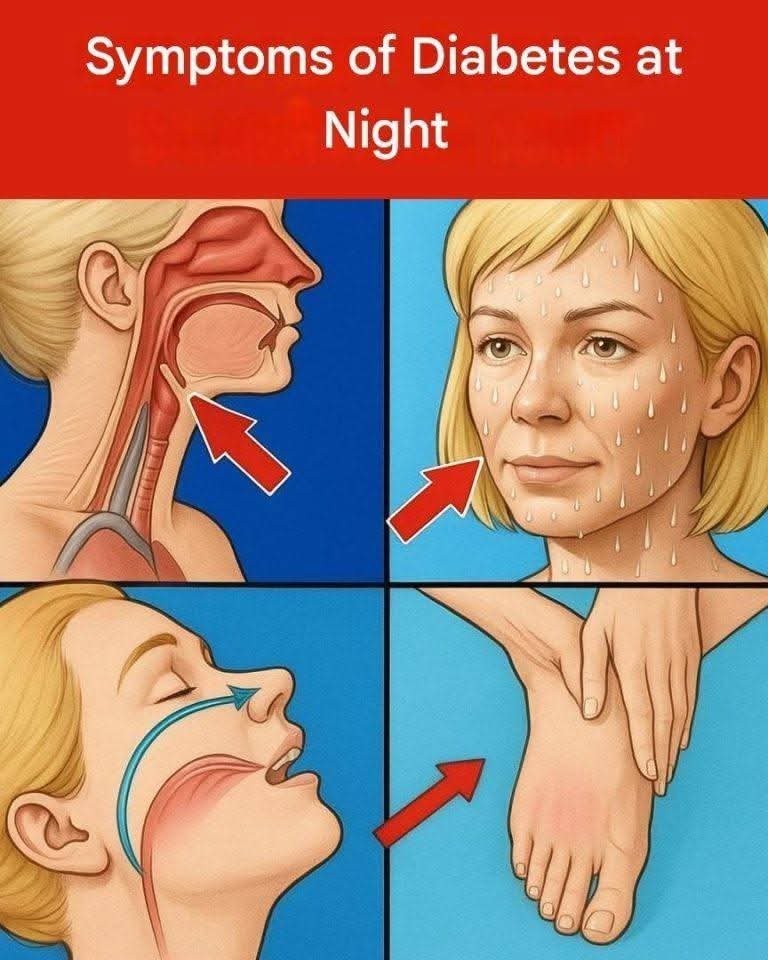
- Diabetes can cause symptoms at any time of day, but some signs may become especially noticeable at night. These symptoms do not necessarily mean someone has diabetes, but they can be reasons to discuss testing with a healthcare professional.
1. Frequent Urination at Night (Nocturia)
When blood sugar levels are high, the kidneys work harder to remove excess glucose from the blood. This causes more urine production.
Common signs:
Waking up multiple times to urinate
Producing large amounts of urine
Difficulty getting uninterrupted sleep
This is one of the more common symptoms of undiagnosed Type 2 Diabetes and Type 1 Diabetes.
2. Excessive Thirst During the Night
Because frequent urination causes fluid loss, the body can become dehydrated.
Common signs:
Waking up with a very dry mouth
Needing to drink water repeatedly during the night
Feeling thirsty even after drinking
The combination of excessive thirst and frequent urination is a classic diabetes symptom pattern.
3. Night Sweats
Night sweats can occur for several reasons in people with diabetes, particularly if blood sugar drops too low during sleep (hypoglycemia).
Possible signs:
Waking up with soaked clothing or bedding
Feeling shaky, anxious, or confused upon waking
Morning headaches
Night sweats have many possible causes besides diabetes, so they should be evaluated in context.
4. Numbness, Tingling, or Burning in the Feet
Persistently high blood sugar can damage nerves, a condition called Diabetic Neuropathy.
Symptoms often become more noticeable at night:
Burning sensations in the feet
Tingling (“pins and needles”)
Numbness
Sharp or stabbing pain
These symptoms may interfere with sleep.
5. Poor Sleep Due to Hunger, Restlessness, or Fatigue
Blood sugar fluctuations can affect sleep quality.
Possible signs:
Waking up feeling unusually hungry
Restless sleep
Morning fatigue despite adequate sleep time
Difficulty staying asleep
Sleep disruption can occur with both high and low blood sugar levels.
Other Symptoms That May Suggest Diabetes
In addition to nighttime symptoms, watch for:
Increased daytime thirst
Increased urination
Unexplained weight loss
Blurred vision
Slow-healing wounds
Frequent infections
Unusual fatigue
When to Seek Medical Evaluation
Consider seeing a healthcare professional if you have:
Frequent nighttime urination along with excessive thirst
Persistent numbness or burning in your feet
Unexplained weight loss
Repeated episodes of sweating or feeling unwell during sleep
A simple blood glucose test or an Hemoglobin A1c test can help determine whether diabetes is present.
It’s also worth noting that these symptoms can be caused by conditions other than diabetes, so testing is important rather than relying on symptoms alone.