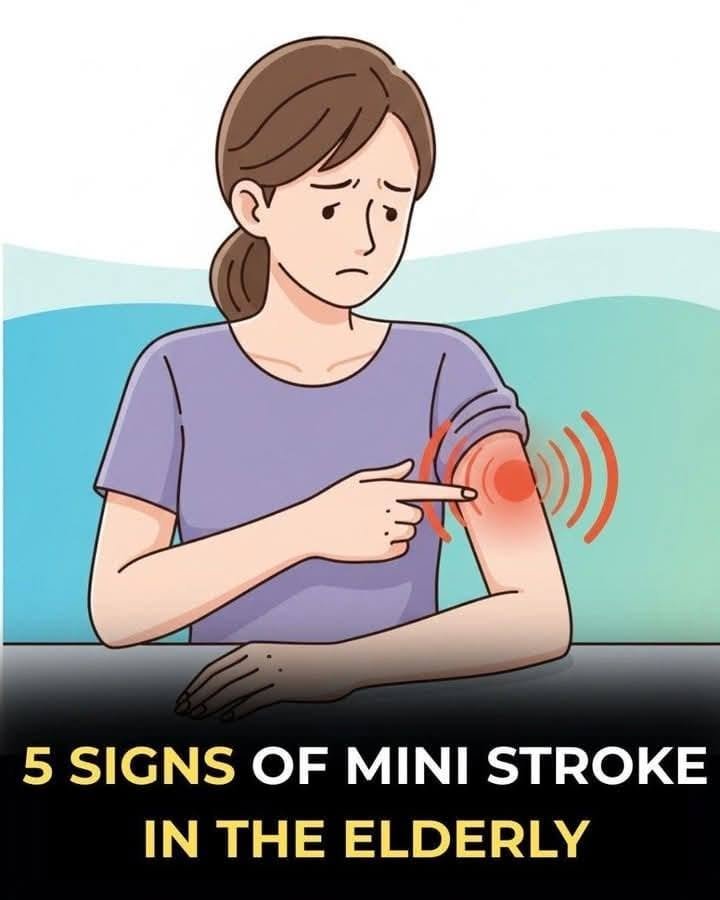
Here are 5 important signs of a mini stroke in older adults, explained in detail.
1. Sudden Weakness or Numbness on One Side of the Body
One of the most common signs is sudden weakness, numbness, or tingling that affects only one side of the body.
What it looks like:
- One arm or leg suddenly feels weak.
- The person may be unable to lift one arm.
- One side of the face may droop.
- They may have difficulty gripping objects or walking.
Why it happens:
A temporary loss of blood flow affects the area of the brain that controls muscle movement.
Example:
An elderly person suddenly drops a cup because their right hand becomes weak, but the strength returns after 15 minutes.
2. Difficulty Speaking or Understanding Speech
A mini stroke can affect the parts of the brain responsible for language.
Symptoms include:
- Slurred speech.
- Speaking words that don’t make sense.
- Trouble finding the right words.
- Difficulty understanding what others are saying.
Example:
A person suddenly cannot answer simple questions clearly or speaks in confusing sentences, then recovers within an hour.
3. Sudden Vision Problems
Vision changes can occur in one or both eyes.
Common symptoms:
- Blurred vision.
- Double vision.
- Temporary loss of vision in one eye.
- Partial loss of vision.
Why it happens:
Reduced blood flow temporarily affects the visual centers of the brain or the blood supply to the eye.
Example:
An older adult suddenly describes a “curtain” covering one eye for several minutes before vision returns.
4. Loss of Balance, Coordination, or Dizziness
A mini stroke may affect the brain areas that control balance.
Symptoms include:
- Sudden dizziness.
- Trouble walking.
- Poor coordination.
- Feeling like the room is spinning.
- Frequent stumbling without another clear explanation.
Example:
An elderly person suddenly cannot walk straight and needs support, but feels normal again after about 20 minutes.
5. Sudden Severe Headache (Less Common)
Although more typical of some other types of stroke, a sudden severe headache can occasionally accompany a TIA.
Symptoms:
- Intense headache that starts suddenly.
- May occur with dizziness or vision changes.
- May be accompanied by nausea.
Important:
A sudden, severe headache—especially if it is the worst headache a person has ever experienced—requires immediate medical evaluation because it may also indicate other serious conditions.
Remember the FAST Warning Signs
The FAST method helps identify a stroke or mini stroke quickly:
- F – Face: Ask the person to smile. Does one side droop?
- A – Arms: Ask them to raise both arms. Does one arm drift downward?
- S – Speech: Is speech slurred or difficult to understand?
- T – Time: Call emergency medical services immediately if any of these signs appear, even if they disappear.
Risk Factors in Older Adults
Older adults are more likely to experience a TIA if they have:
- High blood pressure.
- Type 2 Diabetes.
- High cholesterol.
- Smoking history.
- Atrial Fibrillation (an irregular heartbeat).
- Previous stroke or TIA.
- Heart disease.
- Obesity.
- Physical inactivity.
Why a Mini Stroke Should Never Be Ignored
A TIA is a warning sign. The risk of a full stroke is highest in the hours and days after a TIA, especially within the first 48 hours. Prompt medical assessment and treatment can greatly reduce the risk of a future stroke.
When to Seek Emergency Care
Call your local emergency medical services immediately if an older adult suddenly experiences:
- Facial drooping.
- Weakness or numbness on one side.
- Difficulty speaking or understanding speech.
- Sudden vision loss.
- Loss of balance or coordination.
- Sudden severe headache with neurological symptoms.
Do not wait for symptoms to improve or disappear. Even if the episode lasts only a few minutes, the person should be evaluated urgently because early treatment can help prevent a more serious stroke.