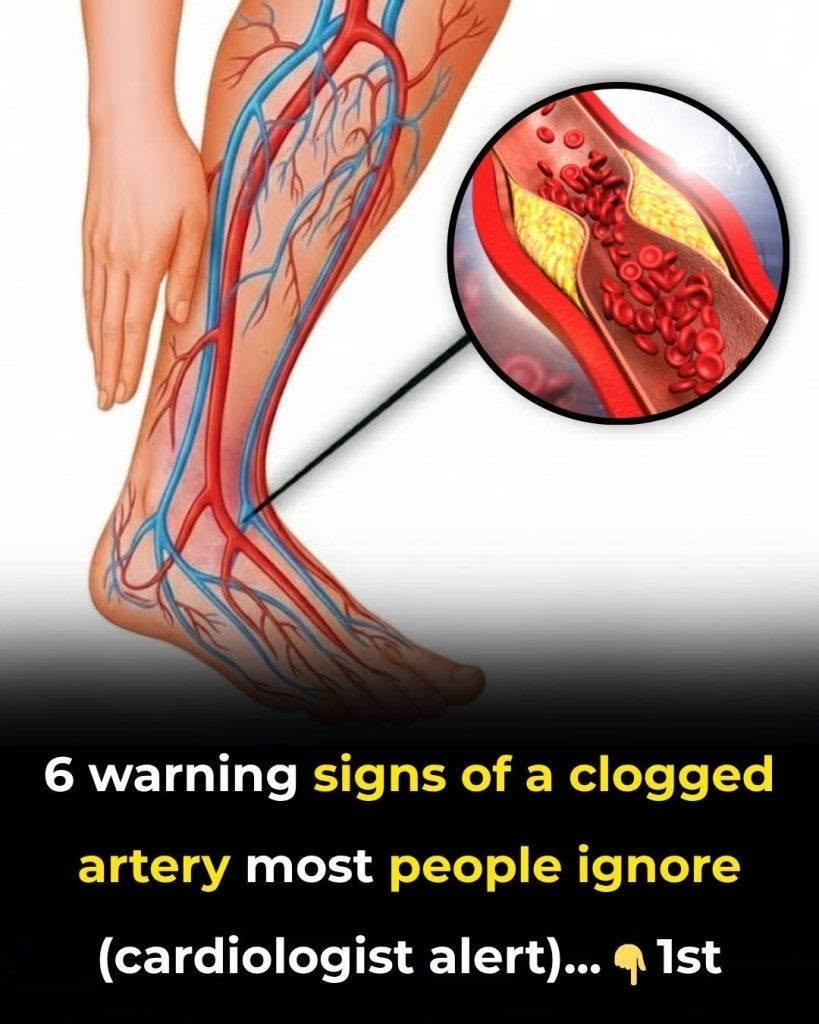
A clogged artery usually refers to atherosclerosis, a condition where fatty deposits (plaques) build up inside arteries, narrowing the space for blood to flow. Many people ignore early warning signs because they can be mild, come and go, or look like ordinary stress, aging, or fatigue.
A cardiologist would emphasize that some artery blockages cause no symptoms until they become serious, so knowing possible warning signs and getting checked when appropriate is important.
1. Chest pressure, tightness, or discomfort (often ignored as “gas”)
One of the most important warning signs of reduced blood flow to the heart is angina.
What it may feel like:
- Pressure, squeezing, heaviness, or fullness in the center of the chest
- A feeling like something is sitting on your chest
- Burning or discomfort that may be mistaken for acid reflux
- Pain that appears during exercise, walking uphill, stress, or heavy activity and improves with rest
Why it happens:
When arteries supplying the heart become narrowed, the heart muscle may not receive enough oxygen during increased demand.
Seek urgent help if:
- Chest discomfort lasts more than a few minutes
- It occurs at rest
- It is severe or different from usual
- It comes with sweating, nausea, shortness of breath, or weakness
These can be signs of a heart attack.
2. Shortness of breath during normal activities
Many people blame breathlessness on:
- Being out of shape
- Getting older
- Stress
- Lack of sleep
But it can be a sign that the heart is struggling to pump efficiently because it is not receiving enough blood supply.
Possible signs:
- Getting unusually tired while climbing stairs
- Needing more breaks during walking
- Feeling breathless during activities you previously handled easily
- Waking up at night short of breath
Why it happens:
Reduced blood flow can weaken the heart muscle or increase pressure in the lungs.
3. Unusual fatigue or reduced stamina
Persistent tiredness is one of the most commonly overlooked symptoms.
Warning patterns:
- Feeling exhausted after small tasks
- A sudden decrease in exercise ability
- Needing longer recovery after activity
- Feeling unusually weak without a clear reason
Why it happens:
If arteries are narrowed, the heart must work harder to deliver blood. Your muscles and organs may also receive less oxygen during activity.
Women, older adults, and people with diabetes may experience fatigue instead of classic chest pain.
4. Pain or discomfort spreading to the arm, jaw, neck, back, or shoulder
Heart-related discomfort does not always stay in the chest.
It may appear as:
- Pain in the left arm (sometimes both arms)
- Jaw discomfort
- Neck tightness
- Upper back pressure
- Shoulder discomfort
Why it happens:
The nerves supplying the heart share pathways with nerves in other parts of the body, so the brain may interpret heart pain as coming from another area.
This type of symptom is especially concerning when combined with:
- Chest pressure
- Sweating
- Nausea
- Shortness of breath
5. Dizziness, lightheadedness, or fainting episodes
A narrowed artery affecting the heart or brain circulation may sometimes cause:
- Feeling like you might pass out
- Sudden dizziness
- Weakness during activity
- Temporary confusion
Possible causes:
- Reduced blood flow to the heart
- Abnormal heart rhythms triggered by heart disease
- Reduced blood supply to the brain
Sudden weakness on one side of the body, trouble speaking, or facial drooping can indicate a stroke and requires emergency care.
6. Leg pain while walking (a sign of peripheral artery disease)
Clogged arteries do not only affect the heart. They can affect blood vessels throughout the body.
A classic warning sign:
Pain, cramping, or heaviness in the calves, thighs, or hips while walking that improves after resting.
This condition is called claudication.
Other signs:
- Cold feet or legs
- Slow-healing wounds on the feet
- Numbness or tingling
- Weak pulses in the legs
Peripheral artery disease can indicate a higher risk of heart attack and stroke.
Risk factors that increase the chance of clogged arteries
You are at higher risk if you have:
- High LDL (“bad”) cholesterol
- High blood pressure
- Diabetes
- Smoking or tobacco use
- Obesity
- Lack of physical activity
- Family history of early heart disease
- Chronic stress
- Poor diet high in saturated fats and processed foods
- Older age
Tests doctors use to check for artery problems
Depending on symptoms and risk factors, a cardiologist may recommend:
Blood tests
- Cholesterol levels
- Blood sugar/HbA1c
- Inflammation markers in selected cases
Heart tests
- Electrocardiogram (ECG/EKG)
- Echocardiogram
- Stress test
Imaging tests
- Coronary calcium scan (to measure calcified plaque)
- CT coronary angiography
- Ultrasound of carotid arteries
For leg circulation
- Ankle-brachial index (ABI)
How to help prevent artery blockage
Eat for heart health:
- More vegetables, fruits, beans, whole grains
- Fish and healthy fats (such as olive oil, nuts)
- Less processed food, sugary drinks, and trans fats
Stay active:
- Aim for regular aerobic activity (such as brisk walking), if medically appropriate.
Control:
- Blood pressure
- Cholesterol
- Blood sugar
- Body weight
Avoid:
- Smoking and tobacco products
Get regular checkups:
Many people with high cholesterol or high blood pressure feel completely normal while plaque is building.
When to get emergency help
Call emergency services immediately for:
- Chest pressure lasting several minutes
- Chest discomfort with sweating, nausea, or shortness of breath
- Sudden weakness, facial drooping, or difficulty speaking
- Fainting with chest symptoms
A clogged artery can develop silently, but recognizing these warning signs early can allow treatment before a major event occurs.