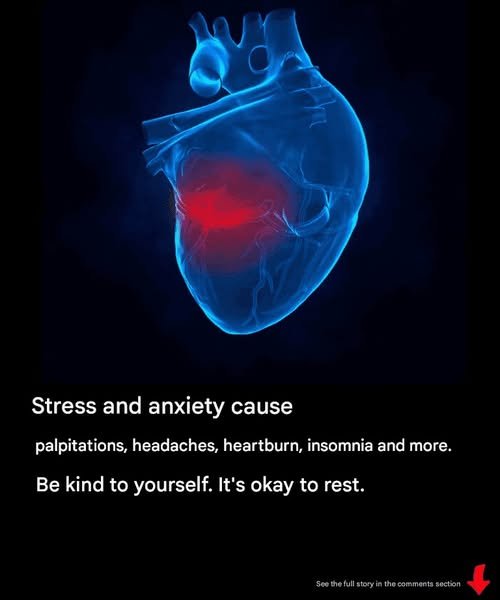
Stress and anxiety can affect almost every system in the body. While occasional stress is normal, persistent or severe stress and anxiety can cause physical, emotional, and behavioral symptoms. Here are 7 common symptoms explained in detail:
1. Headaches and Muscle Tension
What happens:
Stress causes muscles, especially in the neck, shoulders, and jaw, to tighten. This tension can lead to headaches and body aches.
Common signs:
- Tension headaches (a tight band-like feeling around the head)
- Neck and shoulder pain
- Jaw clenching or teeth grinding
- Back pain
Why it happens:
Stress activates the body’s “fight-or-flight” response, increasing muscle tension to prepare for perceived danger. When stress continues, the muscles may remain tight for long periods.
2. Rapid Heartbeat and Chest Discomfort
What happens:
Anxiety can make the heart beat faster even when there is no physical activity.
Common signs:
- Racing or pounding heartbeat
- Chest tightness
- Feeling short of breath
- Lightheadedness
Why it happens:
Stress hormones such as adrenaline increase heart rate and blood pressure. During a panic attack, these symptoms can feel intense and may resemble a heart attack. If chest pain is severe, new, or accompanied by symptoms such as fainting or pain spreading to the arm or jaw, seek emergency medical care immediately.
3. Digestive Problems
What happens:
The brain and digestive system are closely connected, so stress can affect how the stomach and intestines work.
Common signs:
- Stomach aches
- Nausea
- Diarrhea or constipation
- Bloating
- Loss of appetite or overeating
Why it happens:
Stress can change digestion, alter gut bacteria, and affect stomach acid production, leading to gastrointestinal symptoms.
4. Sleep Problems
What happens:
Stress and anxiety often make it difficult to relax enough to sleep.
Common signs:
- Trouble falling asleep
- Waking up frequently
- Nightmares
- Waking up feeling tired
Why it happens:
An anxious mind may remain alert, making it hard for the body to transition into restful sleep. Poor sleep can also make anxiety worse, creating a cycle.
5. Constant Worry and Difficulty Concentrating
What happens:
Anxiety can keep the brain focused on possible threats, making it harder to think clearly.
Common signs:
- Excessive worrying
- Difficulty making decisions
- Forgetfulness
- Trouble concentrating
- Feeling mentally overwhelmed
Why it happens:
Stress hormones can affect attention and memory, making everyday tasks feel more difficult.
6. Fatigue and Low Energy
What happens:
Being under constant stress can leave you feeling exhausted, even after resting.
Common signs:
- Feeling tired all day
- Low motivation
- Physical weakness
- Reduced productivity
Why it happens:
Constant activation of the stress response uses a lot of physical and mental energy. Poor sleep and muscle tension can add to the fatigue.
7. Irritability and Mood Changes
What happens:
Stress and anxiety can affect emotional regulation.
Common signs:
- Irritability
- Feeling restless
- Mood swings
- Feeling overwhelmed
- Increased frustration or anger
Why it happens:
Stress affects brain chemicals involved in mood and emotional control. Ongoing stress may increase the risk of developing anxiety disorders or depression.
When to seek medical advice
Consider speaking with a healthcare professional if:
- Symptoms last for several weeks or keep returning.
- Stress or anxiety is interfering with work, school, relationships, or daily activities.
- Physical symptoms are severe or difficult to explain.
- You experience frequent panic attacks.
Seek immediate medical care if you have:
- Severe chest pain, especially if it spreads to your arm, jaw, or back.
- Difficulty breathing that does not improve.
- Fainting or loss of consciousness.
- Thoughts of harming yourself or feeling unable to stay safe.
Ways to manage stress and anxiety
Some strategies that many people find helpful include:
- Getting 7–9 hours of sleep each night.
- Exercising regularly, such as walking for 30 minutes most days.
- Practicing relaxation techniques like deep breathing, meditation, or progressive muscle relaxation.
- Limiting caffeine and alcohol if they worsen your symptoms.
- Eating balanced meals and staying hydrated.
- Talking with trusted friends, family, or a mental health professional.
- Setting realistic goals and taking regular breaks during work or study.
Everyone experiences stress differently. If your symptoms are frequent, intense, or persistent, a healthcare provider can help determine whether stress or anxiety is the cause and recommend appropriate treatment, which may include counseling, lifestyle changes, or medication when needed.