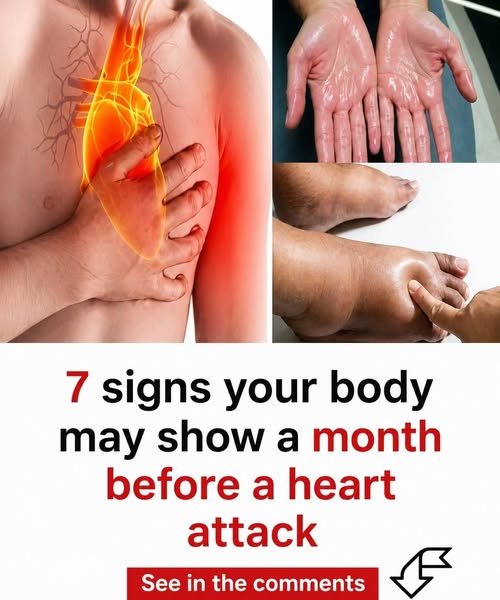
Here are 7 warning signs your body may show up to a month before a heart attack:
1. Chest Discomfort or Pressure
This is the most common warning sign.
What it feels like:
- Pressure, tightness, squeezing, or heaviness in the center or left side of the chest.
- It may come and go rather than being constant.
- It often lasts for several minutes or returns repeatedly.
Why it happens:
Reduced blood flow to the heart muscle causes discomfort.
When to worry:
If chest pain occurs during physical activity or emotional stress and improves with rest, it may indicate reduced blood supply to the heart and should be evaluated promptly.
2. Unusual Fatigue
Many people report extreme tiredness before a heart attack.
Symptoms include:
- Feeling exhausted despite adequate sleep.
- Difficulty performing routine activities.
- Needing frequent rest after minor tasks.
Who experiences it most?
This symptom is particularly common in women but can affect anyone.
Possible reason:
The heart is working harder to pump blood through narrowed arteries, increasing the body’s energy demands.
3. Shortness of Breath
Breathlessness can occur even without chest pain.
Signs include:
- Difficulty catching your breath while walking.
- Becoming winded climbing stairs.
- Waking up at night feeling short of breath.
- Feeling breathless while lying flat.
Why it occurs:
Reduced heart function can cause fluid to build up in the lungs, making breathing more difficult.
4. Pain That Spreads Beyond the Chest
Heart-related pain doesn’t always stay in the chest.
It may spread to:
- Left or right arm
- Shoulders
- Neck
- Jaw
- Upper back
- Upper abdomen
Characteristics:
- Dull ache
- Pressure
- Burning sensation
- Tightness
Women are somewhat more likely than men to experience pain in the jaw, neck, back, or upper abdomen.
5. Cold Sweats, Nausea, or Indigestion
These symptoms are often mistaken for a stomach illness.
You may experience:
- Sudden cold sweating
- Nausea
- Vomiting
- Heartburn
- Indigestion
- Stomach discomfort
Why it happens:
The body’s stress response to reduced blood flow to the heart can trigger these symptoms.
6. Dizziness or Lightheadedness
Feeling faint may indicate that the heart is not pumping enough blood.
Symptoms include:
- Dizziness
- Feeling faint
- Loss of balance
- Brief episodes of near-fainting
This symptom is more concerning when it occurs with chest discomfort or shortness of breath.
7. Swelling in the Legs, Ankles, or Feet
Fluid retention can be an early sign that the heart isn’t pumping efficiently.
Signs include:
- Puffy ankles
- Swollen feet
- Tight shoes
- Leg swelling that worsens during the day
Although swelling has many possible causes, persistent or worsening swelling along with other heart-related symptoms should be assessed by a healthcare professional.
Risk Factors That Increase Heart Attack Risk
You may be at higher risk if you have:
- High blood pressure
- High cholesterol
- Diabetes
- Smoking
- Obesity
- Physical inactivity
- Family history of heart disease
- Chronic kidney disease
- Age over 45 (men) or over 55 (women), though heart attacks can occur earlier
When to Seek Emergency Care
Call your local emergency services immediately if you experience:
- Chest pain or pressure lasting more than a few minutes or that goes away and comes back.
- Chest discomfort along with shortness of breath, sweating, nausea, or pain spreading to the arm, jaw, neck, shoulder, or back.
- Sudden severe shortness of breath or fainting.
Do not drive yourself if you believe you are having a heart attack unless there is no alternative.
Can Heart Attacks Be Prevented?
Many heart attacks can be prevented by:
- Keeping blood pressure, cholesterol, and diabetes under control.
- Not smoking or vaping tobacco.
- Exercising regularly (as recommended by your healthcare provider).
- Eating a heart-healthy diet rich in fruits, vegetables, whole grains, legumes, and healthy fats.
- Maintaining a healthy weight.
- Getting adequate sleep.
- Managing stress.
- Taking prescribed medications consistently.
Important Note
These warning signs are not specific to heart attacks and can have other causes. Some people have no warning symptoms at all before a heart attack. If you develop new, unexplained chest discomfort, shortness of breath, or other concerning symptoms—especially if you have risk factors for heart disease—it’s important to seek prompt medical evaluation rather than waiting to see if they improve.