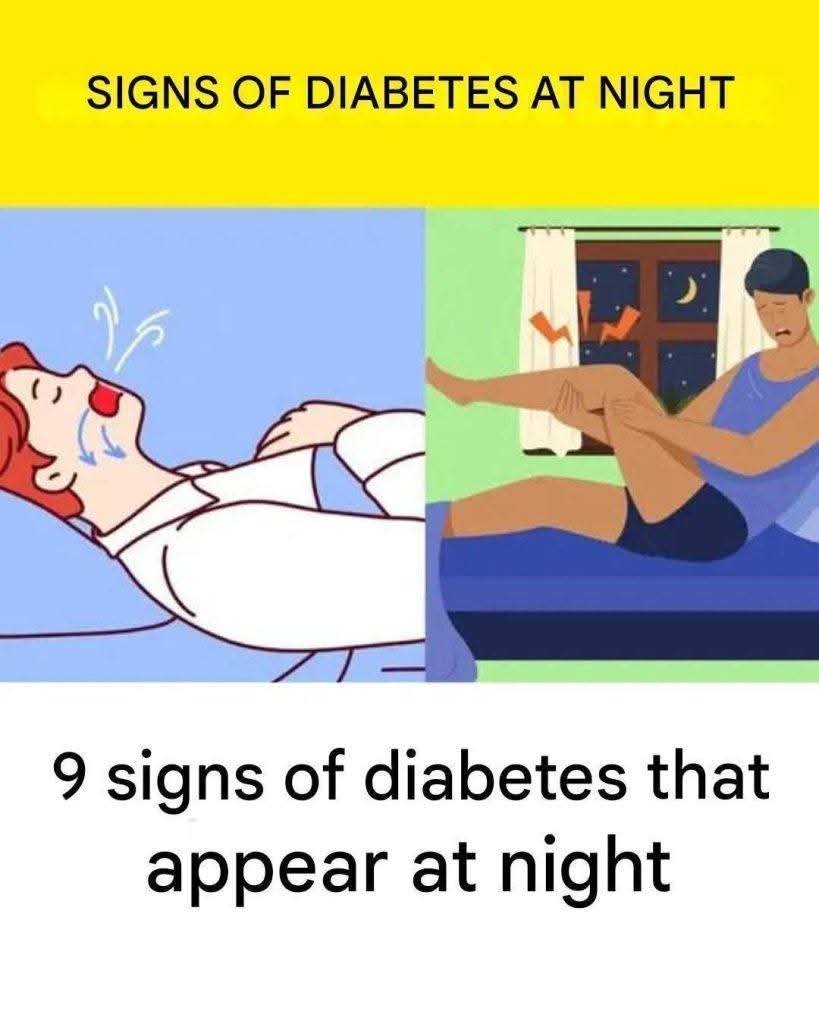
Diabetes symptoms can sometimes become more noticeable at night because of changes in blood sugar levels, sleep patterns, and fluid balance. Having one or more of these symptoms does not necessarily mean a person has diabetes, but persistent symptoms warrant medical evaluation.
1. Frequent Urination at Night (Nocturia)
High blood sugar causes the kidneys to remove excess glucose through urine, leading to increased urine production.
Signs:
Waking up multiple times to urinate
Passing large amounts of urine
Interrupted sleep
2. Excessive Thirst
Frequent urination can lead to dehydration, triggering intense thirst.
Signs:
Dry mouth during the night
Keeping water by the bed
Waking up to drink repeatedly
3. Night Sweats
Low blood sugar during sleep (especially in people taking diabetes medications) may cause sweating.
Signs:
Damp pajamas or sheets
Feeling shaky or anxious upon waking
Morning headaches
4. Tingling or Burning Feet
High blood sugar over time can damage nerves, leading to Diabetic Neuropathy.
Signs:
Burning sensations
Pins-and-needles feelings
Increased discomfort when lying in bed
5. Leg Cramps
Some people experience nighttime muscle cramps, which may be related to nerve changes, dehydration, or circulation problems.
Signs:
Sudden calf or foot cramps
Pain that wakes you from sleep
6. Restless or Poor-Quality Sleep
Blood sugar fluctuations can affect sleep quality.
Signs:
Difficulty staying asleep
Frequent awakenings
Feeling unrested in the morning
7. Increased Hunger During the Night
When the body’s cells cannot effectively use glucose, a person may feel hungry despite eating enough.
Signs:
Waking up hungry
Craving snacks late at night
Feeling unsatisfied after meals
8. Blurred Vision at Night or Upon Waking
Changes in blood sugar can affect the eye’s lens and temporarily alter vision.
Signs:
Difficulty focusing
Vision that seems clearer or blurrier from day to day
9. Extreme Fatigue in the Morning
Poor sleep combined with abnormal blood sugar levels can result in persistent tiredness.
Signs:
Waking up exhausted
Low energy throughout the day
Difficulty concentrating
Other Common Diabetes Symptoms
These may occur during the day as well:
Unexplained weight loss
Slow-healing cuts or wounds
Frequent infections
Increased thirst and urination
Blurred vision
Persistent fatigue
When to Seek Medical Advice
Consider getting tested if you experience several of these symptoms, especially:
Frequent nighttime urination and excessive thirst
Unexplained weight loss
Persistent fatigue
Numbness or burning in the feet
Common tests include:
Fasting blood glucose
Random blood glucose
Hemoglobin A1c
Early diagnosis and treatment of Type 2 Diabetes or Type 1 Diabetes can help prevent complications and improve long-term health outcomes.