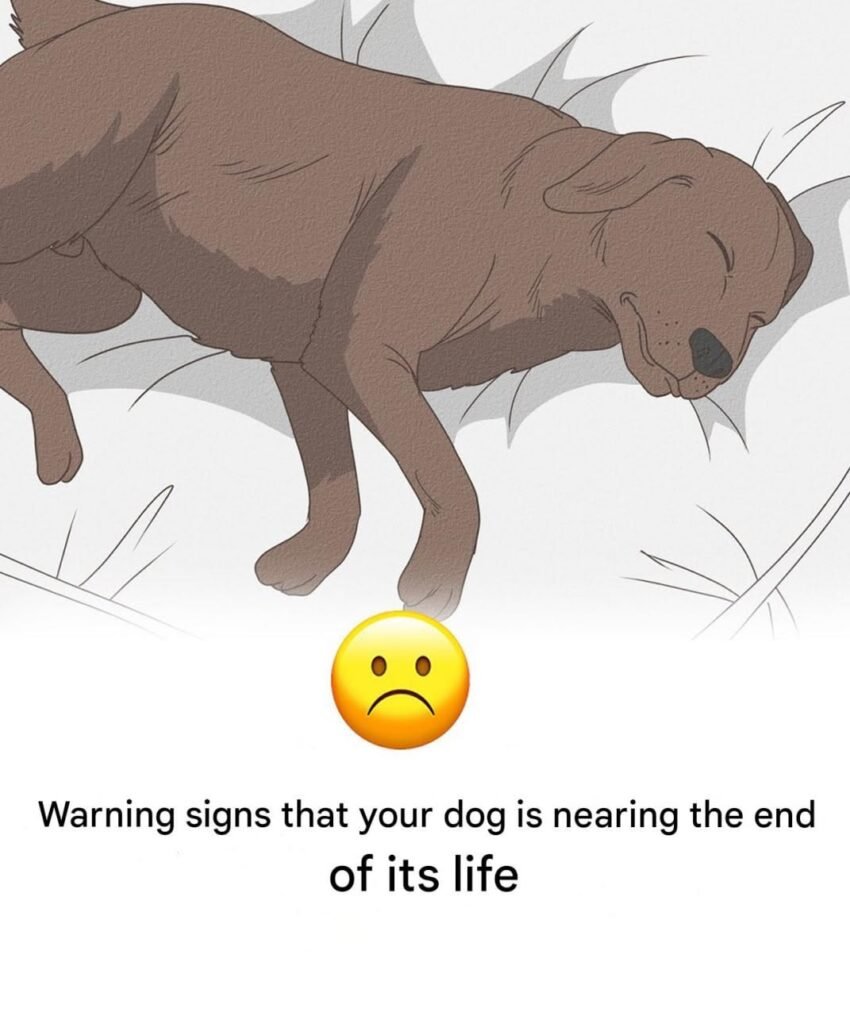
Below are 11 common signs that a dog may be entering the final stage of life.
1. Loss of appetite and refusal to eat
One of the most common signs is a noticeable drop in interest in food and water.
A dog may:
- Ignore favorite treats
- Eat only small amounts
- Stop drinking water entirely
This often happens because the body is slowing down and metabolism changes, or due to nausea, pain, or organ decline.
2. Extreme fatigue and low energy
Dogs may spend most of the day sleeping and show little interest in activity.
You might notice:
- Difficulty waking up
- No interest in walks or play
- Sleeping in unusual positions or longer than usual
Even short movement can seem tiring for them.
3. Difficulty standing, walking, or balance problems
Weakness in the legs becomes more obvious. This may include:
- Slipping or falling
- Struggling to stand after lying down
- Wobbliness or trembling
This is often due to muscle loss, neurological decline, or general weakness.
4. Withdrawal from family and social interaction
Some dogs become less social as they near the end of life. They may:
- Hide or seek quiet places
- Avoid affection
- Show less excitement when family members arrive
Others may become unusually clingy instead.
5. Changes in breathing patterns
Breathing may become:
- Slower or irregular
- Shallow or heavy
- Accompanied by long pauses between breaths
In some cases, dogs may also pant more even when resting.
6. Loss of bladder or bowel control
As muscles weaken, dogs may:
- Have accidents indoors
- Not signal when they need to go outside
- Be unable to hold urine or stool
This is common in late stages of illness or extreme weakness.
7. Noticeable weight loss and muscle wasting
Even if eating normally, some dogs lose weight rapidly due to disease or organ failure.
You may notice:
- Ribs or spine becoming more visible
- Sunken appearance around the face
- Loss of muscle tone, especially in hind legs
8. Confusion or disorientation
Some dogs experience cognitive decline or low oxygen levels, leading to:
- Staring into space
- Getting stuck in corners
- Not recognizing familiar people or places
- Restlessness at night
This is sometimes linked with age-related cognitive dysfunction.
9. Poor temperature regulation
Dogs may feel unusually cold or hot because the body is no longer regulating temperature well. Signs include:
- Seeking heat constantly or avoiding warmth
- Cold ears, paws, or nose
- Shivering even indoors
10. Changes in gum color and body condition
Healthy gums are usually pink. Near end of life, they may become:
- Pale or white (poor circulation or anemia)
- Bluish (low oxygen)
- Dry or sticky
This is often a sign of reduced circulation or organ decline.
11. Pain, restlessness, or “withdrawn stillness”
Some dogs show clear signs of discomfort:
- Whining or unusual vocalization
- Restlessness, inability to get comfortable
- Or the opposite: very still, unresponsive behavior
Not all dogs show obvious pain, but subtle changes in posture or expression may indicate discomfort.
Important context
These signs can appear due to:
- Natural aging
- Chronic illness (kidney disease, cancer, heart failure, etc.)
- Acute medical conditions
A veterinarian can help determine whether the changes are reversible, manageable, or part of the final stage of life.
In many cases, palliative care (comfort-focused treatment) can greatly improve a dog’s remaining time, even when cure is no longer possible.
When to contact a vet urgently
Seek veterinary help immediately if your dog:
- Cannot stand at all
- Stops drinking completely
- Has labored breathing
- Appears in obvious pain or distress
- Becomes unresponsive
If you want, tell me your dog’s age and symptoms—I can help you understand what stage it might be and what comfort care options usually help most.