Which side is best to sleep on? A detailed guide
For most adults, sleeping on your left or right side is generally a good choice. However, the best side depends on your health, digestion, whether you snore, and whether you are pregnant.
If you want a simple recommendation, the left side is often preferable for people with acid reflux, while either side can be comfortable and healthy for most people.
1. Left side vs. right side

1. Left-side sleeping
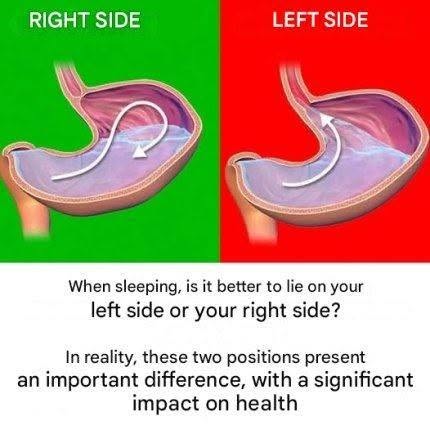
Best for acid reflux
The left side is often the better option for people who experience heartburn or stomach acid coming back into the esophagus.
Potential benefits
-
May reduce nighttime acid reflux.
-
Often recommended during pregnancy, particularly later in pregnancy.
-
May help some people with digestion-related nighttime discomfort.
Possible disadvantages
-
Can put pressure on the left shoulder or hip.
-
May feel uncomfortable if you have pain on your left side.

2. Right-side sleeping
Best when more comfortable
The right side is also a healthy sleeping position for most people and can be just as comfortable as the left.
Potential benefits
-
May be more comfortable for some people with left shoulder or hip pain.
-
Can help reduce snoring in some people compared with sleeping on the back.
-
Is a reasonable alternative if left-side sleeping causes discomfort.
Possible disadvantages
-
May worsen acid reflux in some people compared with left-side sleeping.
-
Can cause pressure on the right shoulder or hip.

3. Sleeping on your back
Good for some people, not everyone
Sleeping on your back can keep your spine and neck in a neutral position when your pillow provides proper support.
Potential benefits
-
Distributes body weight relatively evenly.
-
May reduce pressure on the shoulders and hips.
-
Can be comfortable for people with certain types of back pain.
Possible disadvantages
-
Can worsen snoring and obstructive sleep apnea.
-
May worsen acid reflux in some people, especially when lying flat.

4. Sleeping on your stomach
Usually the least preferred position
Stomach sleeping may reduce snoring for some people, but it often puts extra strain on the neck and lower back.
Potential disadvantages
-
Requires turning your neck to one side for breathing.
-
May increase neck, back, or shoulder discomfort.
-
Can make it harder to maintain a neutral spinal position.
2. Which sleeping side is best for different health conditions?
|
Condition |
Recommended position |
Why |
|---|---|---|
|
Acid reflux or GERD |
Left side |
Can reduce nighttime acid exposure. PMC
+1
|
|
Pregnancy, especially after 28 weeks |
Either side |
Side sleeping is recommended; you do not have to sleep exclusively on the left. NHS
+1
|
|
Snoring |
Either side |
Side sleeping may help keep the airway more open than back sleeping. Mayo Clinic
+1
|
|
Obstructive sleep apnea |
Usually either side |
May reduce breathing interruptions, but it does not replace prescribed treatment. Mayo Clinic
+1
|
|
Back pain |
Side or back, depending on comfort |
Proper support and spinal alignment matter more than choosing a particular side. Johns Hopkins Medicine
+1
|
|
Shoulder pain |
Whichever position avoids pressure |
Avoid lying directly on the painful shoulder if it worsens symptoms. |
|
No particular health problem |
Either side |
Choose the position that lets you sleep comfortably and wake up refreshed. Cleveland Clinic
+1
|
3. How to sleep on your side correctly

Your sleeping posture matters just as much as which side you choose.
-
Use a suitable pillow. Your head should stay level with your spine rather than bending up or down.
-
Keep your neck straight. Avoid twisting your head excessively toward the mattress or ceiling.
-
Bend your knees slightly. You do not need to curl tightly into a ball.
-
Place a pillow between your knees. This can improve hip and pelvic comfort and reduce twisting.
-
Support your upper arm. Hugging a pillow may reduce strain on your shoulder.
-
Choose a comfortable mattress. Your shoulder and hip should be supported without excessive pressure.
You can change sides during the night. You do not need to remain in one position for the entire night.
4. Is sleeping on the left side good for your heart?
You may have heard that sleeping on the left side improves heart health. The evidence does not establish that the left side is universally better for the heart in healthy adults.
Some people with certain heart conditions find that lying on the left side makes them more aware of their heartbeat or causes discomfort. Others sleep comfortably in that position.
Important: If lying down causes new chest pain, significant shortness of breath, or faintness, seek medical attention rather than trying to solve it by changing sides.
5. Is the left side better for digestion?
There is a particular reason the left side is often recommended for acid reflux.
Your stomach and the junction between your stomach and esophagus are positioned so that lying on your left side can make it harder for stomach contents to flow back into the esophagus. Right-side sleeping can increase nighttime reflux in people who are susceptible to it.
If you have frequent heartburn, try these measures:
-
Sleep on your left side.
-
Finish eating about three hours before bedtime.
-
Avoid lying down immediately after a large meal.
-
Consider elevating the head of the bed if nighttime reflux continues.
NHS+1
6. What about sleeping on your side all night?
Side sleeping is generally safe for adults, but staying in exactly the same position for hours can cause pressure on the shoulder, hip, or arm.
If you wake up with pain or numbness:
-
Change sides or adjust your arm position.
-
Check whether your pillow is too high or too low.
-
Put a pillow between your knees.
-
Seek medical advice if numbness, weakness, or persistent pain continues.
If you regularly snore loudly, gasp during sleep, or feel excessively sleepy during the day, consider an evaluation for sleep apnea. Side sleeping may help, but it is not a complete treatment for everyone.
My recommendation for you
To give you the most relevant advice, tell me what you want to improve with your sleeping position.
1. What is your main concern?
2. Which age group are you in?