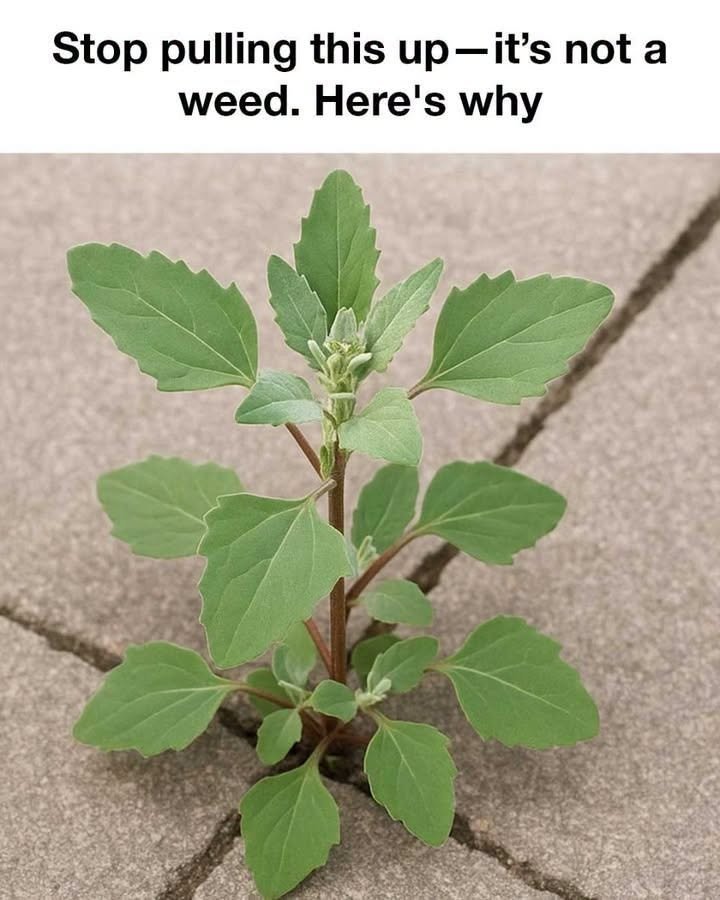
If you’re looking for a detailed explanation of the phrase “Stop pulling this up—it’s not a weed. Here’s why:”, here’s an expanded version you could use:
Stop pulling this up—it’s not a weed. Here’s why:
Many plants that are commonly mistaken for weeds actually play valuable roles in the garden and the environment. Before pulling this plant out, it’s worth knowing what it does.
- It supports pollinators. Its flowers can provide nectar and pollen for bees, butterflies, and other beneficial insects, helping maintain a healthy ecosystem.
- It improves soil health. Some plants have deep roots that break up compacted soil, improve drainage, and bring nutrients closer to the surface.
- It helps prevent erosion. Its roots hold soil in place, reducing erosion caused by rain and wind.
- It provides habitat. Many insects and small wildlife use these plants for food, shelter, or breeding.
- It may be edible or medicinal. Some plants labeled as “weeds” are actually nutritious herbs or have been used in traditional medicine for centuries.
- It increases biodiversity. A diverse garden is generally more resilient to pests, diseases, and changing weather conditions.
Instead of removing every unfamiliar plant, identify it first. You may discover it’s a beneficial native species, a wildflower, or even a volunteer plant that deserves a place in your garden.
If you can identify the specific plant, you can give even more accurate reasons why it should be kept.