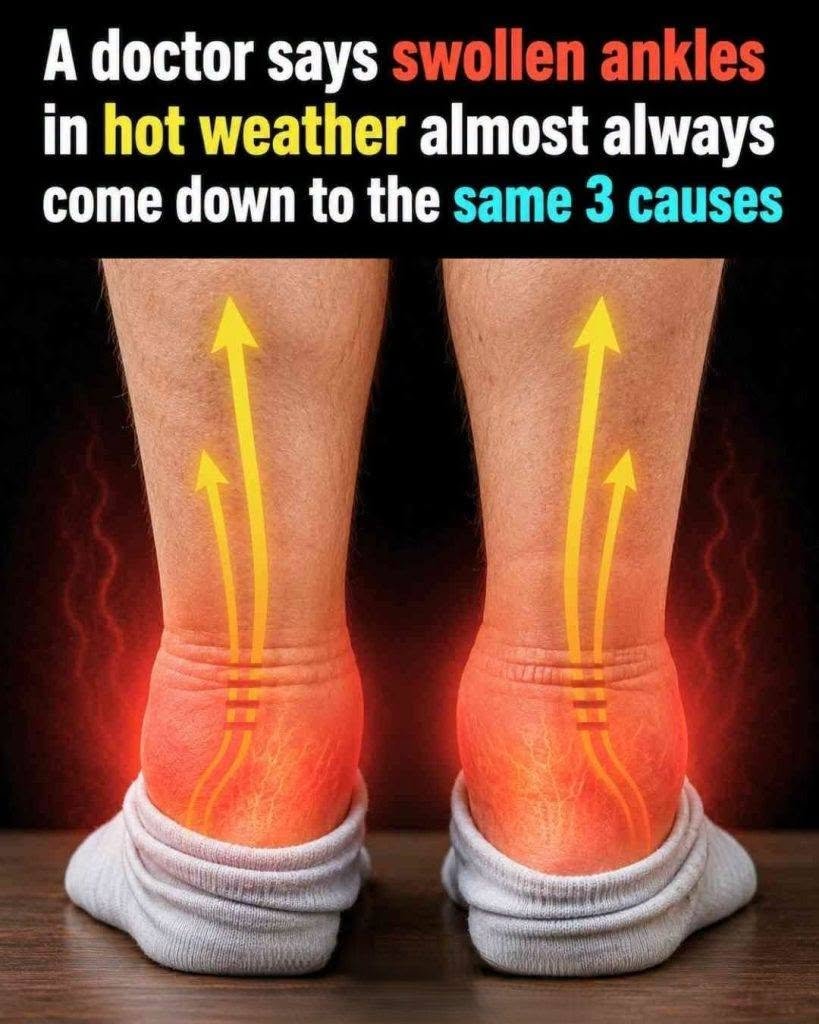
Swollen ankles and feet in hot weather are common. In many otherwise healthy people, the cause is temporary fluid buildup (heat edema), but persistent or severe swelling can sometimes signal an underlying medical condition. A doctor might say that three common causes account for most cases, though they are not the only possibilities.
1. Heat edema (fluid retention caused by hot weather)
This is the most common cause of ankle swelling during warm weather.
Why it happens
When you’re hot, your blood vessels widen (dilate) to help your body release heat. This allows more fluid to leak from small blood vessels into nearby tissues, especially in the feet and ankles where gravity pulls it downward.
Symptoms
- Swelling in both ankles or feet
- Skin may feel tight or shiny
- Usually little or no pain
- Swelling tends to worsen after standing or sitting for long periods
- Often improves overnight or after elevating the legs
Who is more likely to get it?
- Older adults
- People who stand or sit for many hours
- Those who are overweight
- People who are not accustomed to hot weather
- Pregnant women
What helps
- Elevate your legs above heart level when resting.
- Walk regularly and avoid standing or sitting in one position for long periods.
- Stay hydrated.
- Wear comfortable shoes.
- Compression stockings may help if recommended by a healthcare professional.
2. Chronic venous insufficiency (poor blood flow in the leg veins)
This is a very common cause of ongoing ankle swelling.
Why it happens
Veins in the legs have one-way valves that help blood return to the heart. If these valves become weak or damaged, blood pools in the legs, increasing pressure and causing fluid to leak into surrounding tissues.
Symptoms
- Swelling that gets worse as the day goes on
- Heaviness or aching in the legs
- Varicose veins
- Brownish skin discoloration near the ankles
- Itching or skin changes
- In severe cases, leg ulcers
Risk factors
- Increasing age
- Family history
- Obesity
- Pregnancy
- Previous blood clots
- Jobs requiring prolonged standing
Treatment
- Compression stockings
- Regular walking and exercise
- Weight management if appropriate
- Leg elevation
- In some cases, procedures to treat damaged veins
3. Heart, kidney, or liver disease
Swelling in both ankles can sometimes be a sign that one of these organs is not functioning properly.
Heart failure
When the heart cannot pump blood effectively, fluid backs up into the legs.
Symptoms may include
- Swollen ankles and legs
- Shortness of breath
- Fatigue
- Rapid weight gain from fluid retention
Kidney disease
The kidneys may not remove enough salt and water, allowing fluid to build up.
Symptoms may include
- Swelling around the eyes and ankles
- Changes in urination
- High blood pressure
- Fatigue
Liver disease
Advanced liver disease can lower blood protein levels and increase pressure in certain veins, leading to fluid accumulation.
Symptoms may include
- Swollen legs
- Abdominal swelling (ascites)
- Yellowing of the skin or eyes (jaundice)
- Easy bruising
Treatment depends on the underlying condition and often involves managing the disease itself rather than simply reducing the swelling.
Other possible causes
Although the three causes above are common, ankle swelling can also result from:
- Certain medications (such as calcium channel blockers for blood pressure, steroids, NSAIDs, and some diabetes medications)
- Pregnancy
- Injury or sprain
- Infection
- Blood clots (especially if swelling is only in one leg)
- Lymphedema (blocked lymph drainage)
When to seek urgent medical care
Get immediate medical attention if ankle swelling is accompanied by:
- Sudden swelling in one leg, especially with pain, redness, or warmth (possible blood clot)
- Chest pain
- Difficulty breathing
- Fainting
- Severe pain or inability to bear weight
- Fever with a swollen, red leg
When to schedule a medical evaluation
Arrange an appointment if:
- Swelling lasts more than a few days or keeps returning.
- It is getting worse.
- It occurs with high blood pressure, kidney disease, diabetes, or heart disease.
- You develop skin changes, ulcers, or persistent pain.
In many people, swollen ankles during hot weather are simply due to heat-related fluid retention and improve with cooling, movement, hydration, and leg elevation. However, swelling that is persistent, severe, one-sided, or associated with symptoms such as shortness of breath or chest pain should be evaluated promptly to rule out more serious conditions.