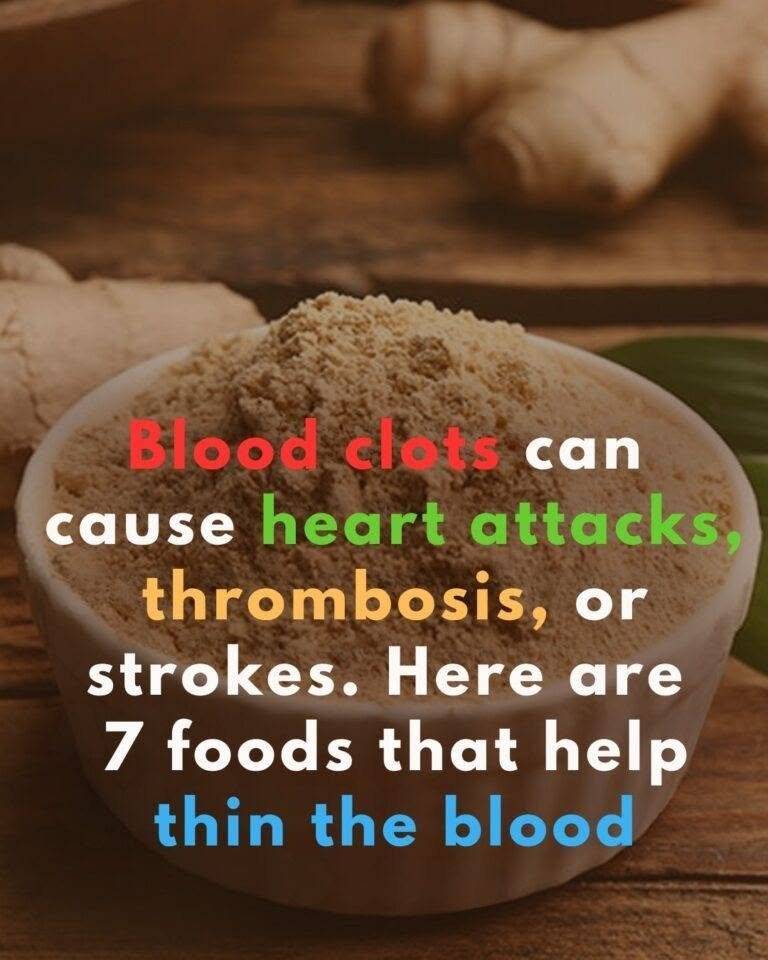
Here are seven foods that have been studied for their potential blood-thinning effects:
1. Garlic
Why it may help:
Garlic contains sulfur compounds such as allicin, which may reduce platelet aggregation (the tendency of blood platelets to stick together).
Health benefits:
- May support heart health.
- Can help maintain healthy blood pressure.
- Has antioxidant and antimicrobial properties.
How to eat it:
- 1–2 fresh cloves daily (if tolerated).
- Add minced garlic to soups, curries, vegetables, or salad dressings.
Caution:
Large amounts of garlic or garlic supplements may increase bleeding risk, especially if combined with blood-thinning medications.
2. Ginger
Why it may help:
Ginger contains gingerols and salicylate-like compounds that may have mild antiplatelet effects.
Health benefits:
- Helps relieve nausea.
- May reduce inflammation.
- Can aid digestion.
How to eat it:
- Fresh ginger tea.
- Add grated ginger to stir-fries, smoothies, or curries.
- About 1–2 grams of fresh ginger daily is common in the diet.
Caution:
High amounts may increase bleeding risk in some people.
3. Turmeric
Why it may help:
Turmeric contains curcumin, which has anti-inflammatory properties and may reduce platelet aggregation in laboratory and animal studies.
Health benefits:
- Supports joint health.
- Reduces inflammation.
- Rich in antioxidants.
How to eat it:
- Add ½–1 teaspoon to cooking.
- Drink turmeric milk or tea.
- Pair with black pepper to improve curcumin absorption.
Caution:
Turmeric supplements are more concentrated than food and may pose a greater bleeding risk.
4. Fatty Fish
Examples include:
- Salmon
- Sardines
- Mackerel
- Herring
Why it may help:
These fish are rich in omega-3 fatty acids (EPA and DHA), which may reduce platelet activity and support cardiovascular health.
Health benefits:
- Supports heart and brain health.
- May reduce inflammation.
- Helps lower triglyceride levels.
How to eat it:
- Aim for 2 servings per week.
- Grill, bake, or steam instead of frying.
Caution:
Very high-dose omega-3 supplements may increase bleeding risk in some people.
5. Cayenne Pepper
Why it may help:
Cayenne pepper contains capsaicin, which may influence platelet function and circulation, though evidence for a meaningful blood-thinning effect in people is limited.
Health benefits:
- May support circulation.
- Can add flavor without extra salt.
- Contains vitamins A and C.
How to eat it:
- Sprinkle small amounts into soups, eggs, sauces, or vegetables.
Caution:
It can irritate the stomach or digestive tract in some people.
6. Cinnamon
Why it may help:
Cassia cinnamon contains coumarin, a natural compound related to anticoagulant medications. However, the amount varies, and consuming large amounts is not a safe way to thin the blood.
Health benefits:
- Adds flavor without sugar.
- Contains antioxidant compounds.
How to eat it:
- Sprinkle on oatmeal, yogurt, or fruit.
- Use in moderation.
Caution:
Large amounts of cassia cinnamon can harm the liver due to its coumarin content.
7. Vitamin E–Rich Foods
Examples:
- Almonds
- Sunflower seeds
- Hazelnuts
- Spinach
- Avocados
Why they may help:
Vitamin E has mild antiplatelet properties at higher intakes, though foods alone are unlikely to have a strong blood-thinning effect.
Health benefits:
- Protects cells from oxidative damage.
- Supports immune function.
- Promotes healthy skin.
How to eat them:
- A handful of nuts daily.
- Add seeds to salads or yogurt.
- Include leafy greens in meals.
Caution:
High-dose vitamin E supplements may increase bleeding risk more than food sources.
Tips for Healthy Blood Circulation
- Stay physically active.
- Drink enough water.
- Eat plenty of fruits, vegetables, whole grains, and legumes.
- Avoid smoking.
- Maintain a healthy weight.
- Manage blood pressure, cholesterol, and blood sugar.
Important Safety Note
If you take medications such as warfarin, apixaban, rivaroxaban, dabigatran, edoxaban, aspirin, or clopidogrel, do not try to enhance their effects by consuming large amounts of these foods or supplements without medical advice. Combining them can increase the risk of bleeding.
Also, if you have symptoms of a blood clot—such as sudden chest pain, shortness of breath, swelling and pain in one leg, or sudden weakness or difficulty speaking—seek emergency medical care immediately rather than relying on dietary changes.